TestDynamics Raises $9 Million to Evaluate Medical Imaging AI
TestDynamics raised $9 million in Series A funding led by Healthier Capital to expand Satori, its platform for evaluating medical imaging AI on hospitals' own patient studies.
Why it matters
- TestDynamics secured $9 million in Series A funding led by Healthier Capital, with Cedars-Sinai Technology Ventures participating
- Satori is in clinical use at several of the ten highest-ranked U.S. medical centers
- Satori Edge de-identifies and encrypts studies inside the hospital network before routing them to enabled AI vendors
- TestDynamics participated in the Cedars-Sinai Accelerator's 2023 program
- A 2024 Nature Medicine comment argued for stronger clinical validation standards for authorized AI health tools
TestDynamics has secured $9 million in Series A funding to expand Satori, a vendor-neutral platform that evaluates medical imaging AI algorithms on hospitals' own studies and delivers their findings into radiologists' existing workflows. Healthier Capital led the round. Cedars-Sinai Technology Ventures participated strategically. The Austin-based company disclosed no valuation and named none of its clinical customers in the announcement.
The financing addresses a problem that grows with every algorithm a hospital adopts. Selecting a tool is only the beginning. Health systems must also establish how it performs on their own patients, connect it to clinical software, and determine whether it continues to deliver useful results after deployment.
TestDynamics says Satori is already in clinical use at several of the ten highest-ranked U.S. medical centers. The company plans to expand its clinical validation team, deploy across more health systems, and extend its evaluation and orchestration capabilities into additional imaging subspecialties.
What problem does the funding target?
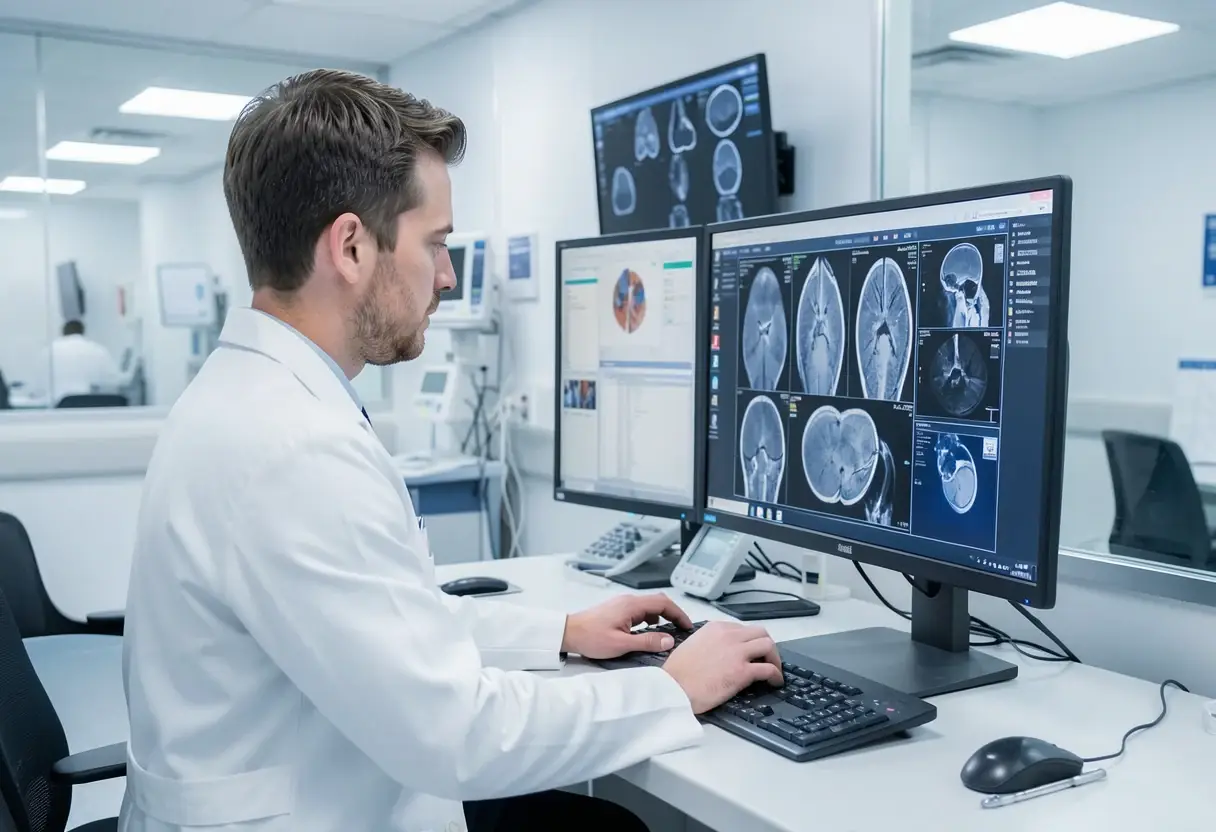
Medical imaging AI is narrow by design. One tool might flag suspected bleeding on a head CT. Another measures structures on an MRI or identifies possible fractures on an X-ray. Buy several tools and radiologists end up reconciling separate interfaces, separate findings, and vendor-specific performance claims.
Satori sits above those tools rather than competing as another diagnostic algorithm. TestDynamics calls its approach Amalgamated Intelligence: it evaluates outputs from multiple systems and organizes the results into a prioritized clinical view. The company says it benchmarks algorithms against both reference findings — often called ground truth — and against competing products.
"Evaluation must come from outside the model," said founder and CEO Lior Eshel in the announcement. His argument is structural: hospitals need an evaluator whose role is separate from the companies selling the algorithms.
The platform's description adds a practical mechanism to that position. Candidate tools run against the provider's own de-identified imaging studies before clinicians and leadership choose them. Those results establish a local baseline for subsequent monitoring. A model's performance at another hospital is useful evidence. A local evaluation tests whether that evidence carries over to this hospital's actual imaging workload.
How does Satori connect to hospital systems?
The integration component is Satori Edge, a service installed within the hospital network. According to TestDynamics' technical overview for IT teams, Edge receives studies from a picture archiving and communication system, or PACS, and from DICOM routers. PACS stores and retrieves medical images. DICOM is the standard used to exchange those images and associated information.
Edge then performs three functions:
- De-identifies and encrypts studies before they leave the network
- Routes studies only to AI vendors the hospital has enabled
- Reconnects returned results with the correct patient on site
TestDynamics says the service uses outbound connections only, and that its vendor agreements prohibit retaining patient data or using it for training.
This architecture gives the hospital a single connection through which it can introduce or replace tools. It also consolidates contracting. TestDynamics holds agreements and business associate agreements with the underlying AI vendors. Those agreements assign responsibilities for handling protected health information, while the technical connection handles movement of studies and results.
What does radiologist oversight look like?
The phrase "one result" can suggest that multiple AI answers are blended into a new diagnosis. The company's Satori View documentation describes something more specific: individual results appear as the originating algorithm produced them, organized into a consistent view at the point of reading.
Clinical sections can choose which findings appear and how they are ordered. Radiologists approve what enters the imaging viewer or the draft report. Priority flags from cleared triage tools can reach worklists. Follow-up tracking keeps incidental findings visible until someone addresses them.
That distinction matters for accountability. A radiologist needs to know which tool produced a finding and whether to accept it. Reducing interface clutter is useful. Preserving the ability to examine and reject an output is equally consequential.
How is performance monitored after go-live?
Satori Governance extends evaluation into ongoing operations. TestDynamics says it tracks performance against each hospital's baseline, monitors usage, compares AI findings with final reports, and collects radiologists' agreements, overrides, and disagreements. Hospital leadership can use that record to decide whether to keep, replace, or expand a tool.
Monitoring exists to expose drift: a change in performance after the conditions surrounding a model change. Scanner upgrades, different imaging protocols, new patient populations, or updated model versions can all raise the question of whether an earlier evaluation still applies.
TestDynamics acknowledges a limitation. Agreement with a final report is a useful signal, but it is not automatically equivalent to an independently adjudicated ground truth. Reviewing disagreements and defining reliable reference cases remain part of clinical validation. The funding's stated emphasis on expanding a validation team reflects the human work behind this infrastructure.
Why does external evaluation matter now?
The demand for independent testing extends beyond imaging. A 2024 comment in Nature Medicine on clinical validation argued for stronger evidence standards for authorized AI health tools. Independent testing of healthcare AI reflects a wider push to assess systems against evidence outside their developers' own claims.
Healthier Capital's participation backs an infrastructure thesis: hospitals will need to change AI vendors without rebuilding their clinical systems around each replacement. Cedars-Sinai Technology Ventures adds a healthcare commercialization investor to the round. TestDynamics also identifies itself as a participant in the Cedars-Sinai Accelerator's 2023 program.
For TestDynamics, the opportunity is to turn evaluation, integration, and clinical oversight into a continuing service rather than a separate project for every algorithm. The $9 million will fund that expansion. Its value will rest on whether hospitals gain clearer evidence about their tools and a more usable flow of findings for radiologists.
By Rebecca Stone
Source: unite.ai
More from Rebecca Stone
Show full bio
Correspondent covering companies, deals and strategy in artificial intelligence and machine learning at AI In Context.
728 articles
Related articles
- Japan Clears Subtle Medical's SubtleHD AI for Faster MRI Scans
- Isomorphic Labs Raises $5B as AI Drug Design Faces Trial Test
- Remedy Robotics Raises $62M Series B for AI Cardiovascular Robot N1
- Charta Health raises $55 million to expand AI chart review
- Ohio State, Microsoft Launch Five-Year Clinical AI Partnership