Japan Clears Subtle Medical's SubtleHD AI for Faster MRI Scans
Japan certified Subtle Medical's SubtleHD on November 18, 2026. The AI cuts MRI sequence times up to 80% on existing GE, Siemens, Hitachi and Philips scanners — no new hardware required.
Why it matters
- Japan granted marketing certification to SubtleHD on November 18, 2026 under the Pharmaceuticals and Medical Devices Act.
- SubtleHD accelerates MRI sequences by up to 80%; a company example shows a knee scan dropping from 6:42 to 2:49, a 58% saving.
- Japan has over 57 MRI scanners per million people — roughly 50% more than the US and three times the OECD average.
- Subtle Medical reports over 50% revenue growth, a doubled sales team, and deployments on more than 1,500 scanners worldwide.
- The software is compatible with GE, Siemens, Hitachi and Philips systems without new hardware purchases.
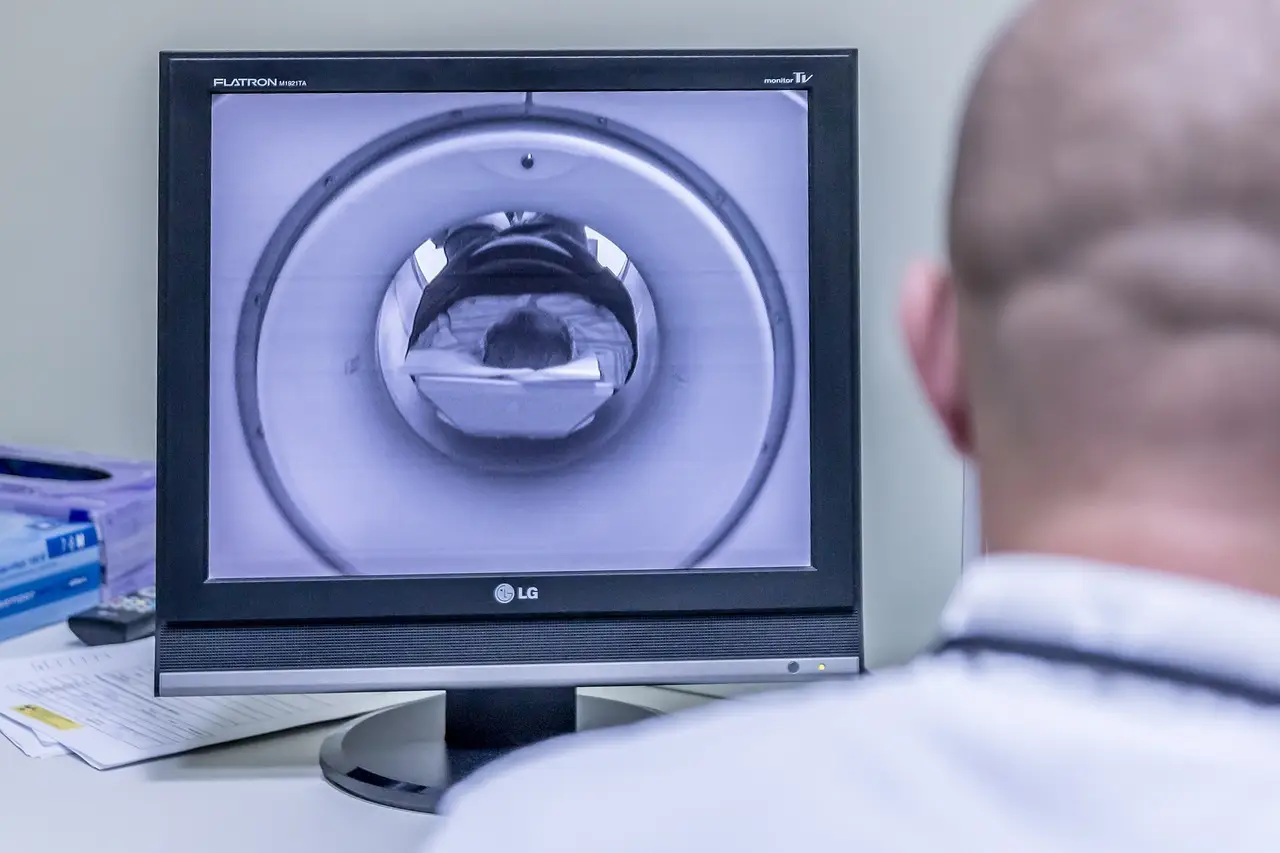
Japan has granted marketing certification to SubtleHD, an AI software that Subtle Medical says can accelerate MRI sequences by up to 80% on scanners hospitals already own. The company announced the clearance on November 18, 2026, and it makes the software available to hospitals and imaging centers across Japan without requiring a single new scanner purchase.
The Japan Association for the Advancement of Medical Equipment issued the certification under the Pharmaceuticals and Medical Devices Act, the country's regulatory framework for medical products. For Japanese providers, the practical appeal is straightforward. SubtleHD can be added to existing imaging workflows, which means hospitals don't need to buy a new MRI machine or wait for an original-equipment-manufacturer upgrade to get faster scans.
That framing matters. Most MRI acceleration stories in the industry revolve around hardware: new magnets, higher field strengths, expensive fleet replacements. Subtle Medical is selling the opposite proposition. Its software applies denoising and sharpening across body parts, integrates with installed systems, and lets a hospital squeeze more capacity out of the equipment sitting in its basement today.
What does the software actually do?
SubtleHD works as vendor-neutral software layered on top of existing MRI systems, according to Subtle Medical's product documentation. The company publishes compatibility materials covering GE, Siemens, Hitachi and Philips systems across different field strengths — a deliberate design choice aimed at the mixed scanner fleets typical of large hospital networks.
The acceleration claims come with concrete numbers. In one company-supplied example, a coronal T1 knee sequence on a GE Signa HDxt 1.5T scanner dropped from an acquisition time of 6 minutes 42 seconds to 2 minutes 49 seconds. Subtle Medical labels that a 58% time saving on a routine, everyday examination.
The company isn't betting on a single clinical use case. Its published examples span brain, spine, shoulder, ankle, wrist and prostate imaging. That breadth signals the strategy: target multiple clinical workflows across a radiology department rather than optimizing one examination type and hoping it spreads.
The clinical logic runs as follows. Faster sequences mean shorter table time per patient. Shorter table times mean more appointment slots in the same operating day. More slots improve scheduling, reduce patient waits and make exams more comfortable — particularly for elderly patients or anyone who struggles to hold still inside a magnet. The software also extends the useful life of existing magnets, which ties its economics to capacity gains from installed equipment rather than capital expenditure on new hardware.
Why Japan, and why now?
Japan is arguably the most scanner-rich market in the world. The country has more than 57 MRI scanners per million people, the highest density among OECD countries, according to the announcement. That figure runs approximately 50% higher than the United States and roughly three times the OECD average.
For a software company selling per-scanner productivity, that installed base is the prize. Every point of Japan's exceptional scanner density represents a machine that could run more examinations per day with no additional hardware. Software-driven capacity gains become a large practical opportunity in a market where the machines are already everywhere.
The timing also reflects pressure on Japanese radiology. The company identifies three strains on the system: high imaging volumes, a limited radiologist workforce, and an aging population that drives demand for diagnostic imaging. Those conditions shift the emphasis from simply adding scanners — Japan already has more than almost anyone — to managing the workload passing through the scanners it has. That workload problem is exactly the gap SubtleHD is built to address.
How big is Subtle Medical's operation?
The Japan clearance lands on top of already-rapid commercial growth. Subtle Medical reports revenue growth of more than 50% in the year preceding the announcement. The company has doubled its global sales team, expanded its international distribution network, and counts deployments on more than 1,500 scanners worldwide.
Those numbers supply the commercial backdrop for the Japan push. Subtle Medical isn't entering the market cold. It is adding a country with extensive installed equipment while simultaneously scaling the sales and distribution operation behind its international expansion.
Chief Commercial Officer Josh Gurewitz framed the move in explicitly strategic terms. He called Japan a "significant growth opportunity" as Subtle Medical expands internationally, and said the certification strengthens its Asia-Pacific presence.
The quote carries weight because it anchors the regulatory win to a regional strategy rather than a one-off approval. Asia-Pacific healthcare systems share many of the characteristics Subtle Medical cites in Japan: dense installed scanner bases, aging populations and radiologist shortages. A certification in the region's largest medical equipment market can serve as a reference point for neighboring regulators and hospital chains.
What are the stakes for providers and the wider market?
The certification highlights a broader shift in how imaging capacity gets expanded. For two decades, the answer to rising scan demand was to buy more or bigger scanners. Software-first approaches change that equation, and regulators are now building pathways for them. Japan's Pharmaceuticals and Medical Devices Act clearance shows AI imaging tools can clear formal medical-device review and reach clinical deployment as standalone products, not just research add-ons.
For Subtle Medical's competitors, the move signals that the race for installed-scanner software is global. Vendors that can certify across multiple regulatory regimes — the United States, Europe, now Japan — gain access to the largest installed bases first, and distribution partnerships tend to follow regulatory footprints.
For Japanese providers, the certification's real test is operational rather than technical. The value will depend on whether sequence-level time savings translate into additional appointments and shorter waits across varied scanners and clinical protocols. A 58% reduction on one knee protocol doesn't automatically become a 58% increase in daily throughput. Departments will need to rework schedules, staffing and patient flow to capture the gain.
That question — converting milliseconds saved into appointments added — links the product's commercial potential in Japan to a practical radiology problem: expanding examination capacity without relying solely on new hardware. How well Subtle Medical and its Japanese partners solve it will determine whether the certification becomes a genuine growth engine or a regulatory line on a slide deck.
Source: unite.ai
More from Elena Vasquez
Show full bio
Market editor covering technology and product news in artificial intelligence and machine learning at AI In Context.
708 articles
Related articles
- TestDynamics Raises $9 Million to Evaluate Medical Imaging AI
- Utah Green-Lights an AI That Prescribes Acne Medication for $5 a Month
- China's Drugmakers Turn to AI Marketing as Anti-Graft Rules Bite
- OpenAI Launches 'OpenAI for Healthcare' With HIPAA Support
- OpenAI's GPT-6 agents now do medical paperwork for 8.5 cents a task