OpenAI Appoints Alignment Researcher Paul Christiano to Foundation Board
OpenAI has named alignment researcher Paul Christiano to its Foundation Board and Safety and Security Committee, installing a known independent risk voice inside post-recapitalization governance.
Updated
Why it matters
- Paul Christiano joins the OpenAI Foundation Board as a non-voting observer on the OpenAI Group PBC Board and joins the Foundation Board's Safety and Security Committee under chair Zico Kolter.
- Christiano led alignment research at OpenAI from 2017 to 2021, co-developing foundational RLHF work, and currently serves as Senior Tech Advisor at NIST's Center for AI Standards and Innovation (CAISI).
- The appointment builds on OpenAI's October 2025 recapitalization and commitments made following year-long reviews by the California and Delaware Attorneys General.
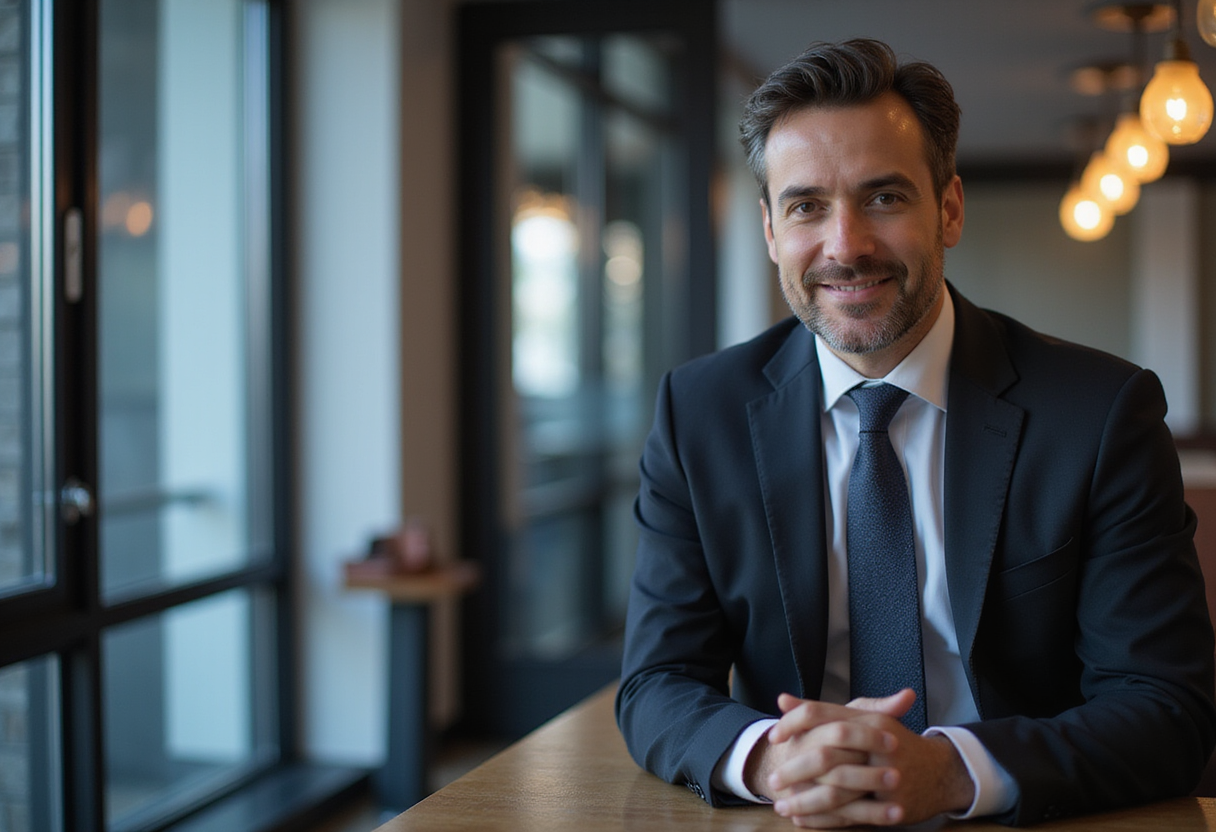
OpenAI has appointed Paul Christiano, one of the field's most influential AI safety researchers, to the OpenAI Foundation Board as a non-voting observer on the OpenAI Group PBC Board. The company announced the move in a statement published on its website.
Christiano will also join the Safety and Security Committee (SSC) of the Foundation Board, where he will work alongside committee chair Zico Kolter. The SSC holds governance authority over safety and security practices across all of OpenAI, including OpenAI Group PBC.
The appointment carries weight beyond its titles. Christiano is the founder of the Alignment Research Center (ARC), a nonprofit research organization focused on aligning advanced AI systems with human interests. From 2017 to 2021, he led alignment research at OpenAI itself and contributed foundational work on reinforcement learning from human feedback, the technique that became the industry-standard method for steering large language models toward helpful behavior. RLHF remains the backbone of how OpenAI, Anthropic, Google and other frontier labs train and refine their flagship models.
Christiano also brings recent government experience spanning two administrations. He serves as Senior Tech Advisor at the Center for AI Standards and Innovation (CAISI) within the National Institute of Standards and Technology (NIST), an agency of the U.S. Department of Commerce. At CAISI and its predecessor, the U.S. AI Safety Institute, Christiano worked on evaluating frontier AI models — including capabilities with national security implications — and on approaches to mitigating associated safety and security risks. That dual background, spanning both technical alignment research and federal evaluation programs, places him at the intersection of the two tracks now shaping U.S. AI oversight.
A critical voice inside the governance structure
OpenAI framed the appointment as a deliberate choice to strengthen internal challenge. Christiano, the company wrote, brings "a perspective that takes seriously the possibility that advanced AI could pose catastrophic risks and that developers must prepare before systems reach more dangerous levels of capability." He has also been, in OpenAI's own words, "an independent voice on whether the industry's safeguards are adequate."
That framing matters. OpenAI stated that its "mission is to ensure that artificial general intelligence benefits all of humanity," and argued that AI is "entering a new era of capability, making it increasingly important that advances in these systems are accompanied by strong safety, security, alignment and governance." The company said it believes "the Foundation's governance is stronger with people prepared to challenge prevailing assumptions and help strengthen the evidence, safeguards, and accountability underlying critical decisions."
In OpenAI's description, Christiano's new capacity brings "a distinct and technically grounded perspective to OpenAI's governance decisions." For a company whose safety teams have seen high-profile departures over the past two years, installing a figure known for independent and often pessimistic assessments of AI risk into a formal governance role signals — at minimum — a structural acknowledgment that outside scrutiny should sit inside the boardroom rather than outside it.
Built on the post-recapitalization governance framework
The appointment does not exist in a vacuum. According to OpenAI, it "builds on the governance structure established through OpenAI's recapitalization in October 2025," including commitments made in connection with reviews conducted over the course of a year by the California Attorney General and the Delaware Attorney General. OpenAI credited both offices' engagement with helping strengthen the governance framework. Delaware Attorney General Kathy Jennings completed her review of the recapitalization in late October 2025, and OpenAI signed a memorandum of understanding with the California Attorney General documenting the conditions of non-objection.
Under that structure, the OpenAI Foundation is a charitable organization that conducts its own charitable operations while maintaining control of — and holding a significant equity stake in — OpenAI Group PBC. The Foundation controls the PBC, and the Safety and Security Committee is a committee of the Foundation Board. The Foundation says it supports initiatives advancing scientific discovery, strengthening civil society, and building resilience through responsible AI through grants, partnerships, and other philanthropic initiatives.
Why it matters
The stakes here are structural, not symbolic. The SSC now overseeing safety across the entire OpenAI organization is the body that resulted from a legally scrutinized restructuring — one reviewed for roughly a year by two state attorneys general. Who sits on that committee, and whether its members hold genuinely independent views, will shape how consequential decisions about model deployment and dangerous-capability evaluations are actually challenged before they are made.
Christiano's position as a non-voting observer on the PBC Board limits his formal power. But his seat on the SSC, next to chair Zico Kolter, puts one of the earliest and most cited researchers in AI alignment directly inside the mechanism that governs OpenAI's safety practices. How much that translates into changed decisions — and whether ARC-style evaluations of frontier capabilities inform OpenAI's internal gating — will be the measure of the appointment.
Original: nist.gov
More from Rebecca Stone
Show full bio
Correspondent covering consumer brands and retail at AI In Context.
157 articles