OpenAI Launches Safety Fellowship for Independent AI Research
OpenAI's Safety Fellowship runs Sept 14, 2026 to Feb 5, 2027, offering stipends, compute, and Berkeley workspace to independent AI safety researchers. Applications close May 3.
Why it matters
- The OpenAI Safety Fellowship runs September 14, 2026 through February 5, 2027.
- Applications close May 3; successful applicants are notified by July 25.
- Fellows receive a monthly stipend, compute support, API credits, and mentorship, but no internal system access.
- Workspace is offered at Constellation in Berkeley; remote work is permitted.
- Fellows must deliver a paper, benchmark, or dataset by the end of the program.
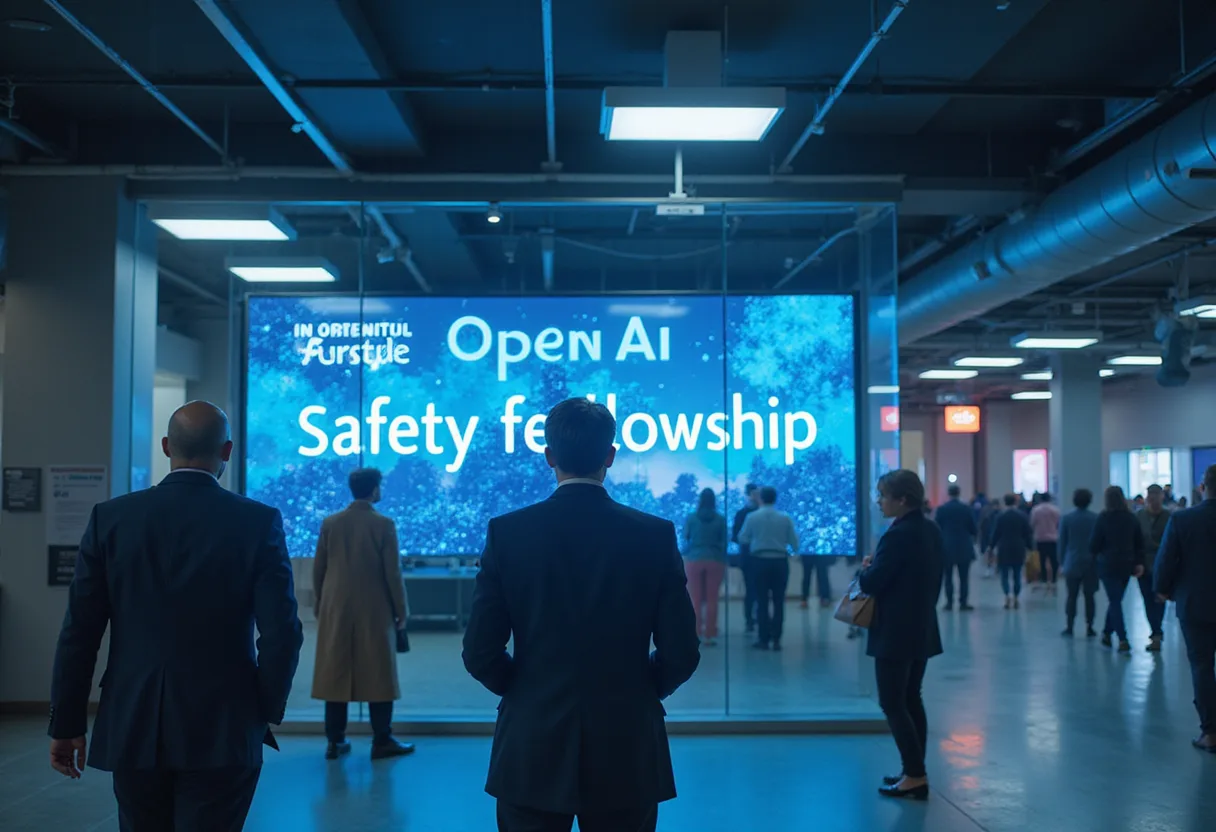
OpenAI opened applications today for a pilot program that will pay independent researchers to study AI safety — with a deadline of May 3. The OpenAI Safety Fellowship runs from September 14, 2026 through February 5, 2027, and it targets external researchers rather than internal staff.
The program matters because it channels resources toward independent alignment work at a moment when frontier labs face persistent pressure to demonstrate credible external oversight of advanced systems. OpenAI says it wants "rigorous, high-impact research on the safety and alignment of advanced AI systems."
What does the fellowship offer?
Fellows get three concrete forms of support:
- A monthly stipend
- Compute support, including API credits
- Ongoing mentorship from OpenAI staff
Workspace will be available in Berkeley, alongside other fellows at Constellation, though remote participation is allowed. Fellows must produce a substantial output by the end of the program — a paper, a benchmark, or a dataset.
One boundary is explicit. Fellows "will not have internal system access," according to the announcement. The research happens outside OpenAI's walls.
Who should apply?
OpenAI casts a wide net. It welcomes applicants from computer science, social science, cybersecurity, privacy, HCI, and related fields. The company states plainly: "We prioritize research ability, technical judgment, and execution over specific credentials." Reference contacts are required.
The priority research areas listed include:
- Safety evaluation
- Ethics
- Robustness
- Scalable mitigations
- Privacy-preserving safety methods
- Agentic oversight
- High-severity misuse domains
OpenAI says it favors work that is "empirically grounded, technically strong, and relevant to the broader research community."
What happens next?
Applications close May 3. OpenAI will review all submissions and notify successful applicants by July 25. Questions about the process go to [email protected] — notably, an address hosted at Constellation, the Berkeley-based organization that will house the cohort, not at OpenAI itself.
Details on eligibility, compensation, and benefits live in the application form rather than the announcement.
The structure signals a talent pipeline as much as a research push. OpenAI describes the fellowship as a way to "support independent safety and alignment research and develop the next generation of talent." How the pilot performs — measured in published papers, benchmarks, and datasets by February 2027 — will likely determine whether it becomes a recurring program.
Source: OpenAI News
More from Marcus Bennett
Show full bio
Senior reporter covering companies, deals and strategy in artificial intelligence and machine learning at AI In Context.
539 articles
Related articles
- OpenAI Lays Out Vision for AGI That "Benefits Everyone"
- OpenAI Reports Progress with US CAISI and UK AISI Safety Bodies
- OpenAI Opens Applications for $50M People-First AI Fund
- OpenAI details how external testers probe its frontier models
- OpenAI Appoints Alignment Researcher Paul Christiano to Foundation Board