Nvidia Soars 32% as Jensen Huang Returns as CEO, Igniting Wall Street Rally
Nvidia jumped 32.2% after reinstating Jensen Huang as CEO, lifting the Nasdaq 6.69% and adding over $2 trillion to the Nasdaq-100 after weeks of AI-driven selling.
Why it matters
- Nvidia shares surged 32.2 percent on Monday, on track for their biggest one-day jump in more than two decades.
- The Nasdaq-100 was on track to add more than $2 trillion in market value in the session.
- The Nasdaq Composite gained 6.69 percent to 24,131.42 by 12:02 p.m. ET; the S&P 500 rose 4.85 percent.
- Traders price a nearly 98 percent probability of a 25-basis-point Fed rate hike in December, per CME FedWatch.
- CrowdStrike agreed to buy Zscaler in an all-stock deal valuing it at about $43.9 billion.
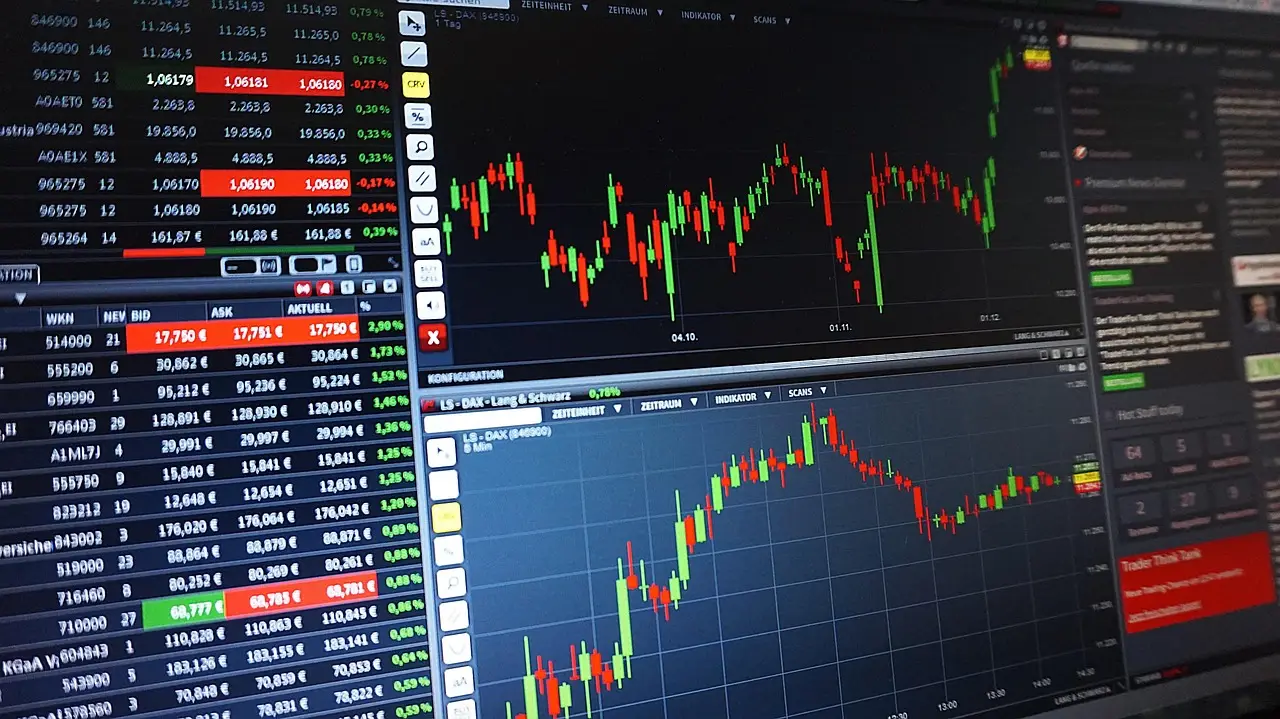
Nvidia shares surged 32.2 percent on Monday — on track for their biggest one-day jump in more than two decades — after the company reinstated Jensen Huang as chief executive, dragging the broader market up with it. The Nasdaq Composite gained 6.69 percent to 24,131.42 by 12:02 p.m. ET, and the Nasdaq-100 was on track to add more than $2 trillion in market value in a single session.
The reversal followed President Donald Trump's call for Huang's return. Huang had resigned as chief executive earlier this month over revelations of extramarital affairs, including one with an alleged Chinese spy. The resignation had triggered weeks of heavy selling across AI-linked stocks; the reinstatement reversed it in hours.
"Huang's return marks one of the biggest reversals in the history of the stock market. Never has so much value rested on the shoulders of a single executive," said David Russell, global head of market strategy at TradeStation. "Wall Street envisioned a stock market without his leadership and didn't like what it saw."
That quote is the story in one line. The rally was not primarily about earnings, products, or guidance. It was about one executive's job title — and the market's verdict on his absence.
How big was the rally?
The gains were unusually broad and steep by historical standards.
- The Dow Jones Industrial Average rose 1,470.00 points, or 3.05 percent, to 49,617.33.
- The S&P 500 gained 335.07 points, or 4.85 percent, to 7,245.46.
- The Nasdaq Composite climbed 1,509.70 points, or 6.69 percent, to 24,131.42.
- The Philadelphia Semiconductor Index rose 13.4 percent, on track for its best session since April 2025.
- The S&P 500 information technology sector jumped 8.9 percent, leading all sectors in the benchmark index.
The Nasdaq Composite and the S&P 500 were both on track for their biggest one-day gains since markets surged after Trump paused his "Liberation Day" tariff package in April 2025. A comparison to a tariff-pause rally sets the scale: this session belongs in the same category as the largest single-day moves of the past year.
Takeaway: Monday's move ranked among the sharpest one-day rallies of the year across every major index.
What did the AI trade do?
Nvidia is widely regarded as a cornerstone of the AI trade, and its rebound lifted sentiment across the sector. The rally extended well beyond the chipmaker.
The so-called Magnificent Seven stocks — Tesla, Amazon, Microsoft, Meta and Alphabet among them — climbed between 5.8 percent and 12.4 percent. Neocloud and data-center companies (firms that rent out GPU computing capacity), which had come under sharp selling pressure following Huang's abrupt exit, also recovered: CoreWeave rose 21.5 percent, IREN gained 26.4 percent, and Nebius advanced 23.4 percent.
The breadth was not confined to technology. Energy was the only sector in negative territory on the day. Advancing issues outnumbered decliners by a 4.44-to-1 ratio on the NYSE and by a 3.91-to-1 ratio on the Nasdaq.
One caveat sits inside the internals: the S&P 500 posted just 1 new 52-week high against 6 new lows, and the Nasdaq Composite recorded 15 new highs against 207 new lows. A rally this large that still produces far more new lows than highs suggests many stocks remain far below their peaks. The index-level euphoria and the stock-level damage are both real.
Takeaway: the rally lifted nearly everything tech-adjacent, but a large majority of Nasdaq stocks still sit closer to their lows than their highs.
Why was the market selling in the first place?
Monday's rebound followed a bruising few weeks for equities. Investors had grown concerned about the heavy borrowing underpinning AI investment and questioned whether the sector could deliver sufficient returns. Fears of political scrutiny for the sector also mounted after Democrats swept the US midterm elections.
The selloff had pushed the S&P 500 and the Dow into correction territory (a decline of 10 percent or more from recent highs), while the Nasdaq came close to entering a bear market (a 20 percent decline) before Monday's rebound.
The underlying concerns — leverage in AI infrastructure spending, uncertain returns, and a hostile political environment — did not disappear on Monday. What changed was the leadership question at the single company most identified with the trade. Investors repriced Huang's absence as a mistake; they did not reprice the debt or the midterm results.
Takeaway: the market recovered its nerve about leadership, while the financing and political risks that drove the selloff remain unresolved.
What happens next for rates?
Attention now shifts to Wednesday's personal consumption expenditures report (the Federal Reserve's preferred inflation gauge), which could offer fresh direction on the central bank's monetary policy outlook.
Traders are pricing in a nearly 98 percent probability of a 25-basis-point rate hike at the Fed's December meeting, according to CME Group's FedWatch tool (a derivative-pricing gauge of market-implied rate expectations). A near-certain hike priced into futures means the PCE print matters less for December itself and more for what it signals about 2026. New York Fed President John Williams is scheduled to speak later on Monday.
Takeaway: with a December hike almost fully priced, Wednesday's inflation data will be read for the path beyond this year's final meeting.
What happened with CrowdStrike and Zscaler?
Away from the AI rally, CrowdStrike said on Monday it would buy cybersecurity provider Zscaler in an all-stock deal valuing the company at about $43.9 billion. Zscaler shares jumped 15.3 percent on the news; CrowdStrike shares fell 10.5 percent.
The split reaction is the standard acquirer-target pattern: targets trade up toward the deal price, acquirers absorb dilution and integration risk. A $43.9 billion all-stock transaction also ranks among the largest cybersecurity consolidations on record, and it landed on a day when risk appetite had broadly returned — a favorable window for announcing a deal of that size.
Takeaway: a $43.9 billion cybersecurity merger is now in motion, with the market rewarding the target and punishing the buyer.
The bottom line
The market's message on Monday was blunt: Nvidia's leadership was worth roughly $2 trillion in Nasdaq-100 market value, and traders wanted it back. Whether that value holds depends on questions a CEO change cannot answer — AI borrowing costs, sector returns, and political scrutiny. Wednesday's PCE report and the Fed's December meeting are the next tests.
Source: feed.koreatimes.co.kr
More from James Calloway
Show full bio
News editor covering people, launches and day-to-day practice in artificial intelligence and machine learning at AI In Context.
880 articles
Related articles
- Nvidia Reinstates Jensen Huang as CEO, and the Stock Erupts 34%
- Trump's Truth Social Post Flipped Jensen Huang's Odds — and Traders Cashed In
- Nvidia Board Sticks to Its CEO Search as Traders Bid Up Huang's Return
- Nvidia's Stock Surges 30% as Board Reinstates Jensen Huang as CEO
- Jensen Huang's Return Adds $500 Billion to Nvidia's Partner Stocks