Jensen Huang's Five-Sentence Offer Added $90 Billion to Nvidia in Ten Minutes
Jensen Huang's offer to return as Nvidia CEO added $91 billion in market value in ten minutes — about one eighth of the $735 billion the scandal has cost. The board says it isn't considering it.
Why it matters
- Huang's statement added about $91 billion to Nvidia's market value in ten minutes on Tuesday morning.
- Nvidia has lost roughly $735 billion since November 6 while the VanEck Semiconductor ETF fell just 0.4%.
- Huang resigned November 12 after 33 years; CFO Colette Kress is interim CEO.
- The last four CEO comebacks produced a 2%-8% next-day pop, with one-year outcomes ranging from +10.4% to -45.6%.
- Nvidia guided to $108 billion in quarterly revenue, plus or minus 2%.
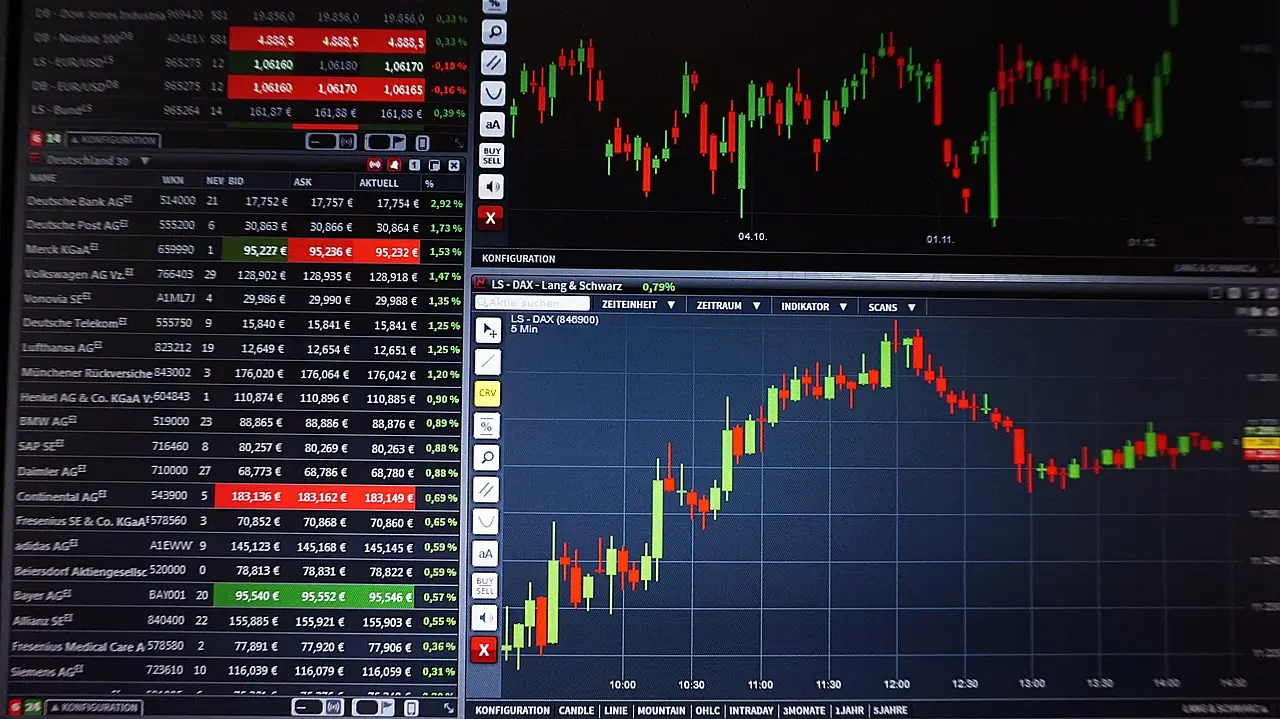
Jensen Huang's five-sentence statement added roughly $90 billion to Nvidia's market value in ten minutes on Tuesday morning. The stock sat at $150.58 just before 11 a.m. ET, down 3.6% on the day and at its low. By 11:05 a.m. it traded at $154.36, up 2.5% from that low, and across Nvidia's 24.1 billion shares the move was worth $91 billion.
The gain did not hold. By 2:55 p.m. the stock had given back about 43% of it, sitting at $152.75, down 2.2% on the day. The whole thing played out hours before an earnings report that options traders expect to move the stock about 8% in either direction.
What did Huang actually say?
Huang offered to return as chief executive — conditionally. "If the Board of Directors decides that my return is in the best interest of our shareholders, our employees, the company, and America, I would be honored to answer these calls and return as CEO," he said in a written statement. The Wall Street Journal reported it and investingLive published the full text.
He opened with an apology. "I did not live up to the standards expected of everyone at Nvidia. I created problems for the Board that I deeply regret. I own my mistakes completely."
Read plainly, the ten-minute jump is the market's first price on the board's answer: about $90 billion for the chance that Huang returns. That is a small fraction of what the scandal has already cost.
The takeaway: traders bid up the possibility of Huang's return before anyone with authority said it was on the table.
Where the board actually stands
The board has not answered. CNBC reported on Monday that directors are not considering a return and are focused on the review being run by the law firm Wachtell Lipton.
The leadership picture looks like this:
- Chief financial officer Colette Kress is interim chief executive and leads Tuesday's earnings call.
- Harvey Jones chairs the board.
- A board representative said Friday that the company was choosing a search firm for a permanent chief executive.
- At midday Tuesday, The Wall Street Journal reported that Nvidia has hired Heidrick & Struggles, and that the firm is in talks with candidates including Arm chief executive Rene Haas.
- The board also created a National Security and Export Control Oversight Committee on Tuesday, Reuters reported.
Huang resigned on November 12 after 33 years running the company he co-founded. An online petition for his return has passed 180,000 signatures. Two large shareholders — Brad Gerstner of Altimeter and Gavin Baker of Atreides — have asked the board in writing to keep the option open.
The takeaway: pressure to bring Huang back is real, but the directors' public posture is process first, decision later.
How much has the scandal cost?
Nvidia closed at $186.64 on Friday, November 6, the last session before the board opened its review of Huang that weekend. On Monday it closed at $156.14, down 16.3%. Over the same seven sessions, the VanEck Semiconductor ETF — the fund most investors use to own the chip group — fell 0.4%.
The gap is Nvidia's own: about $735 billion of market value gone while the group stood still. Nvidia is the fund's largest holding, which means the rest of the group actually did a little better than flat.
The split inside that window is the useful part. Between November 6 and November 11, the last close before the Journal reported that the board was preparing to remove him, Nvidia fell 6.9% while the chip fund rose 9.3%. That was the week of the affair and the spy reports. From November 11 to Monday, Nvidia fell 10.1% and the fund fell 8.9%. Since the board moved, the stock has mostly traded with its group.
So the market punished the scandal, then treated the ouster as one more chip stock in a selloff. Against that backdrop, the $91 billion Huang's statement recovered in ten minutes is about one eighth of the discount. At $152.75 at 2:55 p.m. ET, each 1% move in the stock is worth about $37 billion.
The takeaway: the bounce matters, but it covered barely an eighth of a $735 billion hole measured against Nvidia's own peer group.
What happened the last four times a board took the boss back?
Boards have reversed themselves before. The stock record of what followed is mixed, and the pattern inside it is consistent.
Sam Altman, OpenAI, November 2023. OpenAI's board removed Altman on Friday, November 17, 2023. Microsoft, which had put $13 billion into OpenAI, led the push to reinstate him over the weekend. On Sunday night, Satya Nadella announced that Altman and president Greg Brockman would join Microsoft to lead a new AI research team. On Monday, 738 of OpenAI's 770 employees signed a letter saying they would follow him there. Late on Tuesday, November 21, the board agreed in principle to bring him back. Five days.
OpenAI is private, so Microsoft's stock is the public record: it fell 1.7% the day Altman was fired, rose 2.1% to a record close the Monday he was hired, and ended that Wednesday 2.2% above the Friday close. A year after his return, it was up 10.4%.
Bob Iger, Disney, November 2022. Disney's board removed Bob Chapek on a Sunday night, November 20, 2022, and brought Iger back less than a year after he had left. The stock rose 6.3% the next day. Then it gave the pop back: a month later it was 5.3% below the Friday close before the announcement, and a year after his return it was 3.2% lower, having touched a low 18.7% under the return-day close in October 2023. Two years on, it was up 17.6%.
Howard Schultz, Starbucks, January 2008. Schultz took the chief executive job back on January 7, 2008, replacing Jim Donald after the stock had lost about half its value in a year. Shares rose 8.1% the next day. Then the recession arrived: by November 2008, the stock was 61% below the day he returned, and a year on it was still down 45.6%. Five years on, it was up 217%. The return was right and the year after it was brutal.
Michael Dell, Dell, January 2007. Dell's board replaced Kevin Rollins with the founder on January 31, 2007. The stock closed at $24.22 that day and rose 3.9% after hours on the news. It never got back there. Michael Dell and Silver Lake took the company private in October 2013 at $13.88 a share including a special dividend — 42.7% below the close on the night he returned. Steve Jobs's 1997 return to Apple, the case everyone cites, is the exception, as 24/7 Wall St. examined on Sunday.
| Return | Next session | One year on |
|---|---|---|
| Altman, via Microsoft, Nov 2023 | +2.1% | +10.4% |
| Iger, Disney, Nov 2022 | +6.3% | -3.2% |
| Schultz, Starbucks, Jan 2008 | +8.1% | -45.6% |
| Dell, Jan 2007 | +3.9% after hours | -42.7% at the 2013 buyout |
The return itself was worth 2% to 8% on the day. The year after was decided by the business each company was in: an AI boom, a streaming war, a recession, a PC market that was leaving.
The takeaway: a comeback pop is close to automatic; what follows it is not.
What does this mean for a holder?
Take a scenario from the source: a retired engineer, 66, and his wife, 63, who bought 2,000 Nvidia shares in November 2016 for about $4,500 and never sold. At the October 6 record, the shares were worth $478,480, about 24% of the couple's $2 million. On Monday's close they were worth $312,280. At $152.75 at 2:55 p.m. ET on Tuesday, they were worth $305,500 — $172,980 below the record and about 17% of what the couple has left.
Tuesday's ten-minute jump was worth $7,560 to them. The 8% move options traders expect this week is $24,440 either way. A return-day pop in the historical range of 2% to 8% is $6,110 to $24,440, one time. The year after, across the four cases, ran from a 45.6% fall — the Starbucks path, worth $139,453 on this position — to a 10.4% rise, the Microsoft path, worth $31,654.
The board's answer is a one-day number; the quarter is a one-year number. Nvidia's own outlook for the quarter was $108 billion in revenue, plus or minus 2%, and analysts expect about $109 billion and $2.47 a share. The January-quarter outlook Kress gives on the call matters more than either.
The decision for the couple is about size. A 17% position in one stock is large for people living on the portfolio. Trimming 1,000 shares at $152.75 raises $152,750 and realizes a $150,483 long-term gain; at the 15% rate that applies to a couple with taxable income up to $613,700 in 2026, the federal tax is $22,572, plus $5,718 of the 3.8% surtax if their income is over $250,000. Holding keeps the full position through an 8% night and whatever the directors decide. There is a middle path: trim to a size they could watch fall 46% without changing their plans, and let the board's answer be a bonus rather than a bet.
The takeaway: position sizing, not the board's decision, is what this household actually controls.
What happens next
Huang's offer was worth about $90 billion in ten minutes — about one eighth of the more than $700 billion gap Nvidia has opened against its own group since the scandal broke. The last four boards that took the boss back got a 2% to 8% pop the next day, then a year decided by the business. Nvidia's directors can answer before the call, on it, or not at all. The numbers Kress reads at 4:20 p.m. ET will outlast whatever they say.
Source: 247wallst.com
More from Sophie Lindqvist
Show full bio
Staff writer covering regulation, policy and their impact on artificial intelligence and machine learning at AI In Context.
749 articles