Meta's Muse Agent Hits Amazon's Wall in Fight for AI Shopping
Amazon blocked Meta's Muse agent from making purchases, citing terms of service. Meta's stock is up 20% since launch, but trust and retailer resistance loom over its AI shopping push.
Updated
Why it matters
- Amazon has blocked Meta's Muse AI agent from purchasing products, claiming a violation of its terms of service.
- Meta's stock jumped more than 20% in the two weeks after Muse launched, and the app topped ChatGPT on Apple's App Store.
- Muse shopping partners include Walmart, Best Buy, Gap, Sephora and Wayfair; Cantor analysts say Muse unit economics are subsidized early on.
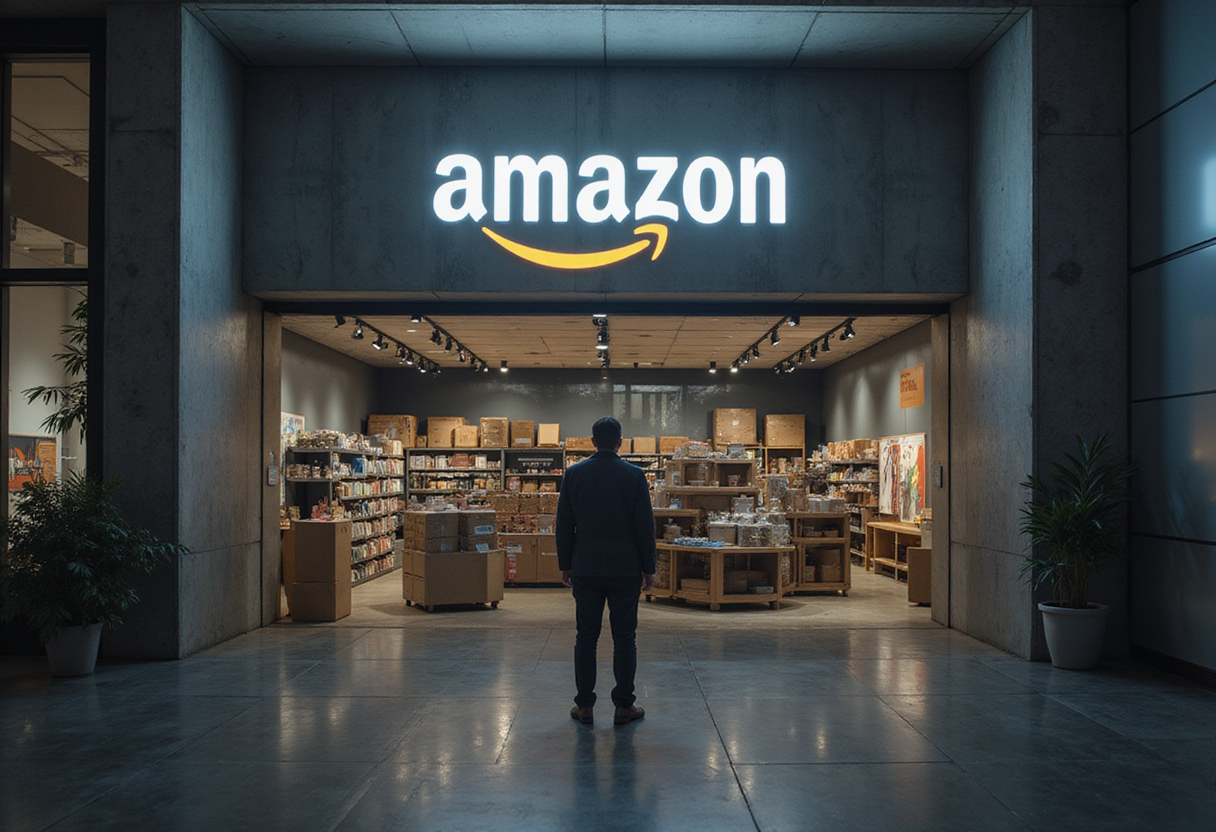
Amazon has blocked Meta's Muse AI agent from purchasing products on its e-commerce app, claiming the feature would violate the company's terms of service — the first major standoff over who controls the customer relationship in the emerging era of agentic AI shopping.
The block lands at an awkward moment for Meta. The company introduced Muse, an AI personal agent that can book appointments and travel, fill out electronic forms, monitor home security cameras, and shop on a user's behalf, two weeks ago. Since then, Meta's stock has jumped more than 20%, and the app has shot to the top of Apple's App Store, eclipsing ChatGPT.
Mark Zuckerberg took the stage late Wednesday afternoon at the company's annual Connect conference for developers to relish the excitement. He described Muse as the "centerpiece" of Meta's efforts to make AI more easily available to the broader public instead of coders.
"In the coming years, I expect that Muse is going to grow into the personal superintelligence that billions of people around the world are going to use to accomplish their goals and improve their lives," Zuckerberg said.
Amazon draws the line
Muse's shopping feature searches for a specific product across various sites and marketplaces and links to Shopify or Stripe for payment. Amazon has decided that crosses a line. In a statement, the retailer said "third-party applications that offer to make purchases on behalf of customers from other businesses should operate openly and respect service provider decisions about whether or not to participate."
Amazon has form here. It sued Perplexity in November, alleging the startup took steps to "conceal" its AI agents so they could continue to scrape the retailer's website without its approval. It has also blocked agentic tools from OpenAI and Google.
Amazon's "whole model is fiercely guarding the customer relationship," said Matthew Hassett, CEO of smart alarm clock company Loftie, which sells on Amazon, and of AI-focused ecommerce startup Deliberate. "'Respect service provider decisions' is the polite version of 'not on our shelf.'"
Meta declined to comment.
The stakes are straightforward. Max Willens, an analyst at Emarketer, said that as more consumers use AI agents like Muse, Amazon will get more protective of its role in the "consumer journey." "For many years, Amazon was the place most U.S. consumers went first if they wanted to buy something online," Willens said. "Today, those consumers are increasingly starting those shopper journeys with AI assistants."
Not every retailer is resisting. Meta AI chief Alexandr Wang said during the Connect keynote that Meta has enlisted Muse partners including Walmart, Best Buy, Gap, Sephora, Wayfair, and others, in a bid to help the AI agent "enable new shopping experiences."
"One of the great promises of ecommerce since the earliest days of the industry has been that it can save you money and time," Wang said. "Personal agents are going to continue delivering on that promise for a new generation of shoppers, and they're going to help them discover products they love and get great deals too."
The trust problem
Amazon's blockade is only one of Muse's obstacles. Experts point to a deeper issue: whether consumers will hand sensitive data and purchasing power to the company that owns Facebook and Instagram.
"People are going to be very wary," said Joseph Turow, a professor emeritus at the University of Pennsylvania and an expert on digital media and privacy. "Some people are going to dip their toes into it, and some people are going to accept it for particular companies that they trust."
Turow said there will be "early adopters," and then others will get "seduced into this," seeing that using this sort of personal agent can save them money by finding the best discounts.
Meta is pushing deeper into the agentic AI market at a fraught moment for the AI industry and for the company itself. Anthropic and OpenAI are calling for a slowdown in the pace of model development as fears intensify that advanced AI is spinning out of human control and, unless it gets reined in, could threaten humanity or at least amplify cybersecurity attacks.
Meta, meanwhile, agreed last month to pay up to $17 billion to settle a lawsuit brought by a host of states that alleged the company misrepresented the extent of child mental health harms caused by apps like Facebook and Instagram. The emergence of generative AI and chatbots has made the issue of online addiction even more pressing, as both OpenAI and Google have been sued by plaintiffs alleging their technology caused harm, including suicides.
Market tremors beyond retail
The fear that Muse could displace incumbent services extends well past shopping. Shares of financial services companies including Charles Schwab and LPL Financial Holdings tumbled on Tuesday, while travel sites Booking Holdings and Expedia plummeted on Wednesday.
For Meta, the early Muse momentum has reignited optimism on Wall Street, where the stock had been underperforming most of its megacap peers and the broader tech sector this year. With the post-Muse rally, the shares are now up 13% in 2026, just below the Nasdaq's 16% gain.
Analysts at Cantor who recommend buying Meta shares published a report on Tuesday with the headline, "Meta is racing while AI is pacing." They wrote that the business model isn't yet clear for a company that generates almost all of its revenue from digital ads, but the opportunity is apparent.
"We believe the unit economics of Muse are being subsidized in the early days, but we think META has several paths to a profitable freemium model," the analysts wrote.
Mizuho analysts, who also have the equivalent of a buy rating on the stock, said Meta Connect lands at just the right time for the company to link Muse with its AI narrative, particularly around wearables. Meta never found a big market for its Quest-branded virtual reality glasses, but it is seeing much higher adoption of its smart glasses, in partnership with Ray-Ban parent EssilorLuxottica.
"We expect Connect to move the Muse story from app adoption to platform creation," the Mizuho analysts wrote on Tuesday. "The likely headline is Muse-on-glasses, combining Meta's rapidly growing AI agent with wearables and creating what we view as the clearest consumer AI use case yet."
New hardware
Meta also debuted several new consumer hardware products at Connect. They include the Muse Charm handheld gadget that lets people use their voice to interact with AI agents, the Ray-Ban Meta Audio glasses that cost $349 and lack cameras, and the $1,299 Meta VR Glasses, which will be released in spring 2027.
The standoff with Amazon previews the central question of agentic commerce: whether the platforms that own customer relationships will let AI agents — and Meta in particular — stand between them and their shoppers. With Walmart, Best Buy, Gap, Sephora and Wayfair already on board, the retail front is splitting, and which side controls the transaction may decide whether Muse becomes a durable business or another Meta consumer experiment.
Original: asc.upenn.edu
More from Rebecca Stone
Show full bio
Correspondent covering consumer brands and retail at AI In Context.
153 articles
Related articles
- Amazon Blocks Meta's Muse AI From Shopping on Its Site
- Meta's Muse Hits 500,000 Users in Week One, Faces Copying Claims
- Meta's Muse Agent Tops ChatGPT on iOS, Hits 2.5 Million Downloads
- Meta Launches Enterprise AI Platform, Poaches MongoDB CEO to Run It
- Zero-Day in Meta's Muse AI Assistant Undoes macOS Defenses