Getac's MX60 and MX60W put 13 TOPS of AI at the tactical edge
Getac's MX60 and MX60W are six-inch defence handhelds with 13 TOPS of local AI, ATAK and WINTAK support, rugged certifications and January 2027 availability.
Why it matters
- The MX60 and MX60W are scheduled to become available in Australia and New Zealand from January 2027.
- Getac says both six-inch devices use Qualcomm's QCS6490 chipset and offer up to 13 TOPS of on-device AI.
- The MX60 will launch first with Android 15 without Google Mobile Services, followed by Android 17 with GMS.
- Both 410g devices are claimed to meet MIL-STD-810H and IP67 and to hold MIL-STD-461G certification.
- Getac says the devices withstand 1.8-metre drops and operate from -21°C to 63°C.
Getac will launch the MX60 and MX60W in Australia and New Zealand from January 2027, with each six-inch rugged device supporting up to 13 TOPS (trillion operations per second) of on-device artificial intelligence processing.
Getac announced the two tactical end-user devices on November 18, 2026. Both use Qualcomm's QCS6490 chipset, according to the company.
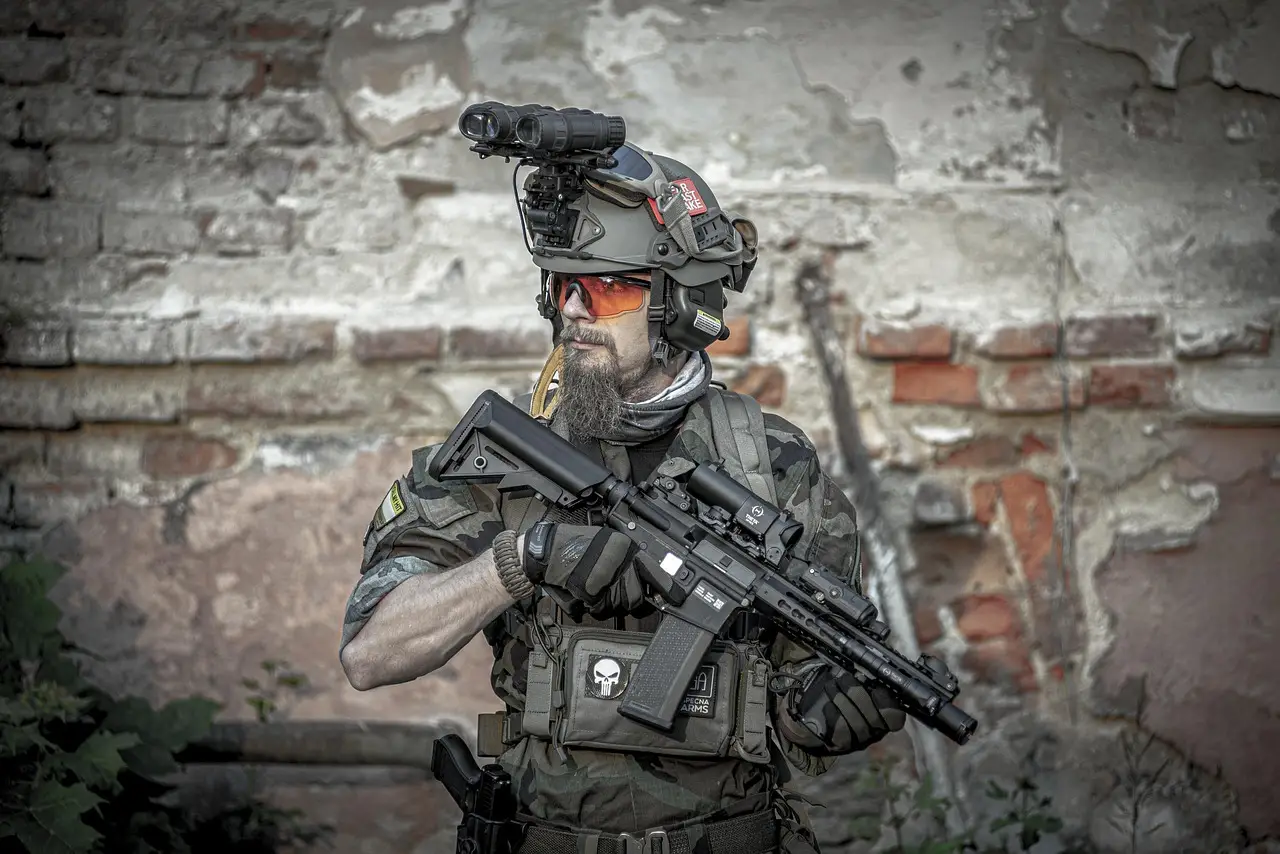
Getac says armed forces in Australia, New Zealand and other allied markets have increased their focus on dismounted digital systems. Those systems connect personnel on foot with sensors, vehicles, command networks and mapping tools.
Getac says frontline operators need computing, communications and location services in difficult conditions. It is targeting military users who need smaller handhelds rather than larger tablets or laptops.
Getac says the devices are designed to work with ATAK and WINTAK soldier systems. Those systems provide real-time situational awareness and tactical information to personnel in the field.
The MX60 will launch first with Android 15 without Google Mobile Services. Getac plans to follow that release with an Android 17 version with Google Mobile Services, while the MX60W runs Windows 11 IoT Enterprise LTSC for organisations that standardise on Microsoft software environments.
Getac places both products at the tactical edge, the point where frontline operators use computing directly. The launch offers two operating-system routes around the same compact, military-focused form factor.
What does Getac say the devices represent?
Getac, known for rugged computing products and mobile video systems, calls the MX60 pair part of a broader product strategy. The company also frames the launch as part of a wider supplier push toward more computing capability in smaller, ruggedised formats.
James Hwang, President, Getac Technology Corporation, said:
"Modern defence is increasingly defined by information. Mission success depends on how quickly data can move from sensor to soldier to commander, and how intelligently it can be processed at the very edge of the network.
Getac is evolving from a rugged device maker into a mission-critical platform provider, building an ecosystem where devices, software and connectivity work together across every domain. The MX60 and MX60W are an important step in that journey, bringing on-device intelligence and dependable interoperability into the hands of the individual soldier," said James Hwang, President, Getac Technology Corporation.
His statement makes interoperability and ecosystem integration as central to the pitch as the rugged enclosure. Getac is selling the idea of a coordinated platform, not only a pair of protected handheld computers.
Getac wants a larger platform role, but the launch evidence remains a product announcement rather than customer proof.
Why does local AI matter?
Getac says the shared Qualcomm platform supports on-device AI processing of up to 13 TOPS. That capability lets users handle AI workloads locally instead of relying on distant network resources.
Getac says the distinction matters when communications links are constrained or unavailable. Local processing can therefore keep AI tools available when a tactical network cannot provide remote resources.
However, the announcement gives no task-specific benchmark, model, latency or power figure for the 13 TOPS claim. A processing-capacity number alone does not establish application performance.
Getac does not identify specific models, workloads, latency figures or power measurements for the AI feature. Local AI may reduce dependence on tactical networks, but Getac has not yet demonstrated performance on a named task.
How are the handhelds built for field networks?
Each device has a six-inch full-high-definition LumiBond display rated at 1,000 nits. Getac says the screen dims to 0.6 nits for low-light and night operations and accepts touch input with gloves.
Both models weigh 410g and support optional tactical vest and wrist mounts for hands-free operation. Multiple programmable buttons give direct access to selected functions without touch-menu navigation. Getac says those controls help in wet conditions or while wearing gloves.
- Dedicated L1 and L5 GPS support provides location services.
- Wi-Fi 6E and Bluetooth 5.2 support links to tactical hubs and peripherals.
- USB 3.2 Gen 1 Type-C provides a wired connection.
- The MX60 includes MicroSD support; the MX60W includes a smart card reader.
Getac says the design supports information sharing within integrated soldier systems, including command-and-control interoperability and links to uncrewed systems. The company positions the handhelds as network nodes rather than standalone terminals, connecting personnel with sensors, vehicles, command networks and mapping tools. Connectivity and shared battlefield data matter more to the design than processing power alone.
What do the durability and security claims cover?
Getac says the MX60 and MX60W meet MIL-STD-810H and IP67 standards. The company says both withstand drops from 1.8 metres and operate in temperatures from -21°C to 63°C.
They also hold MIL-STD-461G certification for electromagnetic compatibility, which Getac links to operation near radios and other electronic systems. The announcement cites no test methods, configurations or independent laboratory results for those durability and certification claims.
Security features include Secure Erase, which Getac says permanently deletes all data stored on a device. Getac considers the function relevant because defence handhelds may face loss, damage or capture in operational settings.
Getac does not describe the deletion process, completion reporting or interaction with protected storage. The physical claims are specific, while Secure Erase remains described only at feature level.
What remains unproven before January 2027?
Getac has set January 2027 as the start of availability in Australia and New Zealand, but not an exact release day. The announcement gives no unit price, ordering timetable or named defence buyer.
It also does not say when the MX60's Android 17 and Google Mobile Services version will arrive. ATAK and WINTAK interoperability by version, and deployment details for links to uncrewed systems, remain unspecified.
Those gaps leave configuration, support, local AI performance and field interoperability as open questions. They matter because Getac's strategy depends on devices working as connected parts of larger soldier systems rather than as isolated screens.
Getac's clearest case is that compact, rugged devices can serve as information nodes for personnel on foot. The January 2027 launch will test whether Getac can turn those specifications into dependable field equipment.
Source: itbrief.com.au
More from James Calloway
Show full bio
News editor covering people, launches and day-to-day practice in artificial intelligence and machine learning at AI In Context.
722 articles
Related articles
- Qualcomm's Snapdragon 8 Elite Gen 6 Puts AI at the Center of Android
- KORA Unveils Linux Desktop With On-Device AI for Snapdragon PCs
- Apple’s M6 iMac Claims Fivefold AI Gains, Starting at $1,499
- Rebellions Plans R200 Integration for Korean Sovereign AI
- Aikon Brings AI Chatbots to a Nearly 20-Year-Old Nokia 6300