Aikon Brings AI Chatbots to a Nearly 20-Year-Old Nokia 6300
Aikon links the 2G Nokia 6300 to Claude, ChatGPT, Gemini and Grok through a Go server, while TLS obsolescence and T-Mobile’s 2G shutdown block most modern use.
Why it matters
- Aikon connects the Nokia 6300 to Claude, ChatGPT, Gemini and Grok through a Go server that splits replies into 8 kB blocks.
- The phone client targets Nokia S40 and S60 devices with a 240x320 display.
- Aikon supports photo analysis, voice messages up to 30 seconds, offline response storage and server-side retention for up to 30 days.
- Apple, Google, Microsoft and Mozilla deprecated TLS 1.0 in 2020; an estimate put remaining website support below 25% as of mid-last year.
- T-Mobile ended its US GSM network in August, leaving the country without 2G service for the original Nokia 6300.
By Rebecca Stone
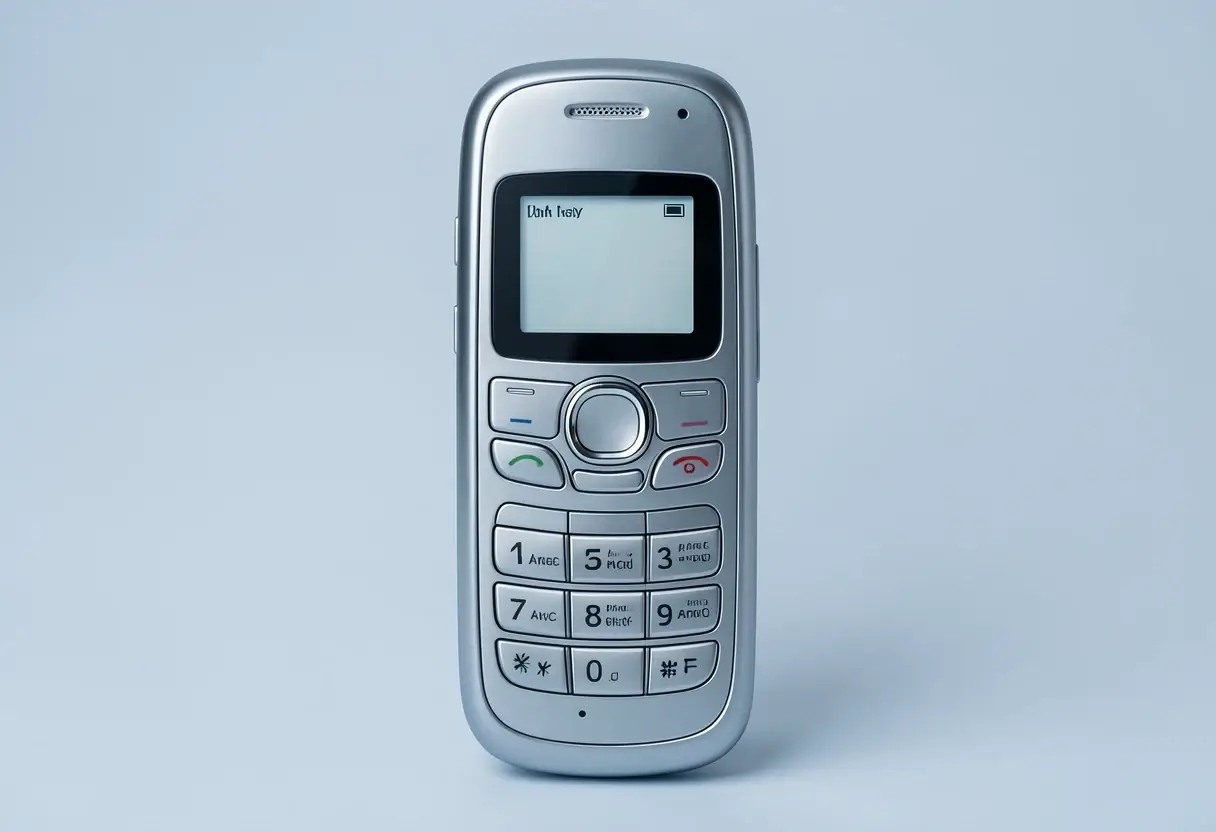
Aikon can connect a Nokia 6300 to Claude, ChatGPT, Gemini and Grok by dividing their responses into 8 kB blocks that the 2G handset can read. The capability arrived in late September through an X demonstration by Turkish entrepreneur Emir Karşıyakalı, who launched the software as “Claude S40” before renaming it Aikon, Nokia spelled backward.
The project matters because it addresses the browser and interface limits of a feature phone while leaving two larger constraints intact: disappearing 2G coverage and unsupported TLS 1.0 security.
What makes the original Nokia 6300 obsolete?
Nokia released the 6300 nearly 20 years ago, in the same month Steve Jobs would introduce the iPhone at MacWorld 2007. The handset would go on to become one of Nokia’s best-selling phones, helped by an understated, attractive design, an affordable price and easy-to-use software. This account concerns the original 2G model, not the recent 4G rerelease.
In 2026, the original 6300 has a sharply limited practical life. It is a 2G phone, and finding a carrier that still operates the old network becomes harder with each passing year. A software bridge can preserve access to cloud services, but it cannot supply cellular coverage.
The handset’s browser never received support for internet security protocols beyond TLS 1.0. Apple, Google, Microsoft and Mozilla came together to deprecate that standard in 2020. The move removed a protocol that the 6300 depends on from most modern websites.
An estimate cited for the middle of last year put support for TLS 1.0 connections at less than 25 percent of all websites. In practical terms, the 6300’s stock browser can no longer reach much of the modern internet. The phone’s original web experience has therefore aged less because of screen size than because of protocol support and carrier availability.
How does Aikon connect a 2G phone to modern chatbots?
In late September, Karşıyakalı posted to X to demonstrate “Claude S40,” an app he had built using the method called vibe coding to make his old Nokia 6300 more usable in 2026.
The original version connected the 6300 to Claude through a Java and Go backend. He has since expanded the software to work with all major chatbots, including ChatGPT, Gemini and Grok, and renamed it Aikon, Nokia spelled backward.
Support is limited to a phone running either Nokia’s S40 or S60 operating system. The app then relies on a Go server to handle the connection, protect the API credential and format each model’s response for the small screen.
The server holds an API key from Anthropic, Google, OpenAI or SpaceXSI, depending on the selected service. It relays requests to Claude, ChatGPT, Gemini or Grok, then truncates the replies into 8 kB blocks the old phone can read. The phone exchanges compact messages with that server rather than loading the providers’ full browser interfaces.
Users must also enable token billing with the provider. Aikon therefore depends on paid cloud models and a Go intermediary; no language model runs on the Nokia itself. The old handset acts as the terminal, while the server and the model vendor perform the computation.
What can the phone actually do?
Aikon turns the 6300 into a narrow terminal for cloud chatbots rather than a repaired general-purpose browser. The implementation remains a gimmick in practical terms, but it is robust and thoughtful, with features designed around the Nokia’s keypad, display and network constraints.
- A reading mode includes a dedicated keypad shortcut, making responses easier to read on the 240x320 display.
- A memory card can store chatbot responses for offline reading.
- Users can send photos to a selected chatbot for analysis.
- Voice messages can run up to 30 seconds, with an OpenAI model handling speech-to-text conversion.
- The server can hold messages for up to 30 days.
- The app supports English, Spanish, Portuguese, French, German, Russian, Indonesian and Turkish.
The photo and voice paths still use cloud services, and the 30-day retention setting applies to messages held on the server rather than files saved directly to the memory card. That distinction matters for anyone deciding what personal material to send through the bridge.
Karşıyakalı has open sourced the app so other developers can continue building on it. That makes the code available beyond his personal Nokia setup, though each user still has to assemble a server, API credentials, token billing and carrier access.
Why can’t most US users run it?
The radio dependency sets the hard limit. This summer, T-Mobile shut down its old GSM network in August, and the shutdown took the United States’ last 2G network offline. For US users, there is no practical way to run Aikon on the original 6300 because the handset cannot connect to the intermediary.
Software cannot replace missing cellular service. Aikon addresses browser age and screen size, but it cannot recreate a retired GSM network or restore TLS 1.0 support in Nokia’s unchanged browser. The distinction between software obsolescence and infrastructure obsolescence determines whether the project works at all.
Users outside North America can follow the installation instructions on GitHub. They still need S40 or S60 hardware, a Go server, an API credential with token billing enabled, and a carrier that offers 2G service. The 240x320 display and keypad remain the interface; the model runs elsewhere.
What does the open-source release change?
Aikon’s open-source release gives other developers a way to extend the bridge and maintain it as phone software, server software and model APIs change. It does not alter the market constraint facing legacy devices: carriers are retiring 2G, and browser security is moving away from protocols the original Nokia cannot support.
The stakes are therefore operational rather than speculative. Aikon can extend the useful life of a handset with a network connection, but it cannot remove the cost of cloud inference, server maintenance or carrier coverage. The next test is whether the open-source community can sustain Aikon for a shrinking 2G user base; without continued carrier support, the project can preserve the 6300’s interface but not its path onto the network.
Original: hmd.com
More from Rebecca Stone
Show full bio
Correspondent covering companies, deals and strategy in artificial intelligence and machine learning at AI In Context.
378 articles
Related articles
- Qualcomm's Snapdragon 8 Elite Gen 6 Puts AI at the Center of Android
- Qualcomm's new Snapdragon chips push AI agents on phones
- OpenMobile-2 hits 59.6 on SPA-Bench, topping open smartphone agents
- China clears Alibaba's Qwen models to power Apple Intelligence
- OpenAI Partners With Deutsche Telekom to Bring AI Across Europe