Qualcomm's Snapdragon 8 Elite Gen 6 Puts AI at the Center of Android
Qualcomm's Snapdragon 8 Elite Gen 6, built on TSMC's 2nm process, runs 30-billion-parameter models on-device as the smartphone market heads for a 14% contraction in 2026.
Updated
Why it matters
- Qualcomm unveiled the Snapdragon 8 Elite Gen 6 and 8 Elite Extreme Gen 6 chipsets on Tuesday, built on TSMC's 2-nanometer process and competing with Apple's A20 Pro.
- The Snapdragon 8 Elite Extreme Gen 6 can run AI models with 30 billion parameters on-device, without relying on the cloud.
- Counterpoint Research expects the smartphone market to shrink 14% in units shipped in 2026, with a possible further 1% decline in 2027, driven by skyrocketing memory costs.
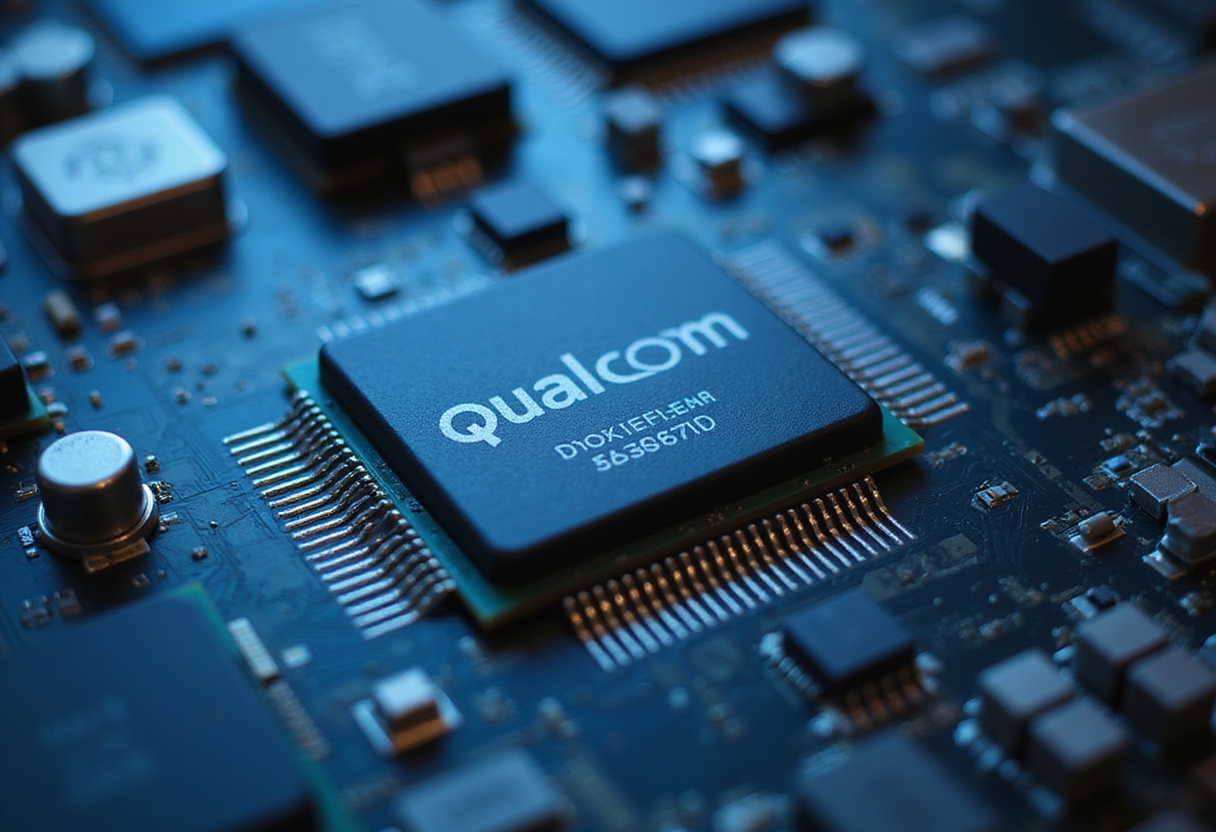
Qualcomm on Tuesday unveiled its newest Android chipsets, the Snapdragon 8 Elite Gen 6, built to run artificial intelligence models directly on the phone and positioned squarely against Apple's A20 Pro in iPhones.
The chips will be manufactured on Taiwan Semiconductor Manufacturing Co.'s 2-nanometer process, Qualcomm said in a press release. Premium smartphones from Motorola, Xiaomi and ZTE will carry the new silicon. Qualcomm is splitting the line in two: a standard version and an "extreme" variant with additional capabilities, branded the Snapdragon 8 Elite Extreme Gen 6.
The launch lands in a shrinking market. The global smartphone industry is reeling from a contraction driven by skyrocketing memory costs, which have pushed up the prices of finished devices. Counterpoint Research expects the overall smartphone market to shrink 14% in units shipped in 2026, with a potential further decline of 1% in 2027. Smartphone makers have responded by concentrating on the premium tier, targeting consumers with more disposable income — exactly the segment Qualcomm's flagship chips serve.
An 'AI hub' in your pocket
Qualcomm is positioning phones running its high-end chips as an "AI hub" — a device able to process AI models and produce tokens without relying on the cloud. The framing mirrors Apple's. At a launch event earlier this month, Apple presented its iPhones as "intelligent personal hubs" capable of on-device AI processing. The two companies are now making the same bet: that the next differentiator in smartphones is not the camera or the screen, but the silicon that runs AI workloads locally.
"We're going into this transition from what is a very phone-centric model to now an agentic-centric model for new experiences," Qualcomm CEO Cristiano Amon said on Tuesday at the launch event.
The stakes are considerable. Qualcomm supplies the application processors for most premium Android phones sold in the United States, and its revenue depends on holding that position as AI redefines what a flagship device does. Apple designs its own chips, so every iPhone sold is a phone Qualcomm does not power. If on-device AI becomes the reason consumers upgrade, the company that ships the most capable AI silicon wins the premium tier.
What the chip actually does
Beyond the central processing unit, the new chipsets include a graphics processing unit and a neural processing unit dedicated to AI workloads. The NPU can handle agents running in the background — software that acts on the user's behalf continuously rather than responding to discrete commands. Qualcomm also added security features to control how those agents access sensitive data, a recognition that background software granted broad device permissions creates new risks.
The top-tier chipset carries a concrete number: the Snapdragon 8 Elite Extreme Gen 6 can run models with 30 billion parameters on the device itself. That figure matters because it defines which AI models can operate without a round trip to a data center — faster responses, lower latency, no reliance on connectivity, and no data leaving the phone.
Amon spelled out the shift in how he expects people to use their devices. "AI will now require the device to do much more than just execute commands, and it's going to be less about navigating apps, and it's going to be about completing tasks for you," he said.
Google joins the pitch
During Tuesday's livestreamed launch, Amon brought up Rick Osterloh, Google's head of platforms and devices. Osterloh said Google's Gemini assistant will be able to understand the user's context — if the person is in a car, for example — using the chip's processing power and the phone's sensors.
The appearance signals how tightly Qualcomm's AI ambitions are bound to Google's. Gemini is the default assistant on Android, and context-aware behavior of the kind Osterloh described depends on sustained on-device inference — reading sensor signals and running models continuously. That workload falls on the NPU, which is precisely what Qualcomm built the Gen 6 chips around.
A crowded premium tier
The competitive picture is tightening. Apple's A20 Pro already carries the "intelligent personal hub" banner, and the iPhone maker controls both its silicon and its software stack end to end. On the Android side, Qualcomm must deliver the AI capability while its customers — Motorola, Xiaomi, ZTE and others — fight over a premium segment that is becoming the industry's only reliable growth area as memory prices squeeze budgets everywhere else.
The 2-nanometer manufacturing node is part of that argument. TSMC's most advanced process offers the power efficiency that sustained background AI processing demands, since an NPU running agents continuously drains a battery in ways earlier chip designs were not built to withstand.
The first phones with the Snapdragon 8 Elite Gen 6 will come from Qualcomm's announced partners, with the premium Android flagships of the coming cycle serving as the test of whether "agentic" experiences — AI completing tasks rather than waiting for commands — are something consumers will pay for. Counterpoint's forecast of a 14% market contraction in 2026 suggests fewer phones will ship overall; Qualcomm's bet is that the ones that do ship will need this chip.
Original: qualcomm.com
More from James Calloway
Show full bio
News editor covering industry trends and analytics at AI In Context.
144 articles
Related articles
- Qualcomm's new Snapdragon chips push AI agents on phones
- Qualcomm's Snapdragon Sound Elite Gen 2 Puts AI at the Center of Headphones
- Qualcomm's Snapdragon Sound Elite Gen 2 doubles on-device AI for earbuds
- Huawei and Alibaba Chip Blitz Arms Xi With Leverage Ahead of Trump Summit
- Qualcomm wants AI agents to spend your money — with your OK