US Factories Added 38,428 Robots Last Year — and Still Can't Hire
US factories installed 38,428 robots last year, up 12%, yet skilled-worker shortages persist. GM targets 20% more automation by 2028 as wages climb 25%.
Why it matters
- U.S. factories installed 38,428 industrial robots last year, up 12% year over year (IFR).
- GM targets a 20% increase in robot and automation use at North American plants by 2028, after agreeing to 25% base wage raises by April 2028.
- BLS projects industrial machinery mechanic jobs to grow 17.8%, from 446,900 to 526,600 by 2035.
- A3 reports North American Q3 robot orders of 10,989, up 24.8% year over year; automotive parts orders nearly doubled.
- In a CNBC survey, 81% of companies considering reshoring said they would rely primarily on automation rather than local hiring.
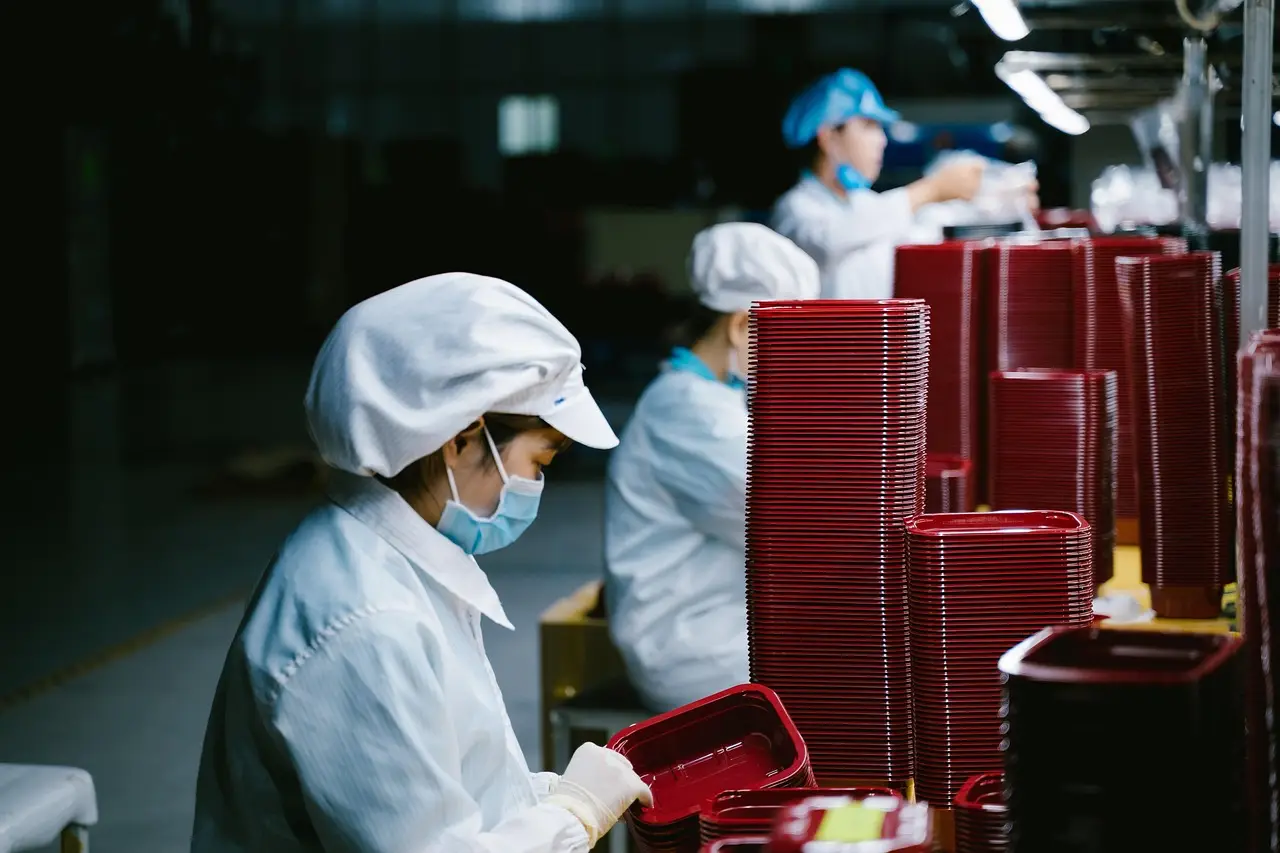
U.S. factories installed 38,428 new industrial robots last year, up 12% from the year before — and they still can't find enough skilled workers to staff their lines. That's the core paradox now reshaping American manufacturing. Companies hand repetitive and hazardous tasks to robots to cut labor costs and safety burdens, then discover they can't hire the people who install, operate and fix those robots. Even with faster automation, the U.S. will need skilled workers for years if it wants to rebuild a manufacturing base eroded over decades.
The latest evidence comes from two directions: wage-driven automation pushes at the automakers, and survey data showing companies planning to automate rather than hire when they bring production back to the U.S.
What is happening on factory floors?
According to the Financial Times on November 19, labor shortages persist at U.S. factories even after robots arrive. The machines handle welding and materials handling, but the skilled workers needed to install and run them stay scarce.
Wired's field reporting made the problem concrete. An Ohio manufacturer of metal automotive parts kept hiring employees even after assigning some welding processes to robots. The company bought 9 welding robots — and 1 ended up in storage because nobody could operate it. Management couldn't find applicants with shop-floor experience, so it switched strategy: recruit unskilled workers and train them in-house.
That's the mechanism worth understanding. Every robot on a line creates maintenance work. The more processes a company automates, the more equipment it must inspect regularly and repair when it breaks down. A survey by the American Skilled Trades Coalition identified technicians who install and maintain automated equipment as among the occupations facing the most severe hiring shortages.
The Bureau of Labor Statistics sees the same gap. The BLS projects the number of industrial machinery mechanics in the U.S. will rise 17.8% over ten years, from 446,900 last year to 526,600 in 2035, driven by automation at factories making electrical equipment, aerospace parts and medical devices.
The takeaway: robots don't replace the hiring problem, they move it up the skills ladder.
Why are wage increases speeding up automation?
Labor costs are the big reason companies buy robots even though they must separately staff maintenance roles. The 2023 collective bargaining agreements between the Detroit automakers and the United Auto Workers locked in steep raises.
Under its deal with the UAW, General Motors agreed to raise base wages 25% by April 2028, and GM estimated the agreement would add USD 575 in labor costs per vehicle. Ford, which settled with the union the same year, projected an additional USD 900 per vehicle. Facing those costs, GM set a target of increasing robot and automated equipment use at its North American plants by 20% by 2028.
Parts transport is a priority. GM plans to assign autonomous mobile robots the job of carrying parts around factories — work employees previously did — to cut labor costs per vehicle. It buys robots from outside suppliers and also assembles its own in-house-developed robots at its plant in Kokomo, Indiana.
The cost pressure now reaches into GM's supply chain. A finished vehicle's cost includes suppliers' labor, which is baked into parts prices. GM now requires parts suppliers bidding for new contracts to submit plans for automating their production processes, and it scores each supplier's automation efforts and factors those scores into contract evaluations.
In short: GM is pushing its wage problem — and its automation requirement — down to its suppliers.
Where do robots go first — and why hazardous work?
Workplace regulation shapes automation decisions as much as wages do. U.S. semiconductor factories can't simply assign new hires to chemical processes. Under Occupational Safety and Health Administration rules, before an employee can be assigned to work requiring a respirator, medical personnel must first assess whether that employee can work while wearing one. For tight-fitting respirators, employers must run a fit test before first use to confirm the actual model seals around the worker's nose and mouth — and repeat the test at least once a year.
That adds up. Every additional painter a company hires brings more pre-work procedures plus ongoing management costs. The OSHA staffing requirements, as summarized by the source:
- Medical evaluation — before work assignment: medical personnel assess whether the worker can wear a respirator and perform the work.
- Initial fit test — before first use of a tight-fitting respirator: check whether the actual model fits snugly around the nose and mouth.
- Periodic fit test — at least once a year: repeated fit testing incurs ongoing workforce-management costs.
One task semiconductor plants can hand to robots is replacing process-gas cylinders. When TSMC recruited gas and chemical equipment technicians for its Phoenix, Arizona plant, the main listed duties included replacing cylinders connected to production equipment on schedule. High-pressure cylinders are heavy, and workers must prevent leaks when disconnecting and reconnecting supply lines.
Samsung Electronics moved the same direction. The company received a U.S. patent last September for technology that uses mobile robots to replace cylinders. The robot moves along the production line, identifies the cylinder's position with a camera mounted at the end of its arm, and switches tools to manipulate valves and pipe connections in sequence.
Do companies plan to automate instead of hire?
For companies building new U.S. lines, deciding in advance which processes go to robots is essential. Simply transferring overseas operations raises local costs and requires staffing every shift with skilled workers at once.
A CNBC survey of supply-chain professionals from April last year shows how companies weigh those burdens:
- 57% identified costs as the biggest obstacle to moving production to the U.S.
- 21% cited securing skilled workers.
- 81% said that if they moved production to the U.S., they would rely primarily on automation rather than local hiring.
The order books reflect that intent. Beyond the IFR's 38,428 installations last year, the Association for Advancing Automation (A3) reported North American robot orders of 10,989 in the third quarter, up 24.8% year over year. Orders from automotive parts suppliers nearly doubled in a year, and semiconductor and electronics companies also substantially increased their orders.
What happens to production workers' jobs?
As robots spread, the jobs themselves change. In a World Economic Forum survey of roughly 1,000 employers across 55 countries, 58% of respondents said they expect robots and autonomous systems to transform how their businesses operate by 2030.
On the factory floor, tasks with repeated, predetermined motions change first. A study by Germany's Institute of Labor Economics (IZA) found that workers in occupations more affected by robotics performed fewer routine tasks. For welders, that means less time welding standardized products by hand and more importance on setting robot-arm paths and speeds for new parts.
Research published in the European Economic Review tracked what this does to hiring. Comparing German manufacturers' robot-adoption records with worker employment data, the study found that factories which introduced robots had more favorable employment conditions for occupations involving less repetition of the same tasks under fixed procedures.
That pattern matters most for U.S. factories running multiple products on a single line. When production repeats the same product, workers reuse the motions programmed into a robot. When the product changes, they must reset its path and speed to match new parts' specifications. At such plants, the ability to adjust equipment for new products and to identify the causes of defects is expected to become a key criterion for selecting and training production workers.
So the endgame isn't fewer factory workers — it's a different job description, built around robot operation, reprogramming and troubleshooting rather than repetitive manual work.
Source: economy.ac
More from Sophie Lindqvist
Show full bio
Staff writer covering regulation, policy and their impact on artificial intelligence and machine learning at AI In Context.
823 articles