GM's 20% Robot Push Aims to Shrink China's EV Price Edge
GM will boost plant automation 20% by 2028 and grade suppliers' robot plans, while BMW and Hyundai test humanoids — narrowing the wage gap behind China's EV price lead.
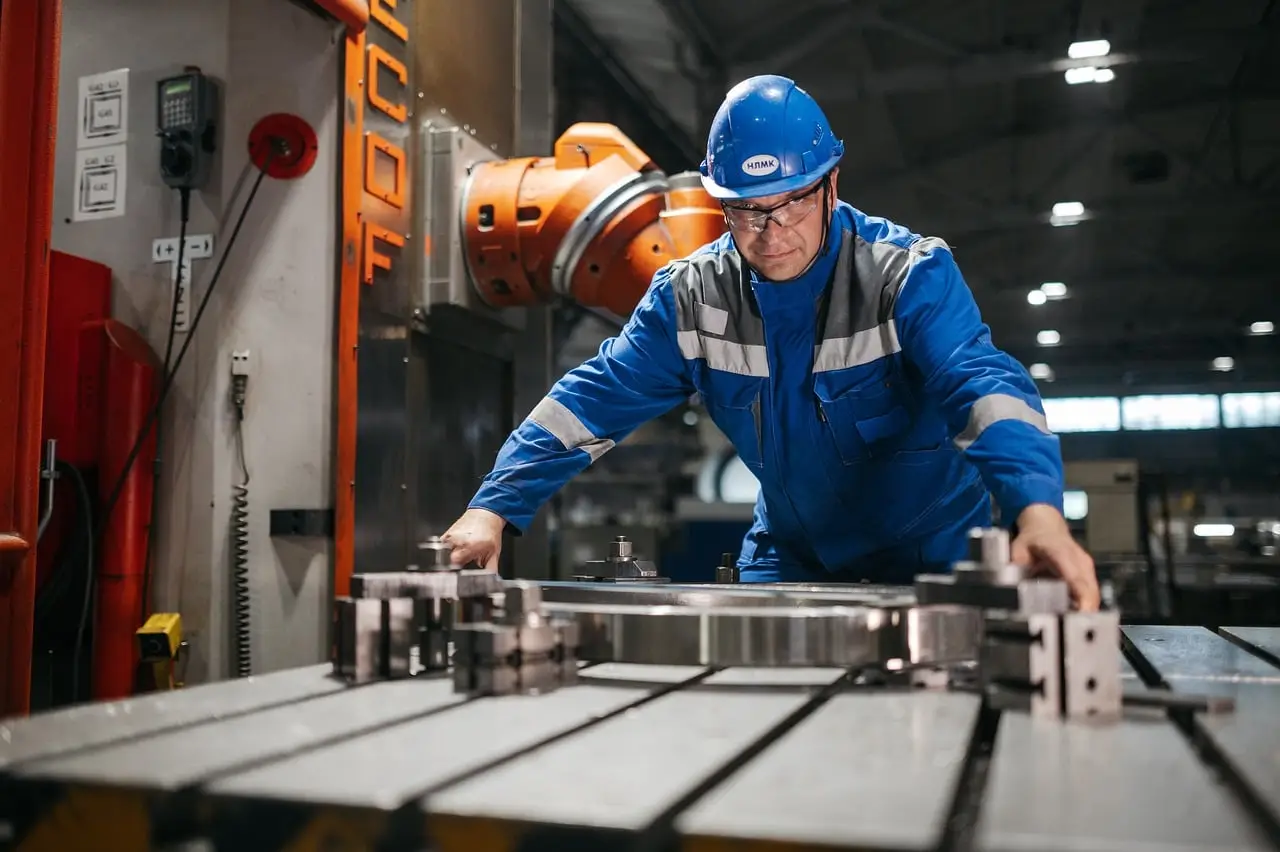
Why it matters
- GM targets a 20% increase in robot and automation use at North American plants by 2028, Reuters reported on November 17.
- GM's 2023 UAW deal adds an estimated USD 575 in labor cost per vehicle.
- BMW's Figure 02 humanoid ran ~1,250 hours over 10 months at Spartanburg, moving more than 90,000 parts for over 30,000 X3 SUVs.
- Hyundai plans Atlas deployment in parts sorting from 2028 and assembly from 2030 at its Georgia Metaplant.
- The IEA says Europe took about 40% of China's EV export value last year, and exports exceeded overseas sales by more than 25%.
General Motors has set an internal goal of raising robot and automation equipment use at its North American plants by 20% by 2028, and it will now score suppliers' automation plans when awarding new contracts. Reuters reported the target on November 17. The stakes reach beyond factory floors: if Western automakers cut labor cost per vehicle, the price advantage Chinese EV makers built on low wages narrows with it.
The move is a response to rising labor expenses. GM previously estimated that its 2023 collective bargaining agreement with the United Auto Workers would add USD 575 to the labor cost of every vehicle it builds.
What is GM actually deploying?
A big share of the expansion involves autonomous mobile robots that ferry parts within factories, carrying components to workstations at each production stage. GM buys robotic equipment from outside suppliers while assembling its internally developed robots at its plant in Kokomo, Indiana.
About 100 robotics, AI and hardware specialists at research sites in Warren, Michigan, and Mountain View, California, build the systems. They train the AI behind new robots using sensor records from thousands of robots already operating in GM plants, plus quality data accumulated during production.
Robots are moving into assembly work too. In October, GM said it had deployed collaborative robots that work alongside employees at U.S. assembly plants, and that it was developing its own robot-control software and gripper devices for handling parts. In June, it installed roughly 50 Fanuc collaborative robots at Factory Zero, its Detroit EV plant, where they attach body panels to vehicles on the same conveyor line as human workers.
Mikell Taylor, GM's director of robotics strategy, said assigning repetitive factory tasks to robots lets employees focus on processes requiring skill and judgment. That's the mechanism in one sentence: machines take the repetition, people take the judgment.
Where does the AI come in?
GM has used Nvidia GPUs for AI training, and last March it widened the partnership to cover factory design and production-line operations. Using Nvidia's Omniverse, GM rebuilds real assembly lines in a virtual environment and tests production flows before installing new equipment or changing work sequences. Catching layout or process-design errors during simulation avoids the cost of ripping out installed equipment or halting running lines. The two companies also use the virtual environment to train robots already doing parts transport and precision welding.
On the factory floor, GM uses sensors on conveyors to track vibration and electrical current, so maintenance teams can inspect machines before they fail. The company says this helped avert unexpected downtime at its truck plants in Fort Wayne, Indiana, and Flint, Michigan.
The data pays off in quality control as well. When missing welds turned up on some vehicles at Fort Wayne, the conventional response would have meant individually inspecting 5,600 vehicles from the same batch. Cross-checking equipment records identified the 9 affected vehicles within hours and stopped them from shipping.
How will suppliers be graded?
Since March, GM has required major suppliers to assess their own automation level at every stage, from raw material procurement through production and delivery. The assessments run on a 5-level scale, from processes done manually by workers up to ones where equipment adjusts itself to changing conditions. Bidders for new supply contracts must submit automation plans separately for review.
One supplier is already moving. Magna of Canada, which supplies GM with pickup truck and SUV parts, is introducing autonomous mobile robots to move materials inside its factories, and plans to grow the number of sites using automated materials handling from about 35 today to 120 in 2028.
What are BMW and Hyundai doing with humanoids?
Other automakers are handing repetitive work to humanoid robots at U.S. plants.
- BMW — Figure AI's Figure 02. Piloted in 2025 at the Spartanburg plant in South Carolina, inserting sheet-metal parts into position before body welding. It ran for roughly 1,250 hours over 10 months, moved more than 90,000 parts, and supported production of more than 30,000 X3 SUVs.
- BMW — Figure AI's Figure 03. In factory logistics trials at Spartanburg in 2026, sorting parts from mixed batches and loading them onto transport carts in assembly order.
- Hyundai Motor Group — Boston Dynamics' Atlas. Training at the Metaplant near Savannah, Georgia, to pick up and arrange parts in sequence; training data feeds back into AI model improvements. The training center opened in September 2026, moves to a separate building and expands to roughly 10 times its size in 2027, with deployment in parts sorting from 2028 and parts assembly from 2030.
Hyundai is extending robots beyond body welding. At its Pune plant in India, finished last month, automated equipment places large steel sheets on the line, roughly 200 industrial robots weld them into complete vehicle bodies, and a 3D scanner checks the entire body surface for deviations from design specs. Hyundai builds the Venue compact SUV there and plans to lift annual capacity from 170,000 vehicles to 320,000 by 2030.
Inspection and grinding robots join the line
Porsche's Leipzig plant, which builds the Macan and Panamera, shows how automation reshapes jobs downstream of welding. Two robots photograph a painted body for about 70 seconds, and an image-analysis system then examines roughly 100,000 images to find dust embedded in the paint and tiny holes. Defect locations and types appear on a 3D image of the body, so workers no longer hunt for each problem area by hand. Porsche also logs inspection results per vehicle and traces recurring defects back to the painting process.
Audi applies similar technology to cleanup after welding. At its Neckarsulm plant, workers once ground away by hand the metal spatter left when steel sheets of different strengths were welded together — residue that could disrupt the next production stage. Now AI locates the residue and highlights it with light, and newly added robotic grinding arms remove the marked material. In January, Audi announced plans to bring an AI welding-residue inspection system to 6 production installations at its Ingolstadt plant.
Why this threatens Chinese EV makers
Chinese EV makers compete on price, and their cost base rests partly on low wages. If robots cut the labor needed per vehicle at U.S. and European plants, that wage-driven cost gap shrinks accordingly.
The largest savings may sit in batteries, which account for a substantial share of an EV's price. The International Energy Agency estimates European battery factories could roughly halve their battery-cell manufacturing cost gap with China through more automation and lower defect rates. Cheaper assembly labor plus cheaper battery procurement would let automakers cut sticker prices on entry-level EVs while holding per-vehicle profit.
Europe is the pressure point. It accounted for about 40% of the value of China's EV exports last year, and Chinese makers have leaned on overseas sales because discount wars at home erode earnings. Yet demand hasn't absorbed the supply: the IEA says China's EV exports last year exceeded actual overseas sales by more than 25%, leaving inventories to pile up abroad.
So the squeeze works like this. If European automakers pass their robot-driven savings into lower entry-level EV prices, Chinese manufacturers must fund deeper discounts through their local sales networks to defend market share — and the deeper the discounts, the less export profit remains to offset weakness at home.
Source: economy.ac
More from Sophie Lindqvist
Show full bio
Staff writer covering regulation, policy and their impact on artificial intelligence and machine learning at AI In Context.
749 articles
Related articles
- Toyota to Deploy 400,000 Robots, Spending $6.42 Billion a Year
- Army Tests Driverless Vehicles at Fort Benning With $30 Million Challenge
- Industrial Next promises factory retooling in minutes, with BMW as first test
- Amazon Now Runs Over 1 Million Robots — And 1.5 Million Human Workers
- J.P. Morgan Sees U.S. Humanoid Robot Output Hitting 400,000 by 2030