Samsung's Display-Free Glasses Are Not XR, Warns YORD CTO David Mařák
YORD co-founder David Mařák says Samsung's camera glasses can recognize products but show nothing, and retailers betting on them for immersive experiences will end up with a gimmick.
Why it matters
- YORD CTO David Mařák says Samsung's glasses lack a display, so retailers cannot build visual in-store experiences on them.
- Snap's Specs shipped this autumn for around $2,200 and, per Mařák, are the closest device to true XR glasses today.
- Mařák bets on Android XR over Vision Pro long-term because AI-assisted development eases platform fragmentation.
- He calls for a mandatory, non-disableable recording light as a platform rule for camera glasses.
- YORD advises brands to keep 3D content platform-agnostic rather than tied to one headset manufacturer.
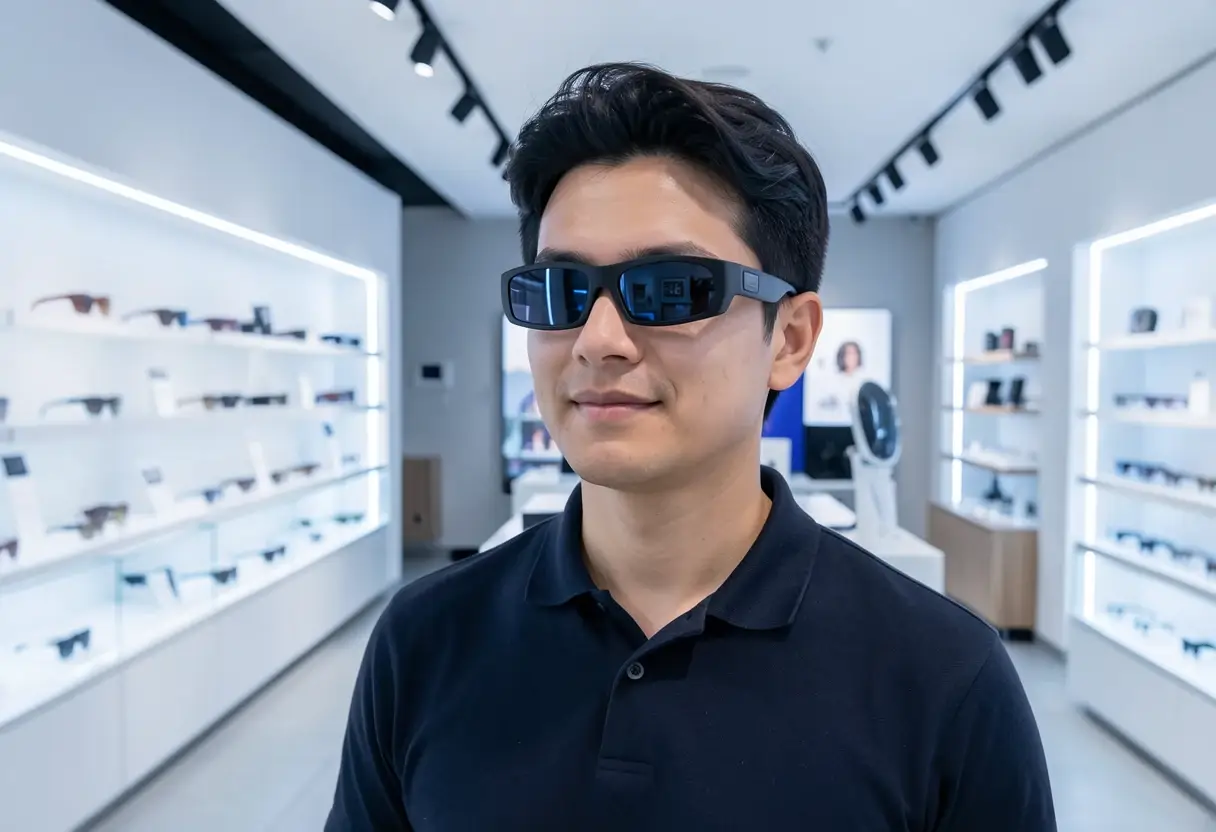
Samsung's new smart glasses cannot display anything to the wearer, and that single hardware fact should stop retailers from building immersive experiences for them, according to David Mařák, CTO and Co-Founder of the Prague-based creative technology studio YORD. In an interview with Unite.AI, Mařák said the glasses — sold through Warby Parker stores and powered by Google's Gemini assistant — are a wearable assistant, not an XR device, and that brands treating them as a development opportunity are making a category error.
"There's nothing on these glasses right now," Mařák said of immersive retail. "No display means we can't build anything the customer would see."
YORD designs and develops AI and XR experiences for brands and organizations, including interactive installations, museum environments, training solutions and custom digital products, and builds for Apple Vision Pro and other headsets. Mařák has spent more than a decade in immersive technologies, spanning AI-powered applications, virtual and augmented reality, digital humans and real-time generative systems. His verdict on Samsung's entry carries weight because his studio decides, platform by platform, where client budgets go.
Why does Android XR still matter to developers?
Samsung's glasses run Android XR, the open platform Google is positioning across hardware from several manufacturers. Mařák contrasts this with Vision Pro, which he describes as "a closed, highly optimized device with a futuristic look, and as a developer, you know exactly what you're working with." The Samsung glasses, by contrast, are "built to look like normal glasses," running on hardware that is "more open and varied, and not perfectly tuned for any one device."
A few years ago, Mařák said, he would have seen that fragmentation as a major problem. AI has changed the calculation. "With AI in the development process, it's a lot easier to optimize for a specific device, read through someone's documentation, or port between platforms, so the open platform tends to win because more people build for it," he said. "In the long run I'd bet on Android XR for that reason."
What can the glasses actually do in a store?
Not much that a phone cannot, in Mařák's assessment. A wearer can look at a product and ask Gemini about it without pulling out a phone. "The phone can already do the same thing; the camera has just moved to your nose," he said.
The interaction that would be genuinely new — looking at a product and seeing price, material, reviews or stock availability overlaid on the shelf — requires a display. Samsung's glasses can recognize the product, and, in Mařák's words, "that's where it ends."
Mařák is nonetheless a believer in glasses as a form factor. "We've been living digital lives through our phones for 15 years, it's just not comfortable, you have to look down at a small rectangle and hold it in one hand the whole time," he said. "Glasses are the natural next step." He predicts glasses will eventually replace the phone. Samsung's device, he argues, does not yet solve the problem.
What should brands do until display glasses arrive?
Mařák's advice is blunt. "I wouldn't build any immersive strategy around these glasses," he said. Instead, brands that want XR should build on hardware that supports it today — Vision Pro, Meta Quest and similar devices — while keeping content portable:
- Good 3D models of products
- Clean product data
- Experiences not locked to one device
"When light glasses with a real display arrive, and I think they will, that's what you'll be able to reuse," he said.
The low-hanging fruit for retailers today, he added, is narrower than most expect: making existing product information available through voice, then testing whether anyone actually prefers it to taking out a phone. "For any glasses project, the test is whether it does something better than what the customer already has in their pocket," he said. "Trying to do XR on a device with no display will end up being a gimmick."
Why Warby Parker as the launch partner?
Mařák reads the retail partnership as a sales-channel decision, not a technology trial. The glasses are prescription eyewear with a camera, and prescription eyewear sells at the optician. "You try them on, they fit your lenses, you walk out wearing them," he said. Samsung and Google needed a chain with hundreds of stores and its own optical labs, and Warby Parker has them. Meta took the same route with Ray-Ban and EssilorLuxottica.
"Glasses are a fashion item and a medical device before they're a gadget, and selling them in an electronics store would probably not work," Mařák said. The placement also signals what the product is: "The frames are what's for sale, and Gemini is something you get with them."
How should camera privacy be handled?
Mařák rejects the framing of the camera itself as the problem. People carry phone cameras all day without calling them surveillance devices, he noted; the glasses relocate a camera people already have. The real difference is observability. With a phone, bystanders can see when it is pointed at something. With glasses, they cannot.
His minimum requirement: "a recording light that is bright, visible from the front, and can't be turned off," and he wants that enforced as a platform rule rather than left to each manufacturer. Questions about what gets recorded, how long it is stored, who has access and what developers can see remain unanswered. "Samsung and Google haven't said much about any of that," he said. "Until they do, I wouldn't build in-store experiences that rely on continuously watching the customer."
Is this even XR?
Mařák identifies the biggest brand misconception as the assumption that anything with glasses, a headset or AI in it qualifies as XR. It does not. XR, he said, refers to digital content tied to the physical space around the user, which requires the device to understand the environment and change what the user sees.
He draws a pointed comparison: Google Glass had a display but almost no understanding of what the wearer was looking at. Samsung's glasses invert the failure — they understand surroundings through the camera and Gemini but cannot show anything. "Each has one half of it," he said. He flags a familiar industry risk: "A few years ago, the industry put the metaverse label on a lot of things that had nothing to do with immersive computing, and I'm a bit worried we're about to do the same with AI glasses. Samsung's product might be a good wearable assistant. It's not an XR device just because the name says so."
How do you measure XR loyalty?
Mařák would not count trials. "Everyone tries new hardware once," he said. He measures what follows: did users understand the product better, decide faster, buy, come back. These are the same metrics used for a website or an app, and the XR version has to beat them to justify existing. Real XR has a decent chance, he said, because it shows the product in the user's own space. For display-free glasses, he recommends measuring against a phone app before promising anything.
What comes next for mass-market glasses?
Over the next 6 to 12 months, Mařák watches two variables: hardware and developer access. The missing device is one that combines a see-through display, environmental understanding and a frame wearable from morning to evening. Vision Pro, Galaxy XR and Quest are, in his view, too heavy and too expensive. Samsung's glasses are light enough but display nothing. Snap's Specs, which shipped this autumn for around $2,200, come closest: still too expensive and a bit thick, but with a real display, room understanding and developer support. "That's the direction I'd expect things to go, and Samsung is currently behind it," he said.
On access, the open question is whether studios like YORD can ship their own apps, render spatial content, work with the device's environmental data, and get written camera rules. "If the platforms open up, people will build on them quickly because development has become much cheaper with AI," Mařák said. "If they stay closed around one assistant, we'll end up with a slightly better Alexa."
Source: unite.ai
More from Rebecca Stone
Show full bio
Correspondent covering companies, deals and strategy in artificial intelligence and machine learning at AI In Context.
577 articles
Related articles
- Google and Samsung's Android XR Smart Glasses Start at $395
- Google's First Android XR Smartglasses Ship December 10, Starting at $395
- XREAL launches AURA Android XR glasses for workplaces
- Google's First Smart Glasses in a Decade Land Dec. 10, Starting at $395
- Google’s Android XR Glasses Redact Faces and Out-Translate Meta