Google's First Smart Glasses in a Decade Land Dec. 10, Starting at $395
Google's first smart glasses since Google Glass arrive Dec. 10 at $395, with Gemini translation, no livestreaming and AI-redacted faces — and display models may follow next year.
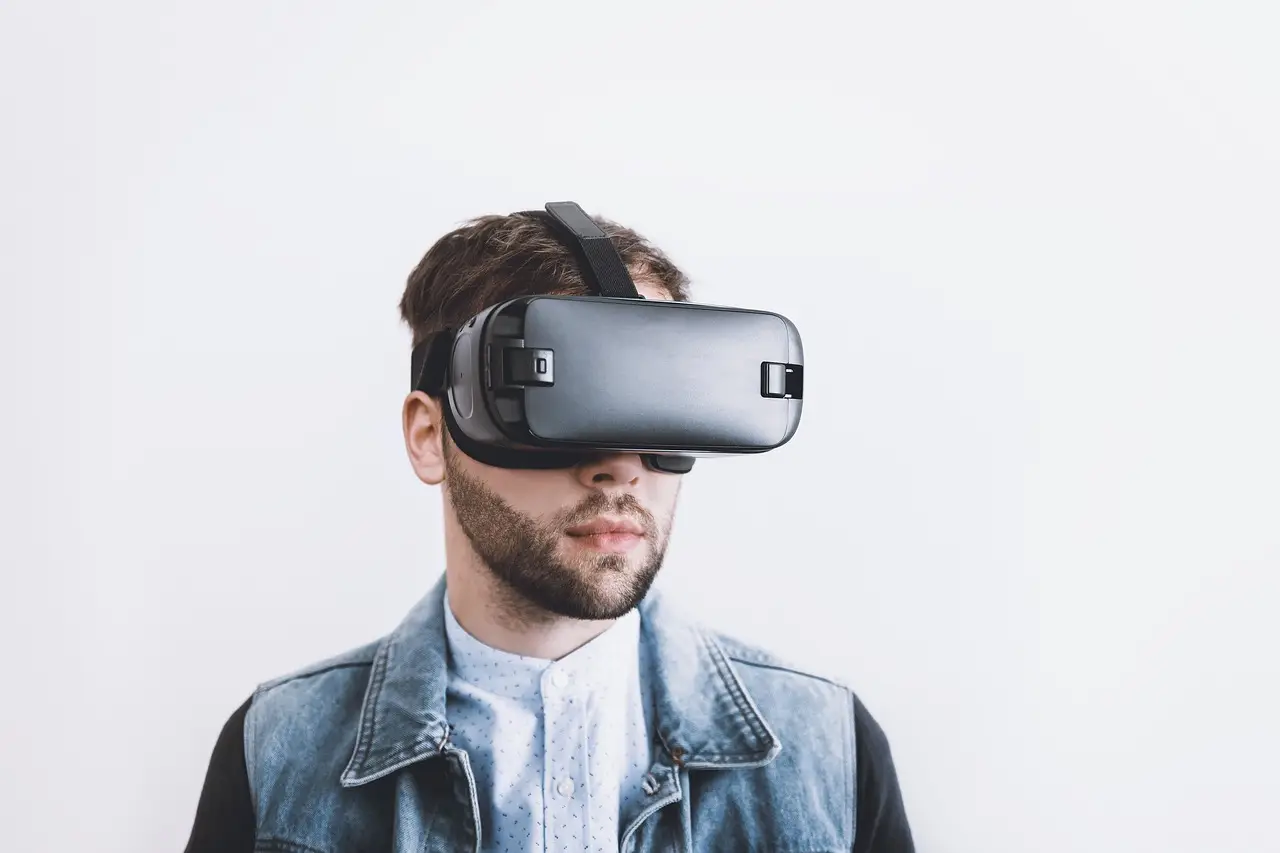
Why it matters
- Google's first smart glasses since Google Glass launch Dec. 10; Warby Parker models start at $395, Gentle Monster at $449.
- Live translation autorecognizes spoken language and reads over 70 written languages via a two-finger temple press.
- Always-on Gemini camera modes share no photos or videos for AI training or ads; faces are AI-autoredacted on the phone before cloud analysis.
- The Xreal Aura tethered mixed reality glasses arrive in the next few weeks; display-enabled Intelligent Eyewear is being tested for a possible 2026 launch.
- Apple is expected to release its own smart glasses in 2027.
Google will ship its first smart glasses since Google Glass on Dec. 10, with frames designed by Warby Parker starting at $395 and Gentle Monster starting at $449. I spent several hours wearing them last week, and the pitch is simple: prescription-ready glasses with speakers, microphones, a camera and Gemini AI living on the temple, no display, no screen, just your regular lenses with a brain attached.
The launch closes a nearly two-year wait. Google promised a return to eyewear back when it announced its Samsung partnership, and the first wave arrives at an awkward moment — nearly year's end, an unusual window for a product launch, and one of the most heated public debates yet around AI, smart glasses and data privacy. Apple is expected to answer with its own glasses in 2027.
What are these glasses, exactly?
The hardware is deliberately familiar. Every model across both brands works the same way:
- No displays — just standard lenses supporting the full range of prescriptions and lens types Warby Parker and Gentle Monster already offer
- Speakers on the arms for audio, plus four beamforming microphones that filter background noise and focus on where you're facing
- A single camera on the left side
- An LED indicator on the right that flashes when capturing, auto-adjusting brightness outdoors, paired with a capture sound — the same indicator approach Meta uses
Most frames weigh around 40 grams, comparable to recent Ray-Ban Meta Gen 3 models. The sizing and arms feel reminiscent of what Meta has made for years, and that déjà vu is intentional: these look like normal glasses, because looking like normal glasses is the whole point. Warby Parker's collection leans understated, in round and square frames across muted color shades — the dark green Pine stood out — while Gentle Monster's designs run more sculptural.
I tested final hardware in two immersive showrooms the companies are opening in New York City, open by appointment. Warby built library-themed rooms with travel motifs and whimsical sculptures. Gentle Monster went surreal: industrial design, realistic robotic horses, people, chickens, a big blue gentle monster — and four robotic heads turning and talking inside floating spheres, each speaking a different language.
How well does Gemini actually work?
The translation demo was the standout. Press and hold two fingers on the temple and live translation kicks in, autorecognizing spoken language and rendering it in your ear. The robotic heads discussed Gentle Monster's design philosophy in a handful of languages, and I heard all of them translated over roughly 10 minutes, occasionally with a short delay or hiccup. The glasses also recognize written text in over 70 languages — a much larger range than typical — and translated voices shift to match different speakers in a room and their intonation.
Gemini itself stays on once activated. Pressing and holding the side temple wakes it, and it listens until a significant pause of about 15 seconds, so you can keep asking questions without repeating a wake word — though "Hey Gemini" is a new trigger phrase if you want it. Swiping backward on the arm ends a session. Any chat can be instantly converted into a note or summary in Google Keep, and the glasses connect to Google Maps.
The demos showed real promise. In a pantry installation stocked with world foods, I asked Gemini to compare brands of international mayonnaise in front of me, pointed at things and casually asked "What is this?" — and it knew what I meant. It identified sheet music I held up and played the matching song. It read a full tarot card spread, correctly handling reversed cards.
It also failed in familiar ways. Sometimes it declared text on a wall was too far away when I could read it fine. Sometimes it hallucinated — asked a wall-mounted question about whether it was OK to wait 45 minutes for a restaurant table, it answered "8 minutes."
Music controls are standard: tap the temple to start and stop, swipe to change tracks, two-finger swipes for volume, which I found confusing. A top button takes photos and videos like Meta's glasses, and in some sessions photos beamed to a Pixel phone noticeably faster than they do to Meta's app. Audio sounded good and loud in a crowded room — possibly louder than Meta's glasses, though a full review will tell.
What changes on privacy?
This is where Google is explicitly trying to differentiate. Cameras are standard on every first-wave model, even as cameras have become the flashpoint of the smart glasses debate over the past year — harassment concerns, bans by certain countries and businesses, and broader social discomfort. Google's head of XR, Shahram Izadi, still sees the camera as key to a deep assistive experience, though he's open to future camera-free versions, like Meta's recent Ray-Ban Audio model.
The company's privacy architecture is unusual, and it's the most consequential design decision here. Juston Payne, Google's senior director of project management for XR, explained that Gemini treats camera feeds in AI mode differently from normal photo and video capture. Always-on Gemini modes with camera don't share any photos or videos for AI training or ad targeting, and the wearer can't see or share those AI-mode captures either — nor can Google. Faces are autoredacted using AI on your connected phone before anything reaches the cloud for analysis, Payne said.
Google is also skipping livestreaming entirely, a deliberate contrast with Meta's livestreaming modes. "We'll always take the conservative path right now just to rebuild trust," Payne said. The glasses won't continuously record ambient audio for memory summaries the way Apple's in-beta Siri Recap feature on its recent watches does. They lack environmental listening features for now — Google frames that as privacy-driven — though music recognition and other audio awareness features are on the road map, and Google scrubs out nearby voices during Gemini audio chats.
Whether any of that reassures strangers is the open question. It's already hard to convince people that smart glasses aren't recording them constantly, and Google's privacy credibility isn't spotless — the company is already fielding questions over targeted ads in Gemini-powered Google search on phones and computers.
What about battery and the Google advantage?
Battery life is the unresolved variable. Meta's up-to-eight-hour battery on the Scibe Optics-style glasses I've been wearing drains fast under heavy use, and whether Google manages power better is exactly what a full review needs to answer. The real differentiator, though, could be integration: Izadi promises most of Gemini's key phone features carry over, and on iPhones the glasses will triangulate across Google apps via the cloud to reach Gmail, calendars and more. The question isn't whether the AI works in demos — it's how smart, and how unsettling, it feels when it taps your entire Gemini history, Gmail, Docs and Maps history.
What comes next?
Dec. 10 is a kickoff, not a finale. A pair of tethered mixed reality glasses with a processor puck — the Xreal Aura, functioning almost like a portable VR headset — arrives in the next few weeks. Google is already testing display-enabled Intelligent Eyewear ahead of a possible launch next year, and Google and Samsung have promised multiple waves of tethered and wireless glasses, with displays and without.
More assistive features are coming to the camera-enabled glasses too, including what Google calls Guided Vision, an extension of the Project Astra technology Google has developed for years. "You'll hear more about our plans in the coming months," Izadi said.
The strategic direction is explicit. "We'll bring more and more agentic and core AI features so that people can depend more on the AI capabilities," Izadi said, positioning the glasses as true phone extensions — watch-connected too — in a race where Meta is pushing agentic AI on eyewear as well. For now, the open questions are practical: how well Warby Parker and Gentle Monster handle support, how easily people understand what these glasses do, and whether conservative privacy choices actually rebuild the trust Google thinks it needs.
Source: cnet.com
More from Elena Vasquez
Show full bio
Market editor covering technology and product news in artificial intelligence and machine learning at AI In Context.
535 articles
Related articles
- Google's First Android XR Smartglasses Ship December 10, Starting at $395
- Google’s Android XR Glasses Redact Faces and Out-Translate Meta
- Google and Samsung's Android XR Smart Glasses Start at $395
- Google Puts Privacy Switches on Its Smart Glasses, Dares Rivals to Match
- Samsung and Google Open Preorders for 30 Gemini-Powered Smart Glasses