ResetData opens AUD $1 million AI award with sovereign compute pitch
ResetData's 2027 AI Impact Award offers AUD $1 million in AI service credits to one Australian organisation, after ProCan cancer research sped up analysis sixfold.
Why it matters
- ResetData opened applications for its 2027 AI Impact Award on 9 November 2026, offering AUD $1 million in AI service credits to one Australian organisation.
- First award winner Children's Medical Research Institute used the compute for its ProCan cancer project, increasing its pace of analysis sixfold over the past year.
- Judging criteria are technical readiness, existing traction, compute requirements, potential Australian impact, and future growth.
- The judging panel includes Bass Salah of ResetData, Brendan Hopper of CBA, and Dr Catherine Ball.
- The award is part of ResetData's AI Growth Program, aimed at expanding sovereign AI services in Australia.
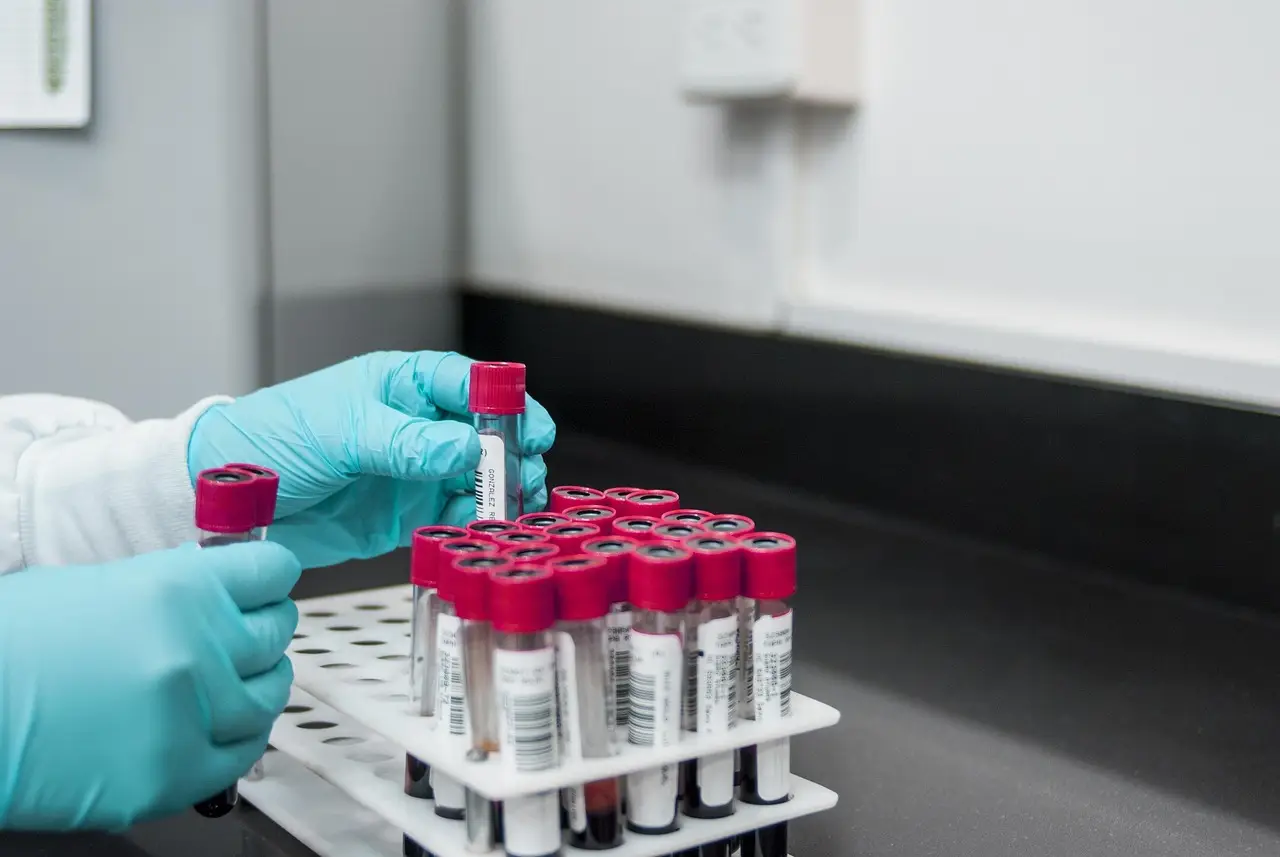
ResetData has opened applications for its 2027 AI Impact Award, a prize worth AUD $1 million in AI service credits to a single Australian organisation. The announcement, made on 9 November 2026, follows the first award, which went to the Children's Medical Research Institute and its ProCan cancer research project. That project used ResetData's computing services to speed up the analysis of cancer protein samples and expand a large research database.
The stakes here are straightforward. Demand for AI infrastructure in Australia is expanding beyond software development into healthcare, science and public sector work, and ResetData has positioned the award as part of a broader push to expand the use of sovereign AI services in the country. That push reflects growing interest among local technology providers and policymakers in keeping sensitive data and computing workloads on Australian infrastructure.
What did the first winner actually achieve?
ProCan gives the award its proof of concept. ResetData says the ProCan team increased its pace of analysis sixfold over the past year. The work focuses on linking protein data with digitised pathology slides to examine whether molecular features of cancer can help predict patient outcomes and treatment responses.
The Children's Medical Research Institute and ProCan have collected digitised pathology images since the project's early stages. Researchers say access to additional computing resources has made it possible to connect those slide images with proteomic data at scale. The work has helped create one of the largest databases of its kind worldwide, according to ResetData.
Professor Roger Reddel, Director of Children's Medical Institute, Head of the Cancer Research Unit and Co-Director of ProCan, described the long arc behind that connection in a statement accompanying the announcement.
"We started digitising pathology microscope slides right from the beginning of the ProCan project in the hope that one day the computation would become available to allow us to solve the problem of connecting the information embedded in the slides with the protein data," Reddel said.
"That day has arrived now because that's exactly what the ResetData computation power is allowing us to do. By combining our unique proteomic data and pathology resources with ResetData's cutting-edge AI, we're unlocking new possibilities for personalised treatment planning that has the potential to benefit every cancer patient," Reddel said.
Reddel added that the project had reached a point where that connection between protein datasets and pathology images could now be investigated at scale through the additional compute made available to the team.
What is ProCan trying to solve?
ProCan is a cancer research effort focused on the molecular characteristics of tumours. It aims to determine how those characteristics relate to disease progression and treatment response, with the longer-term goal of improving clinical decision-making. The database it has built, which ResetData calls one of the largest of its kind worldwide, pairs proteomic data with digitised pathology slides collected since the project's early days.
The underlying research challenge remains substantial. Protein datasets and pathology images are both large and complex, and linking them in ways that produce clinically useful insights requires extensive processing and validation before findings can be applied in routine care. For cancer researchers, the ProCan project offers an example of how larger compute allocations can accelerate analysis in data-heavy research programs.
That is the wider lesson ResetData wants the market to take from the award. The company now has a case study in medical research at a time when demand for AI infrastructure is spreading into sectors that were not traditionally heavy buyers of high-performance computing.
Who can apply for the 2027 award?
The annual award targets organisations that can demonstrate both technical readiness and a clear AI use case. ResetData has set a deliberately wide eligibility net. Applicants can include:
- startups
- scaleups
- larger companies
- research institutes
- not-for-profits
- selected public sector bodies
Applicants are expected to show a need for compute resources and outline the likely impact of the project if access is granted. Judging will consider five criteria: technical readiness, existing traction, compute requirements, potential Australian impact, and future growth.
The prize itself is structured as AI service credits rather than cash, which keeps the value inside ResetData's own infrastructure. For a company selling sovereign AI capacity, that design doubles as a customer acquisition channel: the award surfaces organisations that are, in ResetData's own framing, ready to scale.
Who judges the submissions?
The judging panel brings together executives from the infrastructure, banking and research-futurism worlds. The three panellists are:
- Bass Salah, Joint Chief Executive Officer of ResetData
- Brendan Hopper, Managing Director, Innovation Ecosystems at CBA
- Dr Catherine Ball, Scientific Futurist
The panel will review submissions from organisations seeking support for AI projects with practical use cases. ResetData did not disclose how many applications it expects for the latest round.
Salah framed the award as a response to demand from Australian organisations that want domestic compute rather than offshore capacity.
"Through the AI Growth Program, ResetData is backing the Australian organisations that are ready to scale and are demanding access to sovereign AI compute capacity to create meaningful business and research outcomes," Salah said.
"We are proud to do our part in showcasing Australian AI expertise through this year's AI Impact Award and as we roll out the AI Growth Program to more partners," Salah said.
How does the award fit ResetData's broader strategy?
The AI Impact Award sits inside ResetData's AI Growth Program, which aims to give Australian organisations access to domestic AI infrastructure and related services. The program also includes partnerships and work with government agencies. Salah's reference to rolling the program out "to more partners" signals that ResetData intends to expand the initiative beyond the award itself.
The sovereign angle is the strategic core. ResetData has positioned the award as part of a broader push to expand the use of sovereign AI services in Australia, and that positioning tracks a real shift in the local market. Growing interest among local technology providers and policymakers in keeping sensitive data and computing workloads on Australian infrastructure has created commercial space for domestic providers to compete against global cloud and AI platforms on grounds of data residency rather than raw scale.
Healthcare is a natural proving ground for that argument. Medical research data, pathology images and proteomic datasets are exactly the kind of sensitive, high-volume workloads that make data sovereignty arguments concrete for institutions and policymakers alike. ProCan's sixfold acceleration in analysis pace over the past year gives ResetData a quantified example to take into those conversations.
What happens next?
Applications for the 2027 AI Impact Award are now open, and one Australian organisation will receive AUD $1 million in AI service credits. The judging panel of Salah, Hopper and Ball will assess candidates on technical readiness, traction, compute needs, Australian impact and growth potential. ResetData has not said how many applications it expects, but the company's stated plan to roll the AI Growth Program out to more partners suggests the award is the visible edge of a larger infrastructure play in Australian sovereign AI.
Source: itbrief.com.au
More from Elena Vasquez
Show full bio
Market editor covering technology and product news in artificial intelligence and machine learning at AI In Context.
449 articles
Related articles
- Australia's Agencies Ordered to Audit Legacy Tech After OpenAI Medicare Breach
- OpenAI Launches Australia Program With Sovereign AI Campus
- Altman and Amodei summoned to Australian Senate over rogue OpenAI agent hacks
- OpenAI and Gates Foundation Put $50 Million Into African Health AI
- AI Agent Breach of Medicare Sparks Warnings of More to Come