Prime Video's Castle Walls Is the First End-to-End AI TV Series — and a Mess
Prime Video has premiered Castle Walls, the first end-to-end AI-generated series on a major streamer: two 17-minute episodes from Turkey's Ay Yapım, with melting wax-figure humans and banal dialogue.
Why it matters
- Castle Walls is billed as the first end-to-end AI-generated series on a major streaming platform, premiering on Prime Video.
- The series consists of two 17-minute episodes produced by Turkish studio Ay Yapım using generative video tools.
- The show was written by human screenwriters Kerem Deren and Çisil Hazal Tenim and used human voice actors.
- Ay Yapım stated: "This is not a production that bypassed human skill; it is one that used AI to amplify it."
- It follows Elon Musk's AI-powered seven-minute The Odyssey project, which drew public backlash.
Prime Video has premiered Castle Walls, a two-episode series produced by Turkish studio Ay Yapım with generative video tools, and it's billed as the first end-to-end AI-created series to land on a major streaming platform. Each episode runs 17 minutes. That's the milestone. The execution, according to a review in the source, is another matter entirely — the show's synthetic humans are described as looking like "Vaseline-smeared Madame Tussauds creations slowly melting in the sun."
The arrival matters beyond one review's verdict. Streaming platforms are now testing whether audiences will accept fully machine-generated drama, at the same moment that Elon Musk's AI-powered The Odyssey project — described in the review as "a seven-minute splat of synthetic sludge" — has drawn public backlash. Castle Walls is the first full series to cross that line on a major platform, which makes it a data point for the entire industry.
What is Castle Walls, exactly?
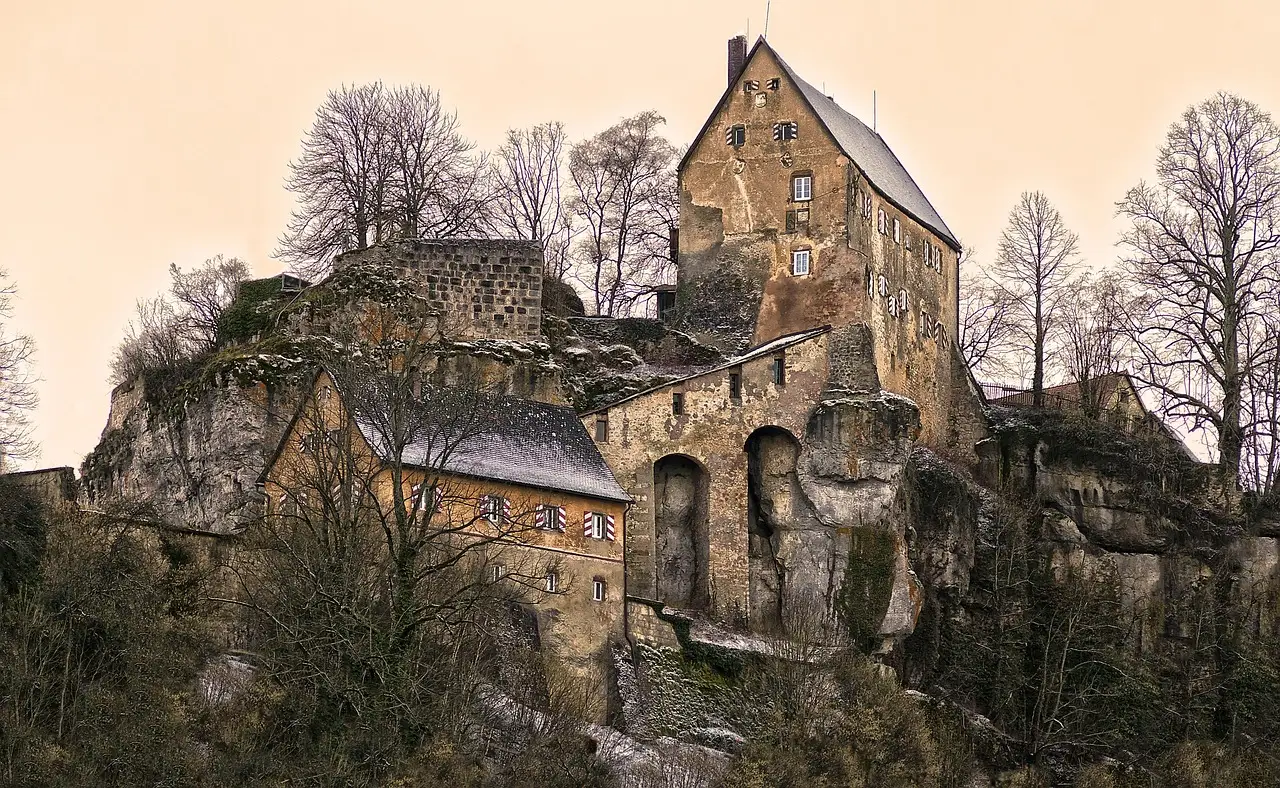
Ay Yapım, the Turkish production company behind the series, built it with what the review calls "a melange of generative video tools." It's set in the 11th century and revolves around the historic Alamut Castle, though the reviewer notes the show carries "no real sense of time or place." Two episodes of roughly 17 minutes each are currently available.
The plot centers on Hasan Sabbah, a figure who arrives in Alamut as a "freak" who "doesn't eat or drink" and wants to claim the castle for himself. He's meant to be charismatic, but the reviewer finds him "plasticky and spectral, with a complexion like wet glue." Sabbah, having somehow built an army of followers, descends into the castle's dungeons to recruit one more soldier: a notorious warrior named Azazil.
The visuals don't rescue it. The reviewer notes the opening shot shows an eagle carried across a desert in a cage, followed by a long shot of the castle, then an aerial shot of men arriving on horseback — a sequence that reads like a prompt chain of "make it cinematic," "make it more cinematic," "make it MORE MORE MORE cinematic."
The opening imagery briefly earned goodwill with "their bold palette of blues and mustard browns and yellows," before the human characters appeared and, in the reviewer's words, everything "came crashing down."
Takeaway: the technology can produce striking stills, but the moment it has to render people, it falls apart.
How bad are the visuals and the writing?
The reviewer catalogs the show's tics in detail:
- Characters who look like melting wax figures
- Overloaded, "over-milked" visual metaphors involving snakes, blood and fire
- Cranky-looking men throughout, in an "oddly paced" show
- Formula-laden lighting: Azazil's farewell scene plays out in front of a milky sunset; his nighttime desert ride gets a glowing white full moon; the castle doors creak open in episode two with orange sunlight streaming through the gap
Everything, the review suggests, looks cooked up with a single prompt: "Give me eye-watering visuals."
The writing comes in for harsher treatment. Ay Yapım reportedly used human screenwriters — Kerem Deren and Çisil Hazal Tenim — and the production employed human voice actors. But the reviewer calls the dialogue "banal and chuckleheaded," citing lines like "I've stopped being a decent man" and "if I am the sheaf, you are the sword." The review's deadpan closer on this point: "Were they really trying to make good art? Maybe that's a question for ChatGPT."
Takeaway: human involvement on paper doesn't guarantee human quality on screen.
What did the studio say?
Ay Yapım has defended the project's process. "This is not a production that bypassed human skill; it is one that used AI to amplify it," the studio said in a statement quoted in the review.
That framing — AI as amplifier, not replacement — is the exact argument the industry is currently litigating. Writers' and actors' unions, audiences and critics have spent the past two years fighting over where machine generation ends and human authorship begins. A major streamer premiering a fully AI-generated series, with human writers and voice actors attached, is the most concrete test case yet of that "amplification" claim.
The review's own verdict on the statement: the studio has nothing to crow about, given the quality of the result.
Why does the public react so badly to AI film?
The review makes a historical comparison that's worth sitting with. It argues the technology itself "is amazing and will profoundly alter the state of motion pictures," and that early efforts like Castle Walls are "prone to snarky commentary" simply for being first out of the gates.
The reviewer draws a line to early silent film. Those works — famously dubbed the "cinema of attractions" by film historian Tom Gunning — offered "carnival-like wonder" that drew audiences in. Today's AI works evoke something colder. Viewers, the review argues, "seem less interested in what the technology promises than in what it threatens to take away: art imbued with humanity."
That's the core tension. Musk's seven-minute The Odyssey project already showed that AI-generated spectacle draws public contempt, not curiosity. Castle Walls extends the test from a short clip to a full episodic series on Prime Video, and the reception question is now a commercial one: will subscribers watch?
Takeaway: audiences judge AI film by what it displaces, not what it demonstrates.
What's the path forward?
The review doesn't call for banning the tools. It sketches a "reciprocal and carefully collaborative process" where artists use algorithms and prompts to enhance human creativity rather than replace it — the same principle Ay Yapım claims to have followed, whatever the results suggest.
The stakes are straightforward. If fully generated series like Castle Walls find audiences, expect more of them, fast, across every platform. If they don't, studios have the review's suggested fallback: AI as a craftsman's tool inside human-led productions. Either way, the first end-to-end AI series is no longer a hypothetical — it's a 34-minute historical drama with waxy faces, streaming now on Prime Video.
Original: variety.com
More from Sophie Lindqvist
Show full bio
Staff writer covering regulation, policy and their impact on artificial intelligence and machine learning at AI In Context.
352 articles
Related articles
- Grok Posts Seven Minutes of Its AI-Generated 'Odyssey' After Musk's Movie Pledge
- Odyssey-3 world model opens as free public research preview
- Kling AI ships video generator 4.0: 30-second clips, 8,000-token prompts
- MIT stranded Claude on a virtual island for 30 hours. It played.
- Google ships Gemini Omni 1.1 Flash with 4K output and longer video