Over 300 Delegates From 40 Countries Gather in Seoul for THE Innovation & Impact Summit 2026
THE Innovation & Impact Summit 2026 opened at Korea University in Seoul, drawing 300-plus participants from over 140 institutions across roughly 40 countries to debate turning research into businesses.
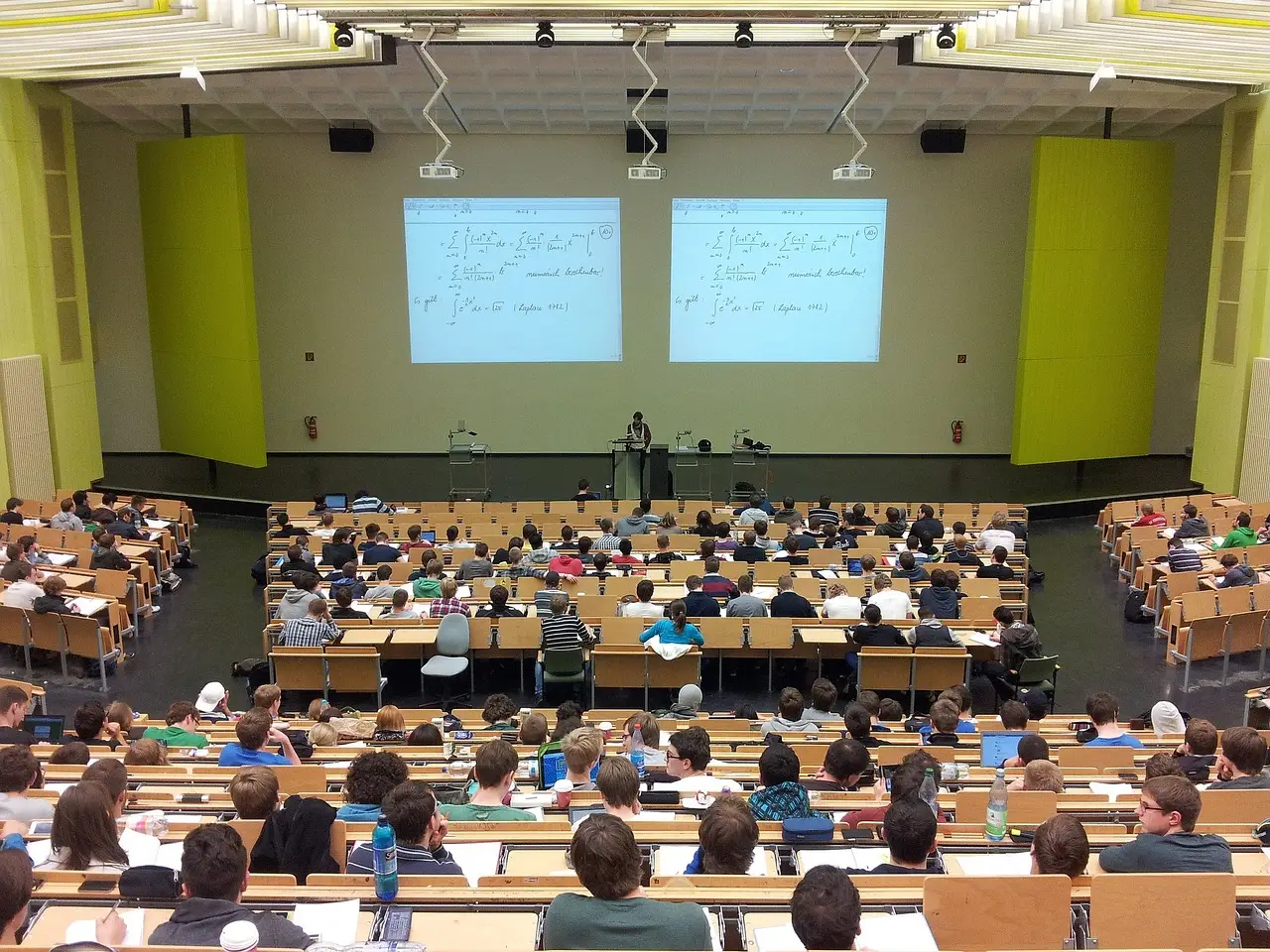
Why it matters
- More than 300 participants from over 140 institutions and organizations are attending, with more than 80 speakers.
- The three-day summit runs at Korea University in Seoul under the theme "Universities, industry and investors: Connecting research with commercialization."
- Delegates come from around 40 countries and territories; Korea supplies the largest share.
- Program tracks cover scaling research, investment in AI, semiconductors, biotechnology, climate technology and advanced manufacturing, and global innovation ecosystems.
- Speakers include the presidents of National Taiwan University, Hokkaido University, Florida International University and the University of Wollongong.
More than 300 participants from over 140 institutions and organizations have converged on Korea University in Seoul for Times Higher Education's Innovation & Impact Summit 2026, a three-day event examining how universities convert research into commercial and societal impact.
The summit, organized by the U.K.-based university ranking agency THE in partnership with Korea University, brings together more than 80 speakers and attendees from roughly 40 countries and territories. Its theme is direct: "Universities, industry and investors: Connecting research with commercialization."
The stakes are straightforward. Universities produce laboratory breakthroughs, but the path from discovery to market-ready technology remains slow and uneven. THE frames the event around scaling innovation and technology transfer in the age of artificial intelligence, with the explicit goal of accelerating the journey from laboratory to global impact.
Who is speaking at the Seoul summit?
The speaker roster spans five continents and mixes university leadership with innovation executives. Confirmed speakers include:
- Wen-Chang Chen, president of National Taiwan University
- Kiyohiro Houkin, president of Hokkaido University
- Jeanette Núñez, president of Florida International University
- Max Lu, president and vice-chancellor of the University of Wollongong
- Darren Cooke, chief innovation and entrepreneurship officer at the University of California, Berkeley
Korean speakers add a domestic policy dimension. They include Chun Yoon-jong, president of the Korea Institute for Advancement of Technology; senior officials overseeing research and international affairs at Korea University; the CEO of Korea University Holdings; and the presidents of Jeonbuk National University and Taejae University. Founders of the startups Finda and EndoRobotics will also speak, according to the organizer.
The program features keynote speeches, panel discussions and workshops addressing the future of higher education.
Which countries and organizations are represented?
Korea accounts for the largest share of attendees. The host institution fields a sizable delegation, joined by representatives from the Korea Advanced Institute of Science and Technology, the Gwangju Institute of Science and Technology, Sungkyunkwan University, Ewha Womans University and Chung-Ang University, among other institutions.
Other large delegations come from mainland China, Hong Kong and Taiwan, alongside Southeast Asian participants from the Philippines, Singapore, Malaysia, Indonesia, Vietnam and Thailand. Additional attendees represent India, the United Arab Emirates, Saudi Arabia, Qatar, Kazakhstan, Uzbekistan and Azerbaijan. North American, Latin American, European, Australian and African delegates round out the roster.
The organizational mix matters as much as the geography. Participants include research universities, global companies such as Elsevier, venture capital firms, startups, and innovation organizations such as UnternehmerTUM and the Hong Kong Science and Technology Parks Corporation. That composition mirrors the summit's core argument: commercialization requires investors and industry at the table, not just academia.
What are the three program themes?
THE has structured the program around three tracks, each targeting a distinct link in the research-to-market chain.
1. "From breakthrough to business: Scaling research into real-world solutions." This theme examines how universities translate discoveries into startups, technologies and scalable businesses. Topics include technology transfer (the formal process of moving research outputs to commercial use), spinouts (companies created to exploit university research) and innovation districts as mechanisms for generating economic and societal value.
2. "Investing in the next frontier: Where research is needed most." This track focuses on emerging fields shaping the future of innovation: artificial intelligence, semiconductors, biotechnology, climate technology and advanced manufacturing. Discussions will examine where global investment and research efforts are being directed, and where critical gaps remain. THE notes that many of these sectors are central to Korea's own industrial strategy, giving the theme particular local relevance in a country whose economy is built on semiconductor and advanced manufacturing strength.
3. "Powering innovation ecosystems: Partnerships, capital and global competition." The third theme explores how universities, industry and investors can collaborate to build globally competitive innovation ecosystems. Sessions will address funding models, strategic partnerships and the intensifying global race for talent, capital and technological leadership.
Across the three tracks, discussions center on three key areas: bringing research to market, financing research-driven innovation and building global partnerships.
Why does research commercialization matter now?
The summit's framing reflects a structural question confronting research universities worldwide. Public funding for basic research increasingly competes with demands for measurable economic returns, and the organizer states that the event will explore how higher education institutions can measure their contributions to economic and societal development.
Participants will discuss how universities can move beyond discovery to become engines of entrepreneurship and industry collaboration in rapidly evolving technology ecosystems. Sessions will examine how leading institutions translate laboratory discoveries into market-ready technologies and businesses through entrepreneurship and industry partnerships.
The financing agenda is equally concrete. Sessions will explore the roles of venture capital, corporate investment and public funding in supporting research-driven innovation and helping startups and other ventures scale — a question that intersects directly with the AI, semiconductor and biotechnology investment cycles named in the program.
What comes next?
THE states that the summit aims to strengthen ties among academia, industry, investors and government. For the more than 140 participating institutions, the immediate test will be whether the partnerships and funding conversations initiated across the three days in Seoul translate into technology transfer deals, spinout formation and investment flows in the sectors — AI, semiconductors, biotech, climate technology and advanced manufacturing — that the program identifies as the next frontier.
Source: feed.koreatimes.co.kr
More from Marcus Bennett
Show full bio
Senior reporter covering companies, deals and strategy in artificial intelligence and machine learning at AI In Context.
718 articles
Related articles
- 95 Percent of Organizations See No Measurable AI Gains, University Leaders Warn
- Elsevier's Chi urges focus and trust as AI pressures universities
- Universities Must Become 'Neutral Brokers' as AI Forces Mission Rethink
- Google DeepMind Partners with Korea to Bring Frontier AI to Science
- Korea Pledges AI and Cultural Initiatives at ASEAN Summit, Targets $300 Billion Trade