Levenza Takes Its Admin AI Agents Global and Buys a Voice Startup
Levenza now sells its admin AI agents globally with voice from acquired startup Fluid Inference. It reports 300+ customers, 170% net revenue retention and no outside capital raised.
Why it matters
- Levenza acquired Fluid Inference in September; financial terms undisclosed; founder Brandon Weng joined as head of engineering.
- The company reports 300+ enterprise customers, 170% net revenue retention and 99% gross retention, with no outside capital raised.
- Agents run inside Slack, Microsoft Teams and Outlook; travel booking and expense management are on the 2027 roadmap.
- Fluid Inference's open-source FluidAudio toolkit handles speech-to-text, speaker identification and speaker separation on Apple devices via Core ML.
Levenza has opened its administrative AI agents to enterprise customers worldwide and acquired Fluid Inference, an applied AI lab whose speech software now powers a voice interface on the platform. The San Francisco startup completed the acquisition in September and has already shipped the voice integration, it said in the announcement. Financial terms were not disclosed.
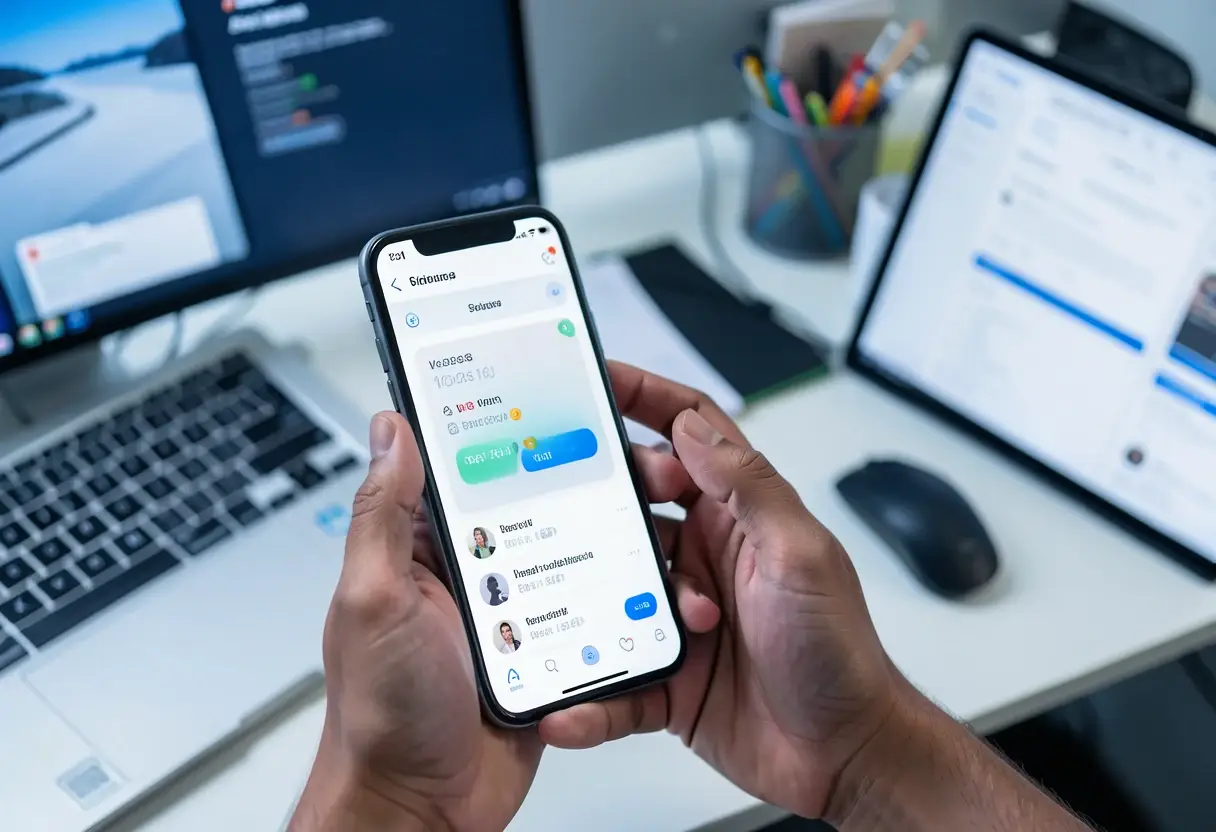
The launch matters because it tests a specific bet in the crowded agent market: that employees will trust autonomous software with calendar coordination, inbox management and time tracking — but only if it lives inside Slack, Microsoft Teams and Outlook instead of demanding a new workflow. Voice adds a second front: agents that can be called, briefed and instructed without opening an app.
Who is Fluid Inference?
Fluid Inference is best known publicly for FluidAudio, an open-source Swift toolkit for audio tasks. It handles speech-to-text, speaker identification and separating different speakers in a recording. Its documentation describes models that run on supported Apple devices using Core ML, which makes the project useful for developers building low-latency audio features.
What the public repository does not establish is where Levenza's own enterprise voice service processes audio. That gap is worth noting for buyers with data-residency requirements. For Levenza, the practical addition is simple: another channel for issuing requests.
Fluid Inference founder Brandon Weng has joined Levenza as head of engineering, the company said. His arrival puts the voice technology's original architect inside the acquiring company.
The takeaway: Levenza bought a working speech stack and the person who built it, but the deployment details remain the company's to disclose.
What do the agents actually handle?
The core pitch is embedded assistance rather than a destination app. An employee can ask for a meeting to be arranged across time zones; the agent checks availability, coordinates with other assistants and reserves a room. The platform also drafts email replies and logs time. Travel booking and expense management sit on the company's 2027 roadmap, distinct from today's ability to coordinate travel-related information.
Levenza's published product description says the system tracks preferences and constraints over time and can start tasks in response to changes in email and calendars. That design choice matters. Role, urgency and prior commitments can change what looks like an available slot — a free hour on a calendar doesn't necessarily mean the meeting belongs there.
The company says its software assesses proposed actions to decide when to ask for confirmation, and lets administrators define controls across the organization. In practice, that confirmation logic is the difference between an assistant and a liability.
The takeaway: the agents are designed to act from context, not just respond to commands, which shifts the burden onto the safeguards.
What does voice change?
The voice interface lets employees call an agent for a briefing, deal with a time-sensitive email or change a meeting without opening Outlook. Because the voice layer sits on top of tools that can act, reliability involves more than transcription accuracy. Before an agent moves a meeting or responds to a client, it needs to know which attendee or conversation the employee meant — and when to stop and confirm.
Voice adds a request channel, but it also adds ambiguity. Speech is messier than a typed instruction, and an ambiguous request routed to the wrong person is a customer-facing error, not a UI annoyance.
The takeaway: voice lowers the friction of using an agent and raises the stakes of the agent getting it wrong.
What do the numbers say about traction?
Levenza says it has signed more than 300 customers, including Oliver Wyman, Goodwin and Hg Capital — without raising outside capital. It reports 170% net revenue retention and 99% gross revenue retention. Net revenue retention accounts for expansions as well as losses among existing customers; gross retention excludes expansion.
One caveat: Levenza did not specify the measurement period in the announcement, so the figures are best read as company-reported indicators rather than as comparisons with other providers. Still, bootstrapped growth to 300 enterprise customers with retention at those levels is uncommon in a category where most competitors are spending venture capital on sales.
The takeaway: the customer base is real and sticky by the company's own account, but the metrics lack the context needed for benchmarking.
What should enterprise buyers check?
Levenza's security documentation lists workspace audit logs, enterprise sign-in and administrative controls. Buyers should ask what the logs capture for specific actions — rescheduling a meeting, sending an email — and whether the voice interface uses the same controls. The public security page describes workspace protection in general and does not answer those voice-specific questions.
The clearest value for agents like these lies in workflows that require several rounds of coordination. A useful evaluation would compare how long it takes to settle a cross-time-zone meeting before and after deployment, and how often a person must step in along the way. That intervention rate is the number that separates a demo from a deployment.
Teams should also distinguish a suggestion that employees can ignore from a change the agent makes on their behalf. A tool may reliably draft follow-ups and still need tighter controls before it sends them, especially when an ambiguous request could reach the wrong client. Those checks matter more in practice than counting how many tasks the software starts.
The takeaway: test the handoff points between agent and human, not the task volume.
What comes next?
The 2027 roadmap adds travel booking and expense management, which would push the agents from coordination into spending decisions — a category that will demand the confirmation and audit controls buyers are only now learning to ask about. How Levenza documents voice-specific logging, and whether its retention figures hold as the customer base scales, will define whether embedded, bootstrapped agents can compete with funded rivals.
Source: unite.ai
More from Sophie Lindqvist
Show full bio
Staff writer covering regulation, policy and their impact on artificial intelligence and machine learning at AI In Context.
910 articles
Related articles
- Mistral AI ships Voxtral 3, a real-time voice agent stack for 50+ languages
- OpenAI Launches gpt-realtime Speech-to-Speech Model With MCP and Phone Support
- Google Ships Upgraded Gemini 2.5 Flash Native Audio and Live Translation
- Innovaccer Puts Grok Voice Behind Healthcare Phone Agents
- WellSaid Producer Brings AI Voiceover Into MCP Workflows at 48kHz