Braiin Signs $40 Million Term Sheet to Buy Marut Drones
Braiin Limited has signed a non-binding term sheet to acquire Hyderabad's Marut Drones for about US$40 million, folding DGCA-certified drone platforms, eight type certificates and 500-plus customers into its Raptor300 agricultural AI business.
Why it matters
- Braiin signed a non-binding term sheet on November 23, 2026 to acquire Marut Drones for approximately US$40 million, starting with a majority stake.
- Marut holds eight DGCA type certificates, including the AG365, described as India's first DGCA type-certified multi-utility agricultural drone.
- Raptor300 has binding Sri Lankan contracts worth US$35.93 million plus roughly US$112 million in non-binding MOUs.
- Closing requires US-standard audits, definitive agreements and Indian foreign-investment and DGCA-related clearances.
- Marut brings over 100 dealers, seven DGCA-approved pilot-training schools and more than 500 customers.
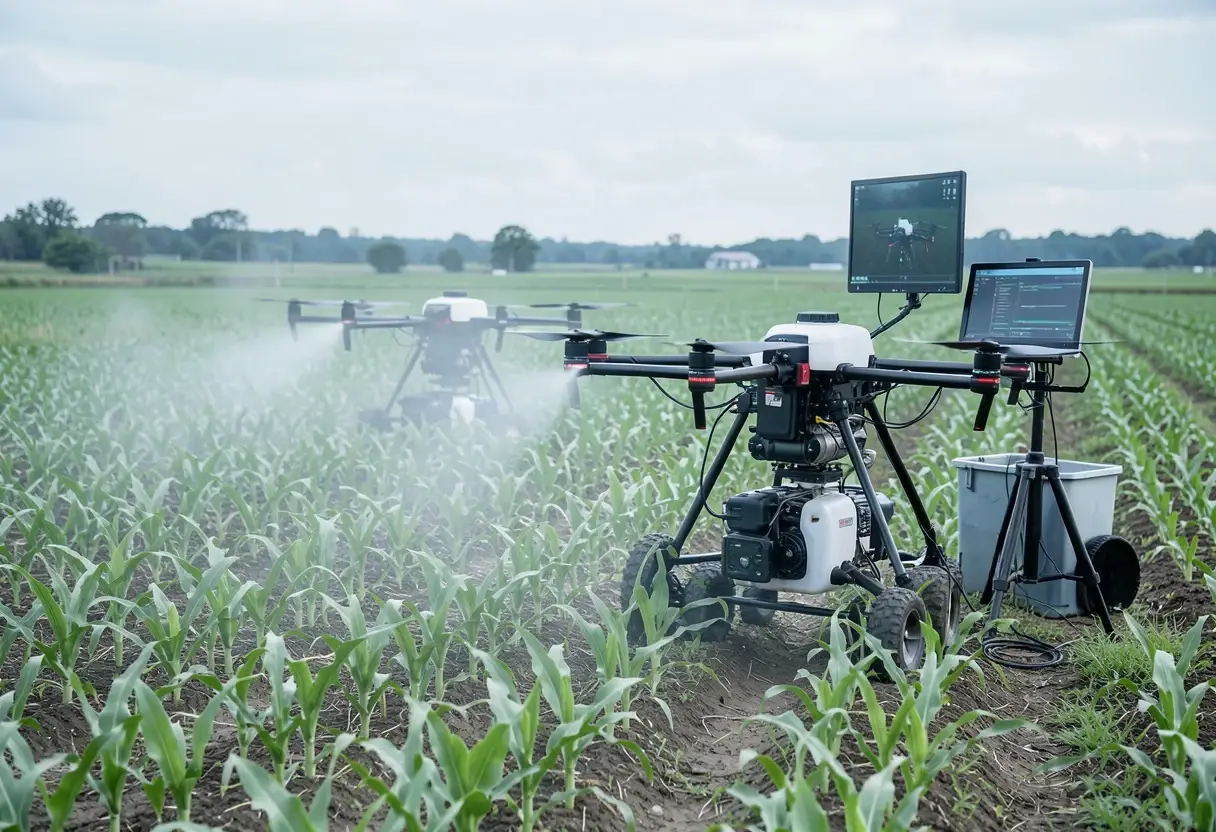
Braiin Limited has signed a non-binding term sheet to acquire Hyderabad-based Marut Drones for approximately US$40 million, paid in phases and beginning with a majority stake. The deal, announced on November 23, 2026, combines upfront consideration, performance-linked earn-outs and growth capital into a single proposed price. If it closes, Marut would join Braiin's Robotics and AI division and be integrated with Raptor300, Braiin's autonomous crop-spraying drone platform.
The logic is straightforward. Braiin wants to combine its autonomy stack — autonomous flight, computer vision, predictive maintenance and agricultural-data analytics — with drone hardware that already carries Indian regulatory approval. Founder and CEO Natraj Balasubramanian said the goal was to build "a leading AI-led aerial intelligence business," initially in India and then across Braiin's international markets.
That framing matters because agricultural drone markets run on certification. A buyer can build software quickly, but type certificates, dealer networks and pilot-training schools take years to accumulate. Marut already has all three, which is what makes the target worth the money.
What does the $40 million actually pay for?
The structure is phased. The upfront portion is payable at completion, while the earn-outs depend on Marut's subsequent performance. Braiin would also fund growth under a mutually agreed annual operating plan, with the remaining shares acquired in later performance-linked phases. The headline figure therefore covers both the share purchase and direct investment in Marut's operations.
Very little of the term sheet binds anyone right now. Only confidentiality, exclusivity, costs and governing-law provisions are binding at this stage. Closing requires satisfactory due diligence, definitive agreements, an audit of Marut's financial statements under US auditing standards, and Indian regulatory and third-party approvals. Those approvals include foreign-investment clearances and clearances tied to the DGCA, India's civil aviation regulator. Final terms, timing and completion all remain conditional.
In plain terms: Braiin has reserved the table, but the meal is not served until auditors and regulators sign off.
Why is Marut an attractive target?
Marut was founded in 2019 by Indian Institute of Technology Guwahati alumni. It designs and manufactures agricultural, surveillance, tethered and multi-utility drones, with in-house work spanning both airframes and payloads. It also builds Swift, its ground-control and fleet-management software. For Braiin, that means an established manufacturing and software base rather than the slower route of building those functions after entering India.
The certification record is the strongest asset. Braiin says Marut holds eight type certificates from the DGCA. They include the AG365, described as India's first DGCA type-certified multi-utility agricultural drone, plus a heavier 30-litre-capacity drone aimed at agriculture, aquaculture and industrial applications.
The commercial footprint is broad:
- More than 100 dealers
- Seven DGCA-approved pilot-training schools
- Over 500 customers, spanning farmers, dealers, cooperatives and institutions
Named customers include Karnataka Police, the Indian Army and Indian Railways. Marut has also supplied drones to Fiji and Myanmar.
The takeaway: Marut gives Braiin things money alone cannot quickly buy — regulatory sign-off, manufacturing capacity and a trained-pilot pipeline.
How does Sri Lanka connect to an Indian acquisition?
Raptor300 already gives Braiin a live drone business in Sri Lanka. Braiin reports binding contracts there valued at US$35.93 million, plus approximately US$112 million under non-binding memoranda of understanding. The company cautions that there is no assurance any MOU will become a binding contract — a standard disclosure, but one that frames how much of the pipeline is still soft.
Marut's manufacturing capacity, wider aircraft range and trained pilots would give those Sri Lankan deployments additional fleet depth. On the technology side, the two stacks complement each other. Raptor300 contributes patented vectorized spraying and autonomous tank-refilling systems. Swift provides ground control and fleet management across Marut's fleet.
Joint product development and hybrid Raptor300–Marut deployments are intended to cover seeding, spraying, crop monitoring, analytics and fleet services. In other words, Raptor300 brings the autonomy and spraying know-how; Marut brings certified aircraft and the people to fly them.
What happens after closing?
Within India, Marut's operations are concentrated in Telangana, Karnataka, Uttar Pradesh, Maharashtra and Odisha. Braiin's post-completion roadmap goes well beyond those five states. The plan calls for:
- National expansion across India
- Heavier-payload and lower-cost drone platforms
- In-house batteries and flight electronics
- Exports to Sri Lanka, Australia, the GCC, Southeast Asia, Africa and North America
That last ambition is where the AI story and the hardware story meet. The proposed deal would give Braiin a faster route into India through assets that are difficult to replicate quickly: regulatory certifications, manufacturing, dealers and pilot training.
The wider significance now depends on execution. Braiin has to convert the term sheet into a completed acquisition, then turn the combined aircraft, autonomy software and Sri Lankan pipeline into scaled AI-led services. The first step is administrative and regulatory; the second is commercial. Until both happen, $40 million is a plan, not a business.
Source: unite.ai
More from Sophie Lindqvist
Show full bio
Staff writer covering regulation, policy and their impact on artificial intelligence and machine learning at AI In Context.
910 articles