Korea to Cross $1 Trillion in Annual Exports for First Time
Korea's cumulative exports topped $960 billion as of Nov. 10 and are set to pass $1 trillion within days, driven by semiconductor demand during the AI supercycle.
Why it matters
- Korea's cumulative exports exceeded $960 billion as of Nov. 10, 2026, with the $1 trillion milestone expected as early as Thursday or Friday.
- Korea becomes the fourth country after the United States, China and Germany to reach $1 trillion in annual exports.
- It took 21 years to go from $100 billion in exports (1995) to $1 trillion; $500 billion was passed in 2015 and $700 billion in 2025.
- Industry Minister Kim Jung-kwan thanked port and logistics workers in Incheon, crediting 'countless people who have quietly fulfilled their roles behind the scenes.'
- The ministry attributes the surge to semiconductor shipments amid the AI supercycle.
South Korea will cross $1 trillion in annual exports for the first time in its history, with cumulative shipments already exceeding $960 billion as of November 10 and the milestone expected as early as Thursday or Friday, according to the Ministry of Trade, Industry and Energy. The country becomes only the fourth nation ever to reach the mark, following the United States, China and Germany. The driver, per the ministry, is unambiguous: strong outbound shipments of semiconductors riding what officials call an artificial intelligence supercycle — a sustained surge in global demand for computing hardware that powers AI systems.
Why the timing matters now
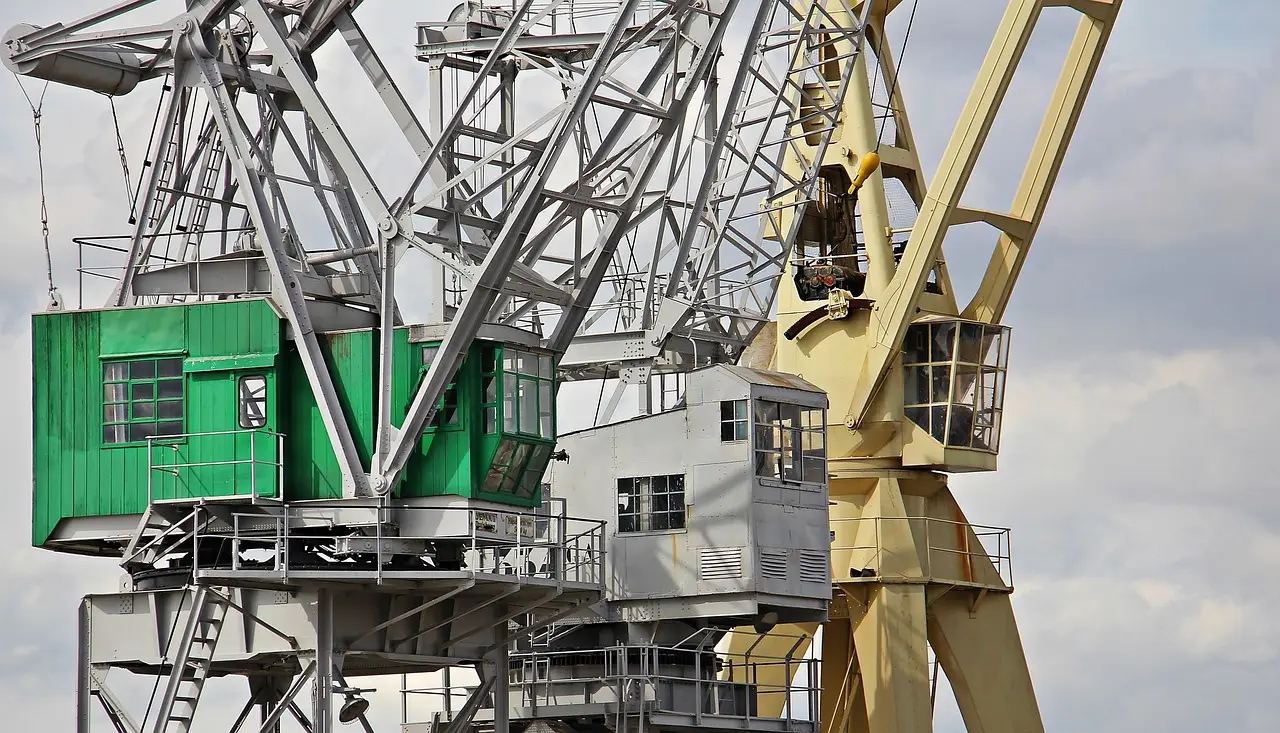
Industry Minister Kim Jung-kwan marked the moment on Tuesday with a visit to a port in Incheon, the western coastal city that serves as one of Korea's major maritime gateways. He used the occasion to thank workers in port management and logistics rather than to celebrate corporate balance sheets or headline policies. The choice of venue was deliberate: the ministry framed the trillion-dollar figure as a logistics achievement as much as a trade one.
Korea's export trajectory tells the story of a compressed climb. The country first reached $100 billion in annual exports in 1995. It passed $500 billion in 2015 and $700 billion in 2025. The jump from $100 billion to $1 trillion took 21 years — a pace the ministry data makes clear was heavily back-loaded, with the final rung added in a fraction of that period.
What does the AI supercycle have to do with it?
The ministry attributes the 2026 surge primarily to semiconductors, Korea's flagship export category, amid what it describes as an AI supercycle. That term refers to the sustained, multi-industry demand wave for chips — memory and processors alike — triggered by the buildout of AI data centers and AI-capable devices worldwide.
Korea's chipmakers sit directly in the path of that wave. As global technology firms race to expand AI infrastructure, demand for the memory components Korean manufacturers dominate has translated into record outbound shipments. The ministry's account, however, stops short of specifying how much of the $960 billion-plus total came from semiconductors, or how much came from other sectors such as automobiles, petrochemicals or displays. That gap matters for anyone assessing durability: an export milestone built on one product category is only as stable as that category's demand cycle.
The skepticism is warranted by history as much as arithmetic. AI-driven chip demand has boomed before and corrected before. The ministry's announcement celebrates the peak of a cycle without addressing what happens if AI infrastructure spending slows. Officials offered no projection for whether the trillion-dollar level would be sustained in subsequent years — a notable omission in a statement otherwise rich with historical benchmarks.
What did the minister actually say?
Kim, speaking at the Incheon port, credited the people behind the goods movement rather than headline industrial names. His two statements, verbatim:
"Reaching $1 trillion in exports is not an achievement that happened overnight. Our exports have been able to make history thanks to the countless people who have quietly fulfilled their roles behind the scenes."
The framing shifts attention from conglomerates to the logistics workforce — crane operators, port managers, freight handlers — whose labor the ministry says made the record possible. It is also a politically useful frame: a milestone attributable to ordinary workers is harder to weaponize against the government that presided over it.
The ministry did not, for its part, claim credit for specific export-promotion policies in reaching the mark. The statement leans on historical continuity — 1995, 2015, 2025 — which implicitly credits three decades of industrial structure rather than any single administration's intervention.
How rare is the $1 trillion club?
Only three countries — the United States, China and Germany — have previously posted $1 trillion in annual exports. Korea joining makes four. For a country of roughly 52 million people that lacked significant natural resources at the start of its industrialization, the entry is statistically remarkable: the other three members are either far larger economies or far larger populations.
The sequence of Korea's benchmarks:
- 1995 — first $100 billion in annual exports
- 2015 — surpassed $500 billion
- 2025 — surpassed $700 billion
- 2026 — expected to surpass $1 trillion, as early as this Thursday or Friday
The acceleration between $700 billion and $1 trillion — from 2025 to 2026 — is the steepest in the country's export history, and the ministry attributes it squarely to semiconductor demand during the AI boom. Whether that pace is repeatable without an AI supercycle behind it is a question the announcement does not attempt to answer.
What is not in the announcement
Three things stand out by their absence. First, no breakdown of exports by sector, so the exact semiconductor share of the $960 billion remains unstated. Second, no import figures, meaning the milestone says nothing about the trade balance — exports alone do not establish whether Korea's net trade position improved. Third, no forward guidance: the ministry celebrates a record but offers no baseline for 2027 or beyond.
Each omission is standard for a celebratory government announcement and each limits what the number can tell analysts. A trillion in gross exports during a chip boom is a fact; it is not yet evidence of structural export strength independent of the AI cycle.
What happens next
The milestone is expected to be formally crossed within days, by Thursday or Friday, once cumulative shipments for 2026 tick past the $1 trillion line. Korea thereby joins the United States, China and Germany as the only economies with trillion-dollar annual exports — and does so with a per-capita export intensity none of the other three approaches. The open question, which the ministry's data cannot yet answer, is whether the AI supercycle holds long enough for the mark to become a floor rather than a peak.
Source: feed.koreatimes.co.kr
More from James Calloway
Show full bio
News editor covering people, launches and day-to-day practice in artificial intelligence and machine learning at AI In Context.
722 articles
Related articles
- South Korea budgets $610 billion, targets world's best AI model
- South Korea's ICT exports more than tripled to $70.35 billion in October
- Korea's Top 10 Exporters Grabbed 60.9% of All Exports in Q3
- Korean chip selloff after US midterms exposes 40% concentration risk
- Foreign investors dumped $19.31 billion in Korean stocks in October