Google Opens Pre-Orders for Gemini-Powered Smart Glasses at $395
Google opened pre-orders November 12, 2026 for $395 Gemini-powered smart glasses with Gentle Monster and Warby Parker, engineered with Samsung, shipping December 10.
Why it matters
- Pre-orders opened November 12, 2026; availability December 10, 2026, starting at $395.
- Gentle Monster's six-design collection starts at $449; more than 360 Warby Parker stores offer demos.
- Specs include a 12MP camera, 3K video, ~41-gram frames, up to nine hours of battery and a case good for seven recharges.
- Google says camera visuals used for Gemini answers are not saved in History, not used for AI training or ad targeting.
- Use requires a US or South Korea adult Google account and compatible Pixel, Galaxy or iPhone 13 Pro+ devices.
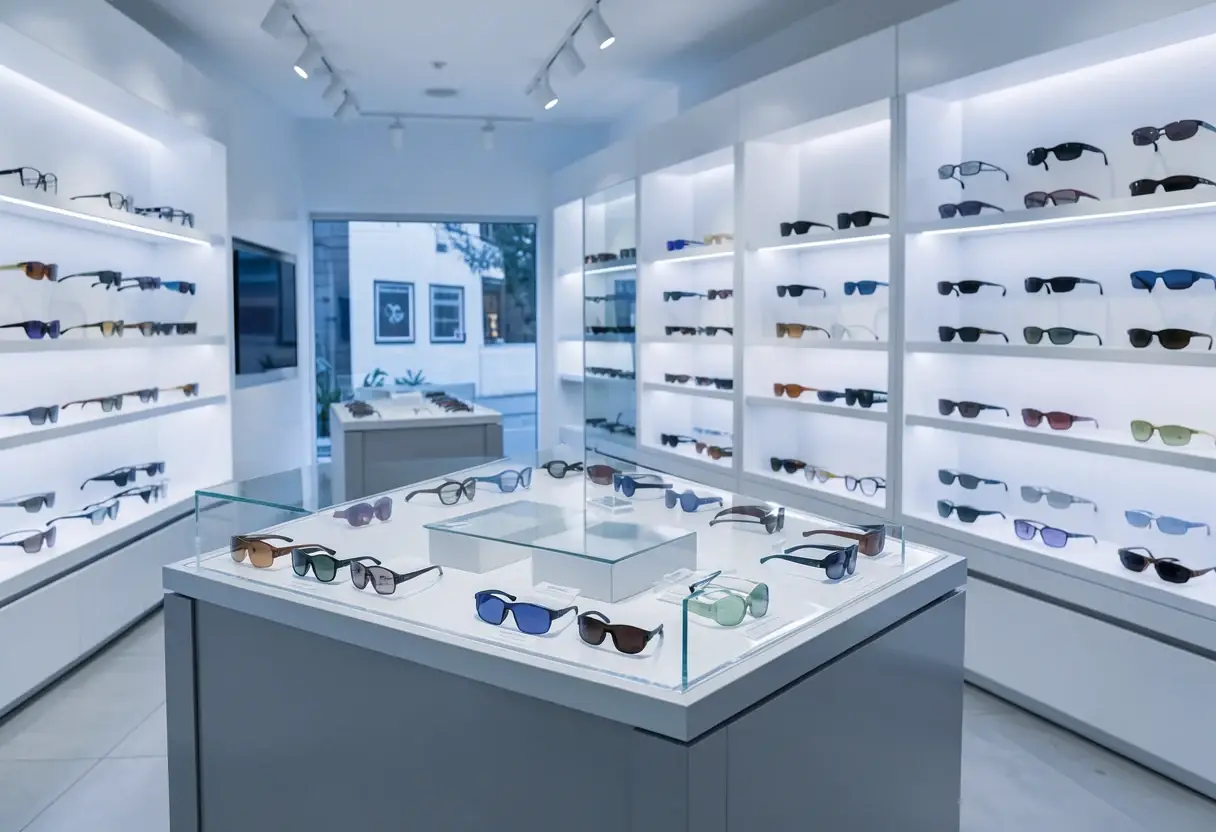
Google opened pre-orders on November 12, 2026 for its Gemini-powered Intelligent Eyewear, with collections designed with Gentle Monster and Warby Parker and engineered with Samsung, starting at $395. Online and in-store availability begins December 10, 2026. The launch marks Google's most serious attempt yet to put a generative AI assistant into ordinary prescription and fashion frames sold through established eyewear retail channels.
The stakes are considerable. After years of false starts in wearables, Google is betting that pairing its flagship Gemini assistant with familiar retail brands — and heavy privacy scaffolding — can make camera-equipped AI glasses socially acceptable at scale.
What does the eyewear cost and where can you buy it?
Warby Parker's lineup spans the Alden, Reid and Wren optical and sun styles, offered in Pine, Saddle and Jet Black, with prescription, width and lens options. Gentle Monster's six-design collection starts at $449, with clear, tinted, blue or brown lenses and prescription options for most frames.
Distribution is unusually broad for a first-generation smart glasses launch:
- More than 360 Warby Parker retail locations offer guided demos.
- Selected partner locations and Google Store locations provide hands-on demos.
- Frames ship through established optical and fashion retail channels, not just tech stores.
The takeaway: Google is treating this as a consumer eyewear product first, not a gadget sold only to early adopters.
What can Gemini actually do on your face?
Google says wearers can say "Hey Gemini" or tap a frame to ask about objects in view, check their Calendar against an event poster, add items to a grocery list or hear turn-by-turn Google Maps directions. Google Translate supplies real-time speech translation with automatic language detection across more than 70 languages. Open-ear speakers deliver music, calls and spoken message summaries while leaving the wearer's ears uncovered.
The hardware spec sheet, per Google's product documentation:
- 12-megapixel ultra-wide camera with HDR processing and stabilization.
- Video recording up to 3K with automatic straightening.
- Frame weight of roughly 41 grams.
- Up to nine hours of battery life, depending on use and settings.
- A charging case that can recharge the frames up to seven times.
That battery figure puts the glasses in everyday-wearable territory rather than short-session accessory territory — if real-world use bears it out.
How does Google handle privacy for wearers and bystanders?
This is where the launch does the most work, because camera glasses live or die on trust.
For the wearer, Google's privacy explanation says camera visuals used for Gemini answers are not saved in Gemini History and are not used to train AI models or target ads. Photos and videos captured at the wearer's request are stored in the gallery, while Gemini chats are saved in History and can be reviewed or deleted. A separate setting controls whether chat text is used to improve generative AI models. Data stored on the glasses is encrypted, and data sent for phone or cloud processing is encrypted in transit.
For bystanders, the protections are structural as well as policy-based:
- The glasses redact faces before Gemini processes visuals.
- Directional microphones focus on the wearer's voice.
- An outward LED signals gallery photo and video capture, with sensors designed to block capture if the light is covered or tampered with.
- A physical switch disables the camera, microphones and Gemini entirely, so the frames work as ordinary glasses.
- Per-app permissions govern camera and microphone access.
Users must agree not to record others without permission or in sensitive places, and not to cover the indicator light. Google Play policies prohibit apps from using the camera for social live-streaming or real-time facial identification, and from changing the LED's behavior. Google's documentation also says Gemini waits in standby until activation and does not send speech to Google in that state — though the company concedes a noise resembling the wake phrase can trigger a request.
In short: Google has built the bystander safeguards directly into hardware, software and store policy rather than leaving them to user goodwill.
Which phones work, and what are the regional limits?
Use requires a compatible Google account for an adult in the United States or South Korea. Compatible devices, per the announcement:
- Pixel 7-series and newer phones running the September 2026 Android 17 update or later.
- Specified Galaxy S and Z devices on One UI 9.0 or later.
- iPhone 13 Pro and newer models.
Gemini requests and media streaming require a Bluetooth phone connection. Volume control, battery checks and photo capture can operate without it.
What does Guided Vision offer — and what does it not?
The glasses integrate Guided Vision, which Google launched for compatible Android devices on October 1, 2026. It provides conversational audio descriptions for blind and low-vision users. An Aira integration can stream the camera view to a trained human visual interpreter. On the eyewear, both features require a compatible Android phone pairing at launch and may require a subscription or membership.
The limits are spelled out plainly. Google cautions that Guided Vision can make mistakes and is not a medical device, clinical vision aid, mobility aid or white-cane replacement. It is not intended for navigation, safe-travel guidance, obstacle detection or other safety-critical tasks — a significant boundary, given that the same glasses offer Maps directions and visual descriptions of the world around the wearer.
That disclaimer draws a sharp line between convenience assistance and assistive technology, and it will shape how regulators and disability advocates read the product.
Why does this launch matter?
The debut ties Gemini's most distinctive assistance to camera and phone access, making visual-data retention, bystander protections and third-party app restrictions central to the product's consumer reception. Google has effectively staked its wearables comeback on a bargain: deep visual context for the wearer in exchange for strict limits on what Google does with that visual data.
If the December 10, 2026 rollout holds — and the privacy commitments survive contact with real-world use — the $395 starting price positions Gemini eyewear as a direct challenge to every AI-glasses effort that treated privacy as an afterthought.
Source: unite.ai
More from Sophie Lindqvist
Show full bio
Staff writer covering regulation, policy and their impact on artificial intelligence and machine learning at AI In Context.
572 articles
Related articles
- Samsung and Google Open Preorders for 30 Gemini-Powered Smart Glasses
- Google's First Smart Glasses in a Decade Land Dec. 10, Starting at $395
- Google and Samsung's Android XR Smart Glasses Start at $395
- Google’s Android XR Glasses Redact Faces and Out-Translate Meta
- Google's First Android XR Smartglasses Ship December 10, Starting at $395