Fujifilm to quintuple LTO tape capacity as AI drives archiving boom
Fujifilm will invest roughly 10 billion yen ($63 million) to quintuple magnetic tape capacity by fiscal 2028, citing 'exponential growth' in data needs driven by generative AI and ransomware-driven demand for air-gapped storage.
Why it matters
- Fujifilm will invest roughly 10 billion yen (about $63 million) to increase tape production capacity fivefold, announced Thursday.
- The expansion at the Kanagawa Factory, Odawara site runs fiscal years 2026 through 2028 and is Fujifilm's largest-ever investment in dedicated LTO tape facilities.
- Fujifilm cites generative AI-driven 'exponential growth' in data needs as the cause of surging archiving demand.
- The LTO Ultrium10, debuting in 2025, is the first tape using 'fine hybrid magnetic particles' combining barium ferrite and strontium ferrite.
- The 5x capacity increase is measured against fiscal year 2025 production levels.
Fujifilm will invest roughly 10 billion yen — about $63 million — to increase its magnetic tape production capacity fivefold, the company announced Thursday. The unlikely beneficiary of the generative AI boom is not a chip factory or a data center. It is a storage medium most consumers abandoned decades ago.
The Japanese imaging and technology giant attributes the surge in archiving demand directly to the spread of generative AI, which the company said is producing "exponential growth" in data needs worldwide. The fivefold increase in production capacity will be measured against Fujifilm's fiscal year 2025 production levels.
Why is a camera company betting big on tape?
The investment will go into Fujifilm's Kanagawa Factory, Odawara site. Fujifilm called it "the largest investment Fujifilm has made to date in dedicated LTO tape facilities." The project will run from fiscal years 2026 through 2028, funding manufacturing expansion and additional personnel.
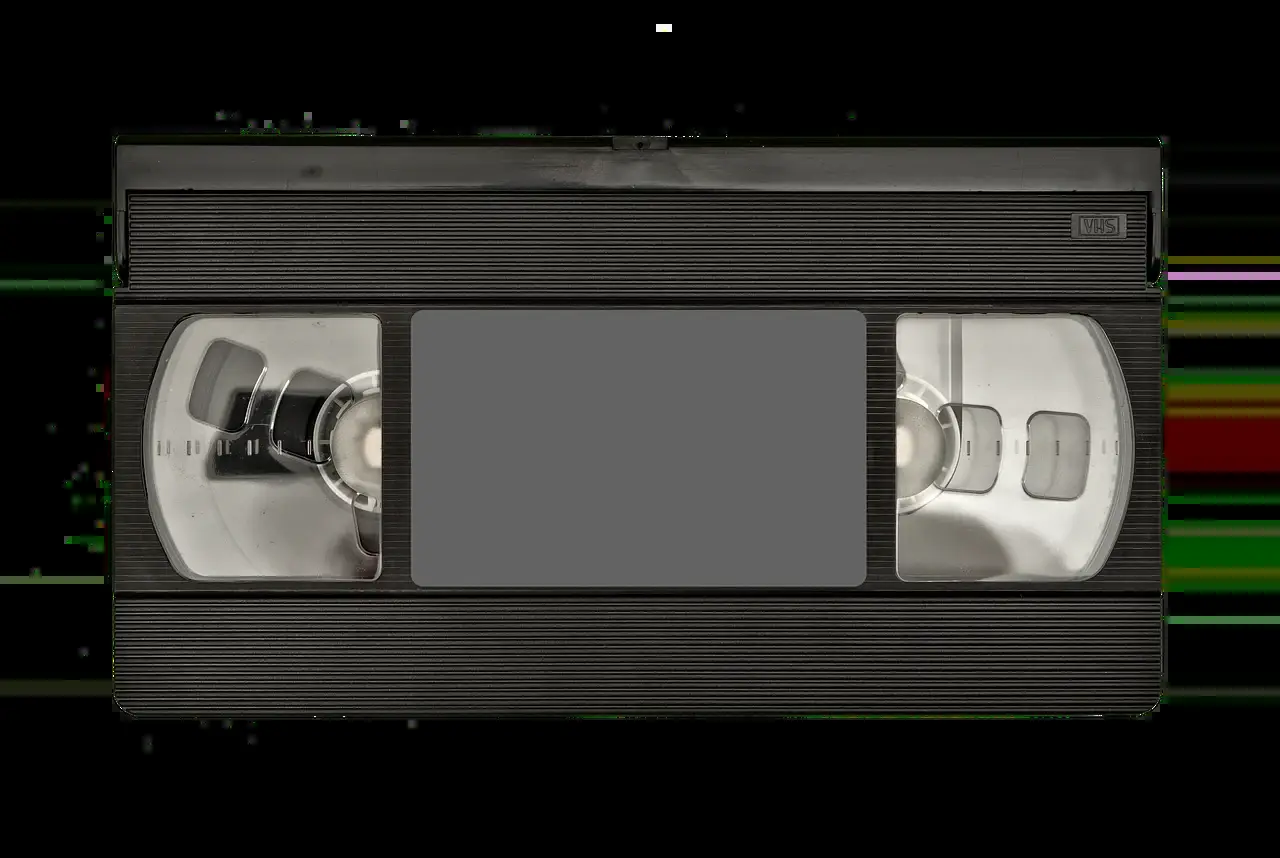
The primary output will be the latest-generation "FUJIFILM LTO Ultrium10" tape, the company's current flagship in the Linear Tape-Open format that dominates enterprise archival storage.
The move matters because it signals where the AI industry's real bottlenecks are forming. Training and running generative models creates enormous volumes of data that someone has to keep, and keeping it on disk is expensive. Tape offers large-capacity storage at relatively low cost, which is exactly what hyperscale operators need as their data footprints balloon.
Did the enterprise world ever really leave tape?
Mainstream consumers may have walked away from tape decades ago. The enterprise world never did. Cloud giants rely on tape to back up vast troves of data, and according to Fujifilm, "major cloud service and data center operators" have been expanding their use of magnetic tape because it can store large data volumes at relatively low cost.
Fujifilm's own history with the medium stretches back to the 1950s, when the company began working with magnetic tape as a data storage medium. That lineage frames Thursday's announcement as less a pivot than an acceleration of a business the company has quietly run for the better part of a century.
The timeline of the company's tape milestones tells the story:
- 1950s — Fujifilm begins working with magnetic tape as a data storage medium.
- 2000 — The company releases its first LTO Ultrium storage tape.
- 2011 — Fujifilm becomes the first company to commercially produce tape using barium ferrite magnetic particles.
- 2025 — Fujifilm debuts the LTO Ultrium10, the first storage solution in the medium to use what the company calls "fine hybrid magnetic particles," combining barium ferrite with strontium ferrite technology.
Each generation of tape — currently Gen 10 — has delivered meaningful increases in both compressed and uncompressed storage limits, the company said. That generational climb is what keeps a 70-year-old medium competitive against modern disk and flash storage for archival workloads.
What does ransomware have to do with it?
Cost is only half of tape's comeback story. The other half is security.
Tape backups can be easily disconnected and stored in a drawer, a vault, or an entirely separate facility. Fujifilm highlights the ability to air-gap tape cartridges — physically severing them from any network — as a last line of defense for user data.
"Given the sophistication of cyberattacks, magnetic tape is attracting increasing attention as a means of protecting data from threats such as ransomware," Fujifilm said in its announcement.
That argument has gained weight as ransomware attacks have grown more aggressive. Data that lives on a cartridge sitting in a vault cannot be encrypted, exfiltrated, or wiped by an attacker who has compromised a network. For cloud providers entrusted with petabytes of customer information, that physical separation is a selling point no purely digital backup can fully match.
How big is this bet for Fujifilm?
At roughly 10 billion yen, about $63 million, the investment is modest by the standards of semiconductor megaprojects. But Fujifilm's own framing gives it weight: the company describes it as the largest investment it has ever made in dedicated LTO tape facilities.
The three-year timeline — fiscal years 2026 through 2028 — means the expanded capacity will arrive as generative AI deployment, and its attendant data storage needs, are expected to keep climbing. The money funds both manufacturing expansion and additional personnel at the Odawara site, with production focused on the LTO Ultrium10 generation.
The choice of product is deliberate. The Ultrium10, debuting in 2025, represents Fujifilm's most advanced tape technology, pairing the fine hybrid magnetic particle innovation with the capacity gains of the tenth LTO generation. Producing more of its newest cartridge, rather than older formats, positions the company to serve operators whose archive requirements are growing fastest.
What happens next?
The expansion ties Fujifilm more closely to the infrastructure layer of the AI economy — the unglamorous storage tier that keeps training data, model checkpoints, and compliance archives intact. If generative AI keeps producing what Fujifilm calls "exponential growth" in data needs, the fivefold capacity increase landing between fiscal 2026 and 2028 could test whether even that is enough.
Source: Ars Technica AI
More from Elena Vasquez
Show full bio
Market editor covering technology and product news in artificial intelligence and machine learning at AI In Context.
357 articles
Related articles
- Treasury Yield Spike Threatens to Inflame the $4.1 Trillion AI Debt Boom
- Chinese data center builders chase the U.S. AI infrastructure boom
- OpenAI Says Compute and Revenue Both Grew 10X From 2023 to 2025
- SoftBank shares jump over 7% after $11.1 billion bond issuance
- NVIDIA to invest up to $100 billion in OpenAI for 10 gigawatts of AI infrastructure