Cohere Adds Timestamped Video Retrieval to Compass
Cohere's Compass now returns timestamped video segments with transcripts and visual descriptions, ranking first at 0.69 across 11 datasets as design-partner testing begins.
Why it matters
- Cohere launched Video Intelligence in Compass on November 16, 2026, reporting a 4.4-point average lead over the strongest alternative.
- Compass ranked first overall with an average nDCG@10 score of 0.69 across 11 datasets and 11,133 queries.
- Results include a link to original footage, a timestamp, a transcript and a visual description.
- Reported margins include 5.1 points over Gemini Embedding 2 on soccer broadcasts and 2.0 points over Qwen3-VL Embedding 8B on business video.
- Design partners can deploy in Cohere's managed cloud or their own environment and evaluate against their own footage.
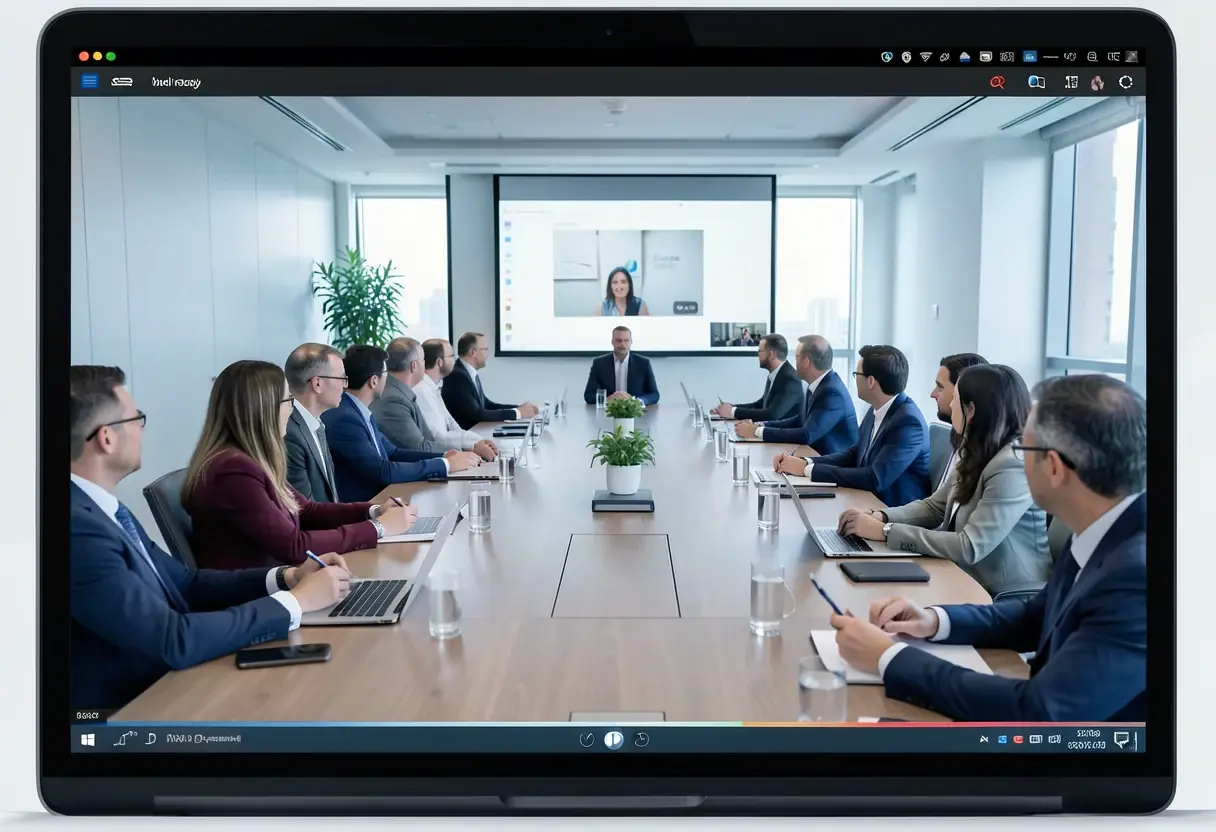
On November 16, 2026, Cohere introduced Video Intelligence in Compass and began recruiting design partners for timestamped retrieval of clips, transcripts and visual descriptions alongside documents, reporting a 4.4-point average lead over the strongest alternative in its video-ranking evaluation. The feature turns Compass from a document search system into one that can search what people said and what appeared on screen in recorded footage — and hand agents a citation back to the exact moment it happened.
That last part is the real story. Compass ranked first overall with an average score of 0.69 across 11 datasets in Cohere's evaluation, but the deeper shift is architectural: video and documents now share one permission-aware index, so an AI agent can retrieve a recorded decision and a related slide or spreadsheet in the same result set. Enterprise search has spent years stuck on text. This release points it at the terabytes of meetings, earnings calls, training videos and broadcasts that most companies can't currently search at all.
What does Video Intelligence actually return?
Compass doesn't chop footage into fixed clips ahead of time. Instead, a query returns a bounded segment selected at search time, with start and end points determined by the request itself. The system searches both spoken content and visible on-screen activity, so a query about a chart or a product demonstration can match what the camera showed, not just what a speaker said.
Each result is built for verification. It includes:
- A link to the original footage
- A timestamp for the segment
- A transcript of what was said
- A visual description of what appeared
That evidence trail matters because retrieval without provenance is nearly useless in enterprise settings. A meeting assistant can claim a decision was made; a result that points a reviewer to the corresponding point in the original footage lets them check it.
How do video and documents work together?
Video is indexed and retrieved within the same Compass system used for documents. A single result set can pair a recording segment with a related page, slide or sheet, and permission-aware retrieval limits each user to authorized content. That permission layer follows video across the same rules documents already live under, which is the unglamorous prerequisite for any enterprise adoption.
Organizations keep the usual controls. They can configure fields, choose models and select deployment options, including Cohere's managed cloud or their own environment.
The Compass MCP server gives agents a connection to the system. Through it, agents can analyze slides, charts and demonstrations in addition to spoken material. In practice, that extends enterprise search and agent workflows to visual evidence while retaining a route back to the source — the agent doesn't just answer, it shows where the answer came from.
Who is this for?
The intended applications connect retrieval to review work. Cohere sketches several scenarios:
- Meeting assistants surfacing decisions, forecasts and commitments from recorded meetings, earnings calls or analyst briefings
- Employees finding a particular demonstration or procedure in training material
- Legal and compliance teams locating statements and disclosures with supporting visual context
- Sports and media teams searching by play, player, camera angle or visible brand for highlights, licensing and sponsor reporting
That last use case is telling. Searching a soccer broadcast by camera angle or a visible sponsor logo is a far harder retrieval problem than keyword-matching a transcript, and it hints at why Cohere benchmarked heavily on broadcast footage.
How strong are the benchmarks?
Cohere's evaluation compared Compass with seven video embedding models across 11 datasets — six public benchmarks and five internal enterprise video datasets. The test ran 11,133 queries and scored results with nDCG@10, the standard measure of how accurately the top 10 search results are ranked. Compass ranked first overall with an average score of 0.69.
The margins varied by domain, and the strongest alternative changed depending on the task:
- 4.8 points over Amazon Nova 2, averaged across five open-source public benchmarks
- 5.1 points over Gemini Embedding 2 on soccer broadcasts
- 5.0 points over Gemini Embedding 2 on MultiVENT 2.0 news retrieval
- 2.0 points over Qwen3-VL Embedding 8B on business meetings, lectures and workplace-safety training
That 2.0-point figure deserves attention. The domains where enterprises actually hold most of their video — meetings, lectures, safety training — are where Compass's lead is narrowest. The bigger margins come on broadcasts and news, where the competition thins out. A first-place average doesn't tell you the model wins by the same margin everywhere your footage lives.
What is the design-partner program?
Cohere is not shipping this to everyone on day one. Design partners can deploy Video Intelligence in Cohere's managed cloud or their own environment, evaluate it against their own footage, queries and use cases, and work directly with Cohere's AI search team. Participants are also invited to influence future capabilities based on their organizational needs and experience.
That structure makes customer-owned footage and permissioned workloads the practical test of whether the reported ranking gains translate into useful retrieval. Benchmark wins on public datasets are one thing; an 11,133-query evaluation is rigorous but synthetic relative to a company's own archive of messy internal video.
Why does this matter?
The central enterprise proposition is a shared evidence trail across video and documents. An agent can retrieve a decision, demonstration or event and point reviewers to the corresponding point in the original footage — no switching systems, no guessing which meeting produced which commitment.
The stakes sit at the intersection of two trends. Enterprises are deploying AI agents that need grounded, citable sources, and video remains the largest body of unsearchable corporate knowledge. Permission-aware, timestamped retrieval is the mechanism that could close that gap, and Cohere is betting design partners will prove it on real footage before the wider rollout.
Source: unite.ai
More from Sophie Lindqvist
Show full bio
Staff writer covering regulation, policy and their impact on artificial intelligence and machine learning at AI In Context.
749 articles
Related articles
- Pangram says its new AI video detector flags 98 percent of generated clips
- Cohere ships Embed 5 with shared retrieval space across tiers
- YouTube Turns Search Into a Chatbot — and Publishers Should Worry
- AI Video in 2026: Wan 3.0 Leads at 1175 Elo, MiniMax H3 Is the Open-Weights Base
- Apple's HomeKit AI Video Summaries Can Cost Up to $59.99 a Month