Blue Planet III Keeps Cloudy Footage to Prove It Is Not AI
BBC producers kept murky, imperfect shots in Blue Planet III to prove its animals are real, with Jack Bootle stating: "No gen AI was used in this series. Not a single frame. It's all real photography."
Why it matters
- Blue Planet III premieres Sunday 1 November on BBC1 and iPlayer.
- Commissioning head Jack Bootle said: "No gen AI was used in this series. Not a single frame. It's all real photography."
- Filming spanned four years across five oceans and introduced the world's first underwater CCTV camera, dubbed "stonefish" cam.
- Narrator David Attenborough is 100 years old and made changes to scripts.
- The series made savings under the BBC's £500m cost-cutting drive by using more local crews on location.
The producers of Blue Planet III have deliberately kept cloudier, less polished footage in the BBC series to prove to viewers that its animals are not AI-generated. The disclosure, made ahead of the series launch, is one of the clearest signals yet that the spread of generative AI is reshaping how factual television is made and presented.
For the first time in the franchise's history, the BBC has issued an explicit on-the-record guarantee about its production methods. Jack Bootle, the BBC's specialist factual commissioning head, assured journalists at a press screening: "No gen AI was used in this series. Not a single frame. It's all real photography."
Why would a flagship BBC series want murkier footage?
The answer lies in a collision between technology and trust. Since the first Blue Planet aired 25 years ago, and since Blue Planet II drew global attention to plastic pollution nearly a decade ago, cameras and televisions have advanced to deliver ever sharper, higher-definition pictures. But that polish now carries a cost. Producers concluded that the combination of the rise in AI and the extraordinary sequences and fantastical creatures captured by BBC Studios' natural history unit for this series could make audiences doubt what they were watching.
The result is a deliberate editorial shift toward what producers call more "organic" footage: shots previously considered unusable now stay in the cut.
Executive producer Elizabeth White said AI "makes us want to be even more authentic," adding that the creatures filmed in the deep ocean "are probably more remarkable than AI could imagine and it's completely real."
She described exactly how the old editing habits worked. In the past, "the amount of plankton and things that are in the water in the sequences" would usually mean those shots might be excluded, and previously, "we might have framed out a boat or a buoy or gone: 'Oh, actually … the water conditions are not really good enough for this.'"
That standard has been reversed. Such elements are now left in, because, in White's words, "we're really leaning into that authenticity … As AI booms we will probably lean more into the more organic" footage — murkier and less polished.
The stakes run beyond one broadcaster. Blue Planet is one of the BBC's most commercially significant factual exports, produced by BBC Studios' natural history unit, and its editorial choices tend to influence wildlife filmmaking globally. If the genre's most trusted brand now feels compelled to prove its footage is real, the question of authenticity confronts every producer of factual imagery in the generative AI era.
What new technology does the series use?
The authenticity question is sharpened by the fact that Blue Planet III is itself built on genuinely new filmmaking tools. The series introduces what producers describe as the world's first underwater CCTV camera, dubbed "stonefish" cam.
The device was developed by the programme's producer and director, Yoland Bosiger, and it captured one of the series' headline sequences: never-before-seen behaviour of dolphins using sea sponges to block holes in coral to trap fish.
Series producer Lara Bickerton said BBC Studios "continually innovated" over the four years of filming across five oceans. The production toolkit included:
- a "mini-dome" camera built to follow an octopus;
- a "deep-sea selfie stick";
- camera operators wearing leg-mounted scooters to create immersive TikTok-style diving footage;
- lasers used to film deep-sea creatures.
The contrast is stark: the same series that showcases cutting-edge capture technology also preserves imperfect, plankton-filled frames as evidence of its own honesty. The tools got better; the tolerance for polish went down.
What animal behaviour will viewers see?
Bootle framed the series against a saturated market. He said we live in a "golden age of natural history-making" and that "sometimes people feel like they've seen it all before," so "this series is bursting with novel behaviour."
The confirmed sequences include:
- dolphins using sea sponges to block coral holes and trap fish, filmed on underwater CCTV;
- grouper communicating with another species of fish;
- 200,000 crabs lining up in formation to feed;
- sea urchins using shells as sun hats;
- penguin footage that producers say echoes the Planet Earth II "iguana v snakes" sequence.
How does the series treat threats to the ocean?
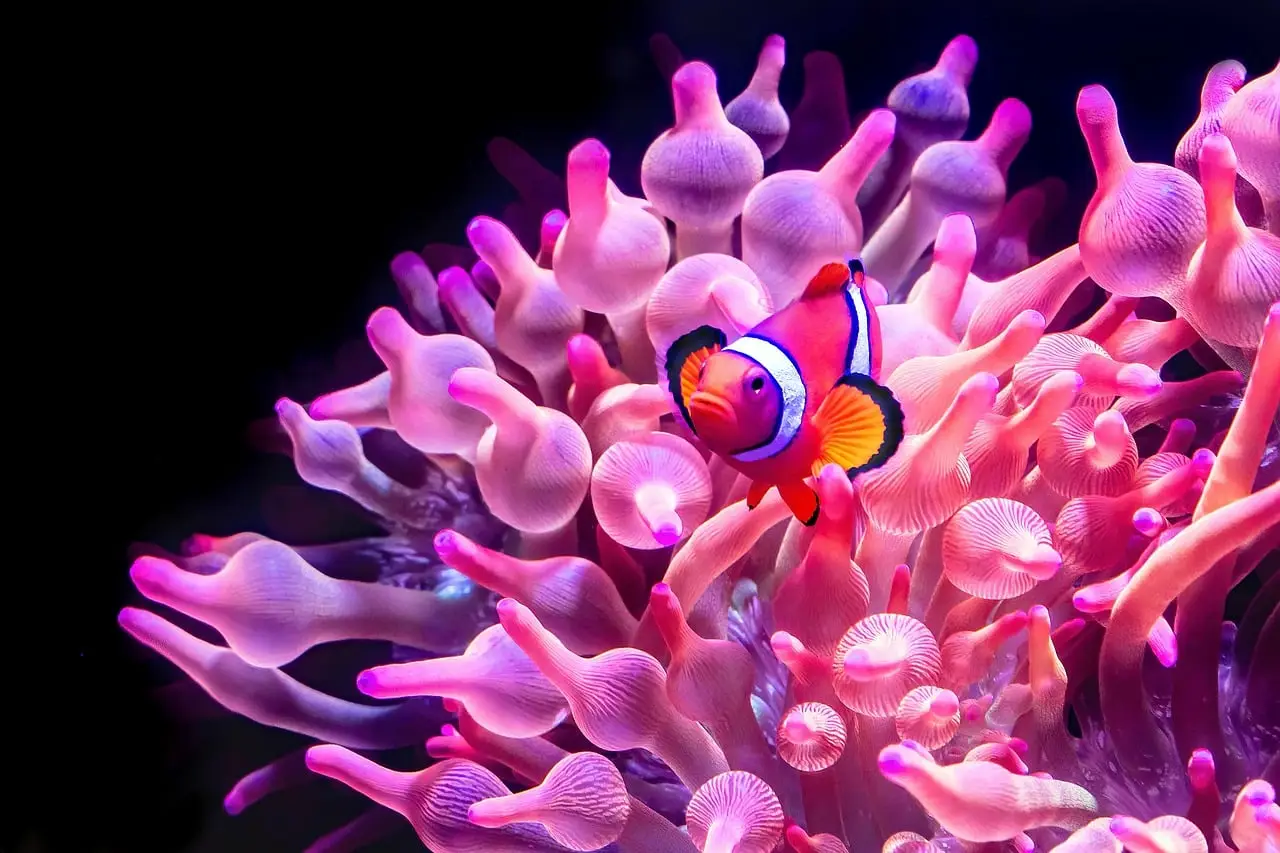
The programme covers both the damage to marine ecosystems and their resilience. Episodes show how the climate crisis is killing off the sea where anemone clown fish live and what those fish do to try to fix their homes.
The plastics story that defined Blue Planet II also continues. White said the new series carries a story about pollutants and forever chemicals, extending the franchise's decade-long engagement with ocean contamination from visible plastic waste to persistent chemical pollution.
The environmental thread gives the series its policy weight. Blue Planet II's plastic coverage in 2017 fed directly into public and political debate on single-use plastics, and the decision to address forever chemicals places the new series inside an ongoing regulatory conversation about persistent pollutants.
What role does David Attenborough play?
David Attenborough, who is 100 years old, narrates the series and remained hands-on. Bosiger said he was "very much involved" and made changes to scripts.
White added: "What's wonderful is he hasn't lost his curiosity … he's still that little boy … who gets excited … when you show him a new piece of footage."
Will BBC cost-cutting affect the natural history unit?
The BBC is operating under a £500 million cost-cutting drive, and journalists asked whether it would affect BBC Studios' renowned natural history output. White said she could not comment on that question directly, but she pointed to one concrete measure: Blue Planet III made savings by using more local crews on location than in previous series.
The answer leaves the question open. The unit's reputation rests on expensive, multi-year expeditions — four years and five oceans in this case — and the shift toward local crews suggests one way the economics of that model are being adjusted without cutting ambition on screen.
Blue Planet III starts Sunday 1 November on BBC1 and iPlayer.
The series arrives at a moment when audiences can no longer assume that astonishing footage was photographed rather than generated. By keeping boats, buoys and plankton in frame, and by having a commissioning head state on the record that not a single frame is synthetic, the BBC has turned imperfection into a credential — and set a disclosure standard that other factual producers may soon find hard to avoid.
Source: The Guardian AI
More from Rebecca Stone
Show full bio
Correspondent covering companies, deals and strategy in artificial intelligence and machine learning at AI In Context.
378 articles
Related articles
- Hollywood Turns Its Lens on Zuckerberg, Musk and Altman
- Grok Posts Seven Minutes of Its AI-Generated 'Odyssey' After Musk's Movie Pledge
- Odyssey-3 world model opens as free public research preview
- A Developer Let Claude Debloat His TV — Here's Why You Shouldn't
- Claude Science Produces First Complete Ultraviolet Map of the Sky