Base Group readies $150 million rescue for Eric Trump-backed robot maker
Base Group is preparing a $150 million investment in Foundation Future Industries, an armed-robot maker backed by Eric Trump that has missed payroll, deepening Trump-family business ties under Senate scrutiny.
Why it matters
- Base Group is preparing to invest $150 million in Foundation Future Industries, per internal emails seen by Reuters.
- Foundation, advised by Eric Trump, stopped paying employees; CEO Sankaet Pathak called it "a timing issue" in a November 8 email.
- Foundation has raised $11 million from Tribe Capital, Defined and Gaingels, according to Pitchbook.
- Democratic senators questioned whether Base Group's $2 million payment to the Trump Organization in 2025 was tied to aluminum tariff relief.
- CNBC reported Pathak took a $4.6 million company loan in August 2025 to buy a California home.
South Korea's Base Group is preparing a $150 million investment in Foundation Future Industries, a struggling U.S. military-robot maker that employs Eric Trump as chief strategy adviser and has stopped paying its employees, according to internal company emails seen by Reuters.
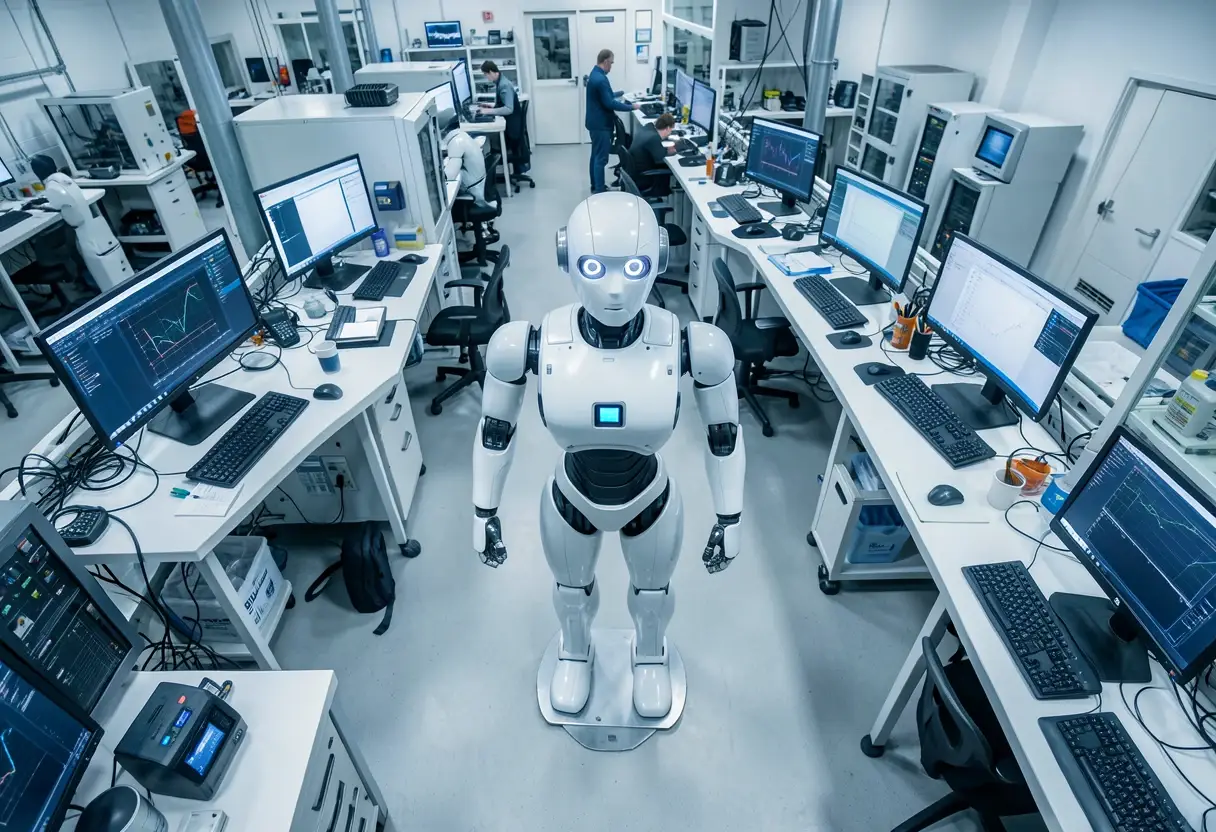
The funding has not kept pace with the company's bills. Foundation Future Industries, which builds gun-carrying "Terminator"-style robot soldiers, missed payroll in recent weeks and is betting its survival on the Base Group deal, CEO Sankaet Pathak told staff in emails.
"My read, given where Base is, this is a timing issue, not an existential one for the company," Pathak wrote in a November 8 email.
A Base Group spokesperson confirmed the conglomerate is weighing an investment, "recognizing the long-term value and growth potential of humanoid robotics," but declined to answer further questions. The planned investment has not previously been reported. CNBC first reported that Foundation had stopped paying employees.
Why does this deal matter beyond one startup's payroll?
Because the money comes with political weight. Base Group, a Seoul-based conglomerate, already has business ties to the Trump family that have drawn congressional scrutiny, and Foundation is one of the Trump family's highest-profile bets on defense technology — a sector the family has pushed into over the past two years as companies vie for Pentagon contracts.
In an August open letter, Democratic senators demanded that Base explain its relationship with the Trump family. They questioned whether a $2 million payment the conglomerate made to the Trump Organization in 2025 was connected to its efforts to win relief from U.S. aluminum tariffs. The senators wrote that any such quid pro quo would be an "egregious example of Trump Administration corruption."
Base Group did not address questions about the congressional scrutiny in its statement to Reuters. Spokespeople for the Trump Organization and Eric Trump did not respond to requests for comment, and Foundation and Pathak did not reply either.
The takeaway: a rescue for a cash-strapped robot maker is also a stress test for how closely a foreign conglomerate can tie itself to the sitting president's family business.
What exactly is Base Group buying into?
Foundation Future Industries sits at the intersection of two hot markets: humanoid robotics and defense tech. The company makes armed robot soldiers of the kind once confined to science fiction, and it has recruited a politically connected adviser to help open doors.
Eric Trump appeared on Fox News in April alongside Pathak and said he joined the company to help the U.S. beat China in humanoids. "That's exactly what Sankaet is doing, and he's doing a phenomenal job," Eric Trump said.
Pathak is a Silicon Valley founder who previously led fintech startup Synapse, which filed for bankruptcy in April 2024. He launched Foundation months later and has raised $11 million from investors including Tribe Capital, Defined and Gaingels, according to Pitchbook.
That means Base Group's proposed $150 million would dwarf everything Foundation has raised so far — roughly thirteen times its known investor backing.
How does Base Group plan to structure the deal?
Not as a simple cash injection. In a November 12 email to employees, Pathak framed the arrangement as a strategic alliance with material supply at its core.
"This is a long-term partnership and not just a financing event," he wrote.
According to Pathak's emails, the deal includes:
- A $150 million investment from Base Group into Foundation.
- A joint venture under which Base would supply aluminum for the robots.
- Lithium from the same partnership, destined for the robots' batteries.
Base Group Chairman Kim Seong-jip has a specific strategic rationale, Pathak told staff. The chairman "sees humanoid robotics as the biggest unlock for the labor constraints across their businesses. He sees Foundation as the company doing it right," Pathak said.
That framing matters for the supply side: Base Group is a major aluminum producer seeking tariff relief in the U.S., and humanoid robots are typically built from aluminum and powered by lithium batteries — materials Base itself would provide.
The takeaway: Base isn't just funding a startup; it wants to build the supply chain underneath it.
What else is in the emails and reporting?
On November 14, CNBC reported that Foundation had stopped paying employees and that Pathak had taken a $4.6 million loan from the company to purchase a home in California. The loan's existence, disclosed alongside the payroll problems, raised the obvious question of cash priorities at a startup that couldn't meet its payroll.
Pathak addressed the issue directly in an email to employees. He said the loan was agreed in August 2025 and "had no relationship to the current cash situation."
The company's investors — Tribe Capital, Defined and Gaingels — have not publicly commented on the payroll lapse or the proposed rescue. Foundation and Pathak did not respond to requests for comment from Reuters.
How deep do the Trump-family ties already run?
The relationship between Base Group and the Trump Organization goes back years and spans several industries. Base Group has worked with the Trump Organization since at least 2017, when one of its subsidiaries secured an agreement to import wine from Trump Winery, the family's vineyard business.
In February, the company hosted Eric Trump in Seoul for a summit focused on potential business partnerships between the United States and South Korea, according to local media reports. Then in August, the Trump Organization announced it was building a golf course in South Korea in partnership with Base.
Add Foundation to that list — wine, golf and military robots — and the pattern becomes the story: a single Korean conglomerate now touches the Trump family's hospitality business and its defense-tech ambitions at the same time.
The takeaway: each new deal between Base and the Trumps gives Senate Democrats more material for their corruption inquiry.
What happens next?
The investment isn't closed. Base Group says only that it is "considering" the deal, and the company declined to answer follow-up questions about timing, terms or the congressional scrutiny. Foundation's employees, meanwhile, are waiting on back pay that depends on money that hasn't arrived.
If the $150 million lands, Base Group becomes the dominant financial force behind an armed-robotics startup advised by the president's son — while the same conglomerate seeks U.S. aluminum tariff relief and builds a golf course with the Trump Organization. If it doesn't, a company that has raised just $11 million and missed payroll faces the same arithmetic that sank its CEO's previous venture.
Either way, the August open letter from Senate Democrats guarantees that this deal will be examined not just as a business transaction, but as a test of how far Trump-family business entanglements can stretch before regulators and lawmakers force an accounting.
Source: feed.koreatimes.co.kr
More from Sophie Lindqvist
Show full bio
Staff writer covering regulation, policy and their impact on artificial intelligence and machine learning at AI In Context.
823 articles
Related articles
- Ballistic Ventures seeks $490M for two new cybersecurity funds
- Agile Robots Closes $500M Series F at $8.5B Valuation
- Korea's AI Funding Boom Concentrates on Chips and Models, Starving Services
- Pluto Security Exits Stealth With $42M to Watch What AI Agents Do
- Genesis AI Raises $500M to Put General-Purpose Robots to Work