Anthropic Raises $81.3 Billion in Largest IPO on Record, Up 17% on Day One
Anthropic raised $81.3 billion at $83 per share and closed day one at $97.17. History says five of six similar IPOs were underwater within six months, and SpaceX already is.
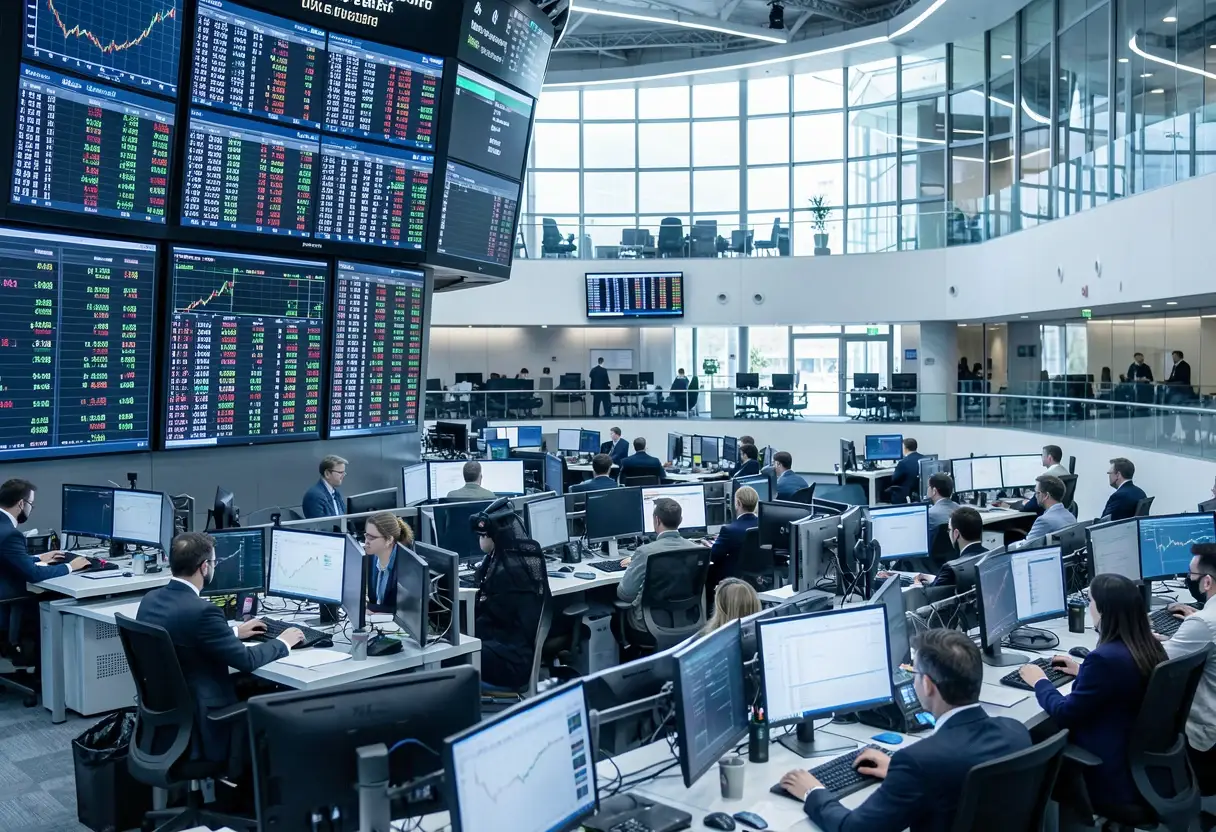
Why it matters
- Anthropic sold 980 million shares at $83 on Nov. 18, raising $81.3 billion — the largest IPO on record — and closed day one at $97.17, up 17%.
- Five of the six biggest tech IPOs since Facebook traded below their first-day close six months later; three lost more than half within a year.
- SpaceX closed its first day at $160.95 in June and now trades about 14% below that, with up to 797.6 million shares unlocking Dec. 8.
- Anthropic's first-half 2026 revenue was $16.3 billion, up from $1.2 billion a year earlier, with a $693 million operating loss.
- Sam Altman said OpenAI plans to be a public company 'at some point,' with no date.
Anthropic raised $81.3 billion in the largest IPO on record, selling 980 million shares at $83 each on Nov. 18 — above the marketed range of $70 to $78 — and closed its first trading day at $97.17, up 17%. The stock, listed on the Nasdaq under the ticker ANT, opened Thursday at $111.50 before settling lower. The deal beats Elon Musk's SpaceX (NASDAQ: SPCX), which listed in June and became the previous record holder.
The offering reserved up to 20% of the deal for individual investors through their brokers. Everyone without an allocation paid the market price, and that gap between the $83 offer and the first-day close is where the historical record turns cautionary.
Why the first-day close matters
Here is what the six biggest technology IPOs since Facebook did after their first day, computed from adjusted closing prices: five of the six traded below their first-day close six months later and behind the S&P 500 (a broad market index) over the same period. Three of them — Facebook, Uber and Rivian — lost more than half their value from the first-day close within a year.
Put $10,000 into each of the six at its first-day close, $60,000 in all, and six months later the basket was worth $53,654, down 11%. The same $60,000 in an S&P 500 fund across the same six windows would have grown to $64,110. After a year the basket was still down 2% against the index's 14% gain. Only at three years did it pull level: $91,068 against $90,060, with Arm and Facebook carrying Uber, Snowflake and Rivian, all three still below their starting points. The plain takeaway: giant IPOs have usually gotten cheaper after day one, and the index was rarely the worse place for the same money in the first year.
What the numbers show deal by deal
The record, from adjusted closing prices, is stark in both directions:
- Facebook (2012): $38 offer, $38.23 first-day close. $10,000 at the close was worth $5,995 at six months (S&P 500 up 8%), $6,738 at one year, and $21,155 at three years (S&P 500 up 75%).
- Alibaba (2014): $68 offer, $93.89 close. $9,132 at six months, $6,806 at one year, $19,179 at three years (S&P 500 up 32%).
- Uber (2019): $45 offer, $41.57 close. $6,529 at six months, $7,611 at one year, just $5,694 at three years against an S&P 500 up 46%.
- Snowflake (2020): $120 offer, $253.93 close. $9,142 at six months, $12,741 at one year, $6,358 at three years.
- Rivian (2021): $78 offer, $100.73 close. $2,262 at six months — a 77% loss — $3,272 at one year, $1,096 at three years.
- Arm (2023): $51 offer, $63.59 close. $20,594 at six months, $21,764 at one year, $37,586 at three years.
Arm is the outlier that doubled and kept going. Rivian is the tail risk. Both belong in the same table because nobody knows in advance which one a new listing resembles.
Warren Buffett's rule on new issues
Buffett has a rule on this. Days before Uber listed in 2019, he told CNBC's Becky Quick: "In 54 years, I don't think Berkshire has ever bought a new issue." His reasoning was that in an IPO everyone involved is paid to sell the stock to you. The caveat: Berkshire did buy into Snowflake's 2020 IPO at the offer price, a bet credited to his deputies. The offer price is the point — in six of the seven cases, SpaceX included, the offer price sat below the first-day close, so the buyer with an allocation collected the pop that the day-one buyer paid for. For Anthropic, allocation holders paid $83; everyone after them paid the market.
Is SpaceX following the script?
SpaceX, the freshest comparable, is tracking the pattern so far. It priced at $135 on June 11, closed its first day at $160.95, up 19%, then slid to $108.27 on Aug. 5 — 33% below the first-day close. It now trades near $138, about 3% above the offer price and 14% below the first-day close, while the S&P 500 is roughly flat since June 12. Every $10,000 put in at SpaceX's first close is $8,601 today.
The next test date is Dec. 8, when the last tranche of the lockup (a restriction preventing insiders from selling) expires and up to 797.6 million more shares become eligible for sale. That is about 5.9% of the 13.58 billion shares outstanding, roughly $110 billion of stock at the current price, and more shares than the 638.9 million SpaceX sold in the IPO itself. Musk's own shares stay locked until June 2027. Whether holders sell is their choice; what Dec. 8 changes is how much can be sold.
What Anthropic's filing actually says
The prospectus gives anyone buying the business rather than the pattern something to weigh. Anthropic's revenue in the first half of 2026 was $16.3 billion, up from $1.2 billion a year earlier, against an operating loss of $693 million. The $80.7 billion net loss was mostly a $72.4 billion accounting charge tied to convertible notes. A founder entity led by Dario and Daniela Amodei holds 50.1% of the voting power. The lockup is staged rather than a single 180-day cliff: some employees and early investors can sell sooner, and the co-founders are held longer.
Wall Street and rivals are watching. Dan Ives of Yorkville Ives called the deal an "important step" for the AI buildout. Sam Altman said Wednesday that OpenAI plans to be a public company "at some point," with no date attached — a promise without a schedule, which is itself information.
How to size a day-one position
The source anchors this with a real case: a 67-year-old retired engineer with $2.4 million in a rollover IRA (a retirement account funded from an old employer plan) wants to put $10,000 into Anthropic. That is 0.42% of his portfolio, about 103 shares at Thursday's $97.17 close. On Rivian's six-month path it would be worth $2,262, a loss of $7,738 — about a third of a percent of the IRA. On Arm's path it would be $20,594. The pattern says the hobby usually got cheaper: in five of the six cases, a buyer who waited six months paid less than the day-one buyer.
Inside an IRA, a loss buys nothing at tax time; in a taxable account it can at least be harvested. The sizing is the real decision — set the dollar amount from the Rivian case, not the Arm case, and keep it small enough that losing three quarters of it changes nothing.
Where the pattern is weak
Seven cases are a pattern, not a rule. These names are known precisely because each was among the biggest listings of its year, so they are not a random sample. Arm went up and kept going, and Anthropic's revenue is growing faster than any company on the list was growing when it listed. Rivian's first months ran into the 2022 bear market, which is why its S&P 500 comparison figures are negative too. Facebook and Alibaba were two of the five six-month fallers, and both had doubled from their first-day close three years on. The first-day price of a giant IPO has rarely been the low — but it has also rarely been a verdict on the business underneath.
Source: 247wallst.com
More from James Calloway
Show full bio
News editor covering people, launches and day-to-day practice in artificial intelligence and machine learning at AI In Context.
791 articles