Anthropic's Claude for Manufacturing plugs AI into factory software
Anthropic's Claude for Manufacturing connects its AI to Autodesk Fusion, NetSuite, Infor and Microsoft 365 with 17 skills, from drafting quotes to rescheduling production after human approval.
Why it matters
- Claude for Manufacturing ships with 17 specific skills across four integrations: Autodesk Fusion, Oracle NetSuite, Microsoft 365 and Infor.
- The Infor plugin lets Claude order from backup suppliers and reschedule production, but only after human approval.
- Anthropic's Model Hardware Standard, a research preview, cuts AI-to-device setup time from weeks or months to hours or minutes.
- The plugin is available to Team and Enterprise customers and does not control physical machines yet.
Anthropic has released Claude for Manufacturing, a plugin that gives its Claude AI direct access to industrial software to automate factory workflows. The product connects to four widely used business and engineering systems: Autodesk Fusion, Oracle NetSuite, Microsoft 365, and Infor. For factories running other software, Anthropic offers a narrower path — file exports into Microsoft 365.
The stakes are straightforward. Manufacturing runs on fragmented software stacks, and vendors have long promised AI that can work across them without custom integration projects. Anthropic's pitch is that a single AI layer can now read inventory, drafting tools, and supply-chain records and act on them — with a human checking the output.
What can Claude actually do on the factory floor?
The plugin ships with 17 specific skills. According to Anthropic's description of the product, Claude drafts quotes from actual inventory data, compares suppliers, generates quality reports and design variants, and analyzes sensor data and manuals when machines go down.
That last use case is notable. Downtime analysis has traditionally required an engineer to cross-reference machine telemetry against technical documentation. Claude for Manufacturing automates the reading portion of that job — pulling together sensor readings and manuals to explain what likely went wrong.
The takeaway: the AI handles document-heavy, cross-referencing work, not the physical work.
Who approves the decisions?
Supply-chain actions get a safeguard. Through an added Infor plugin, Claude can order from backup suppliers when deliveries are delayed and can reschedule production around the disruption. Both actions happen only after human approval.
Anthropic has also built traceability into the workflow. Every result the AI produces links back to the original source documents, so employees can review what Claude based its output on before anything reaches a customer or a supplier.
The takeaway: a person signs off before the AI commits the company to spending money or promising dates.
Why the AI doesn't touch the machines yet
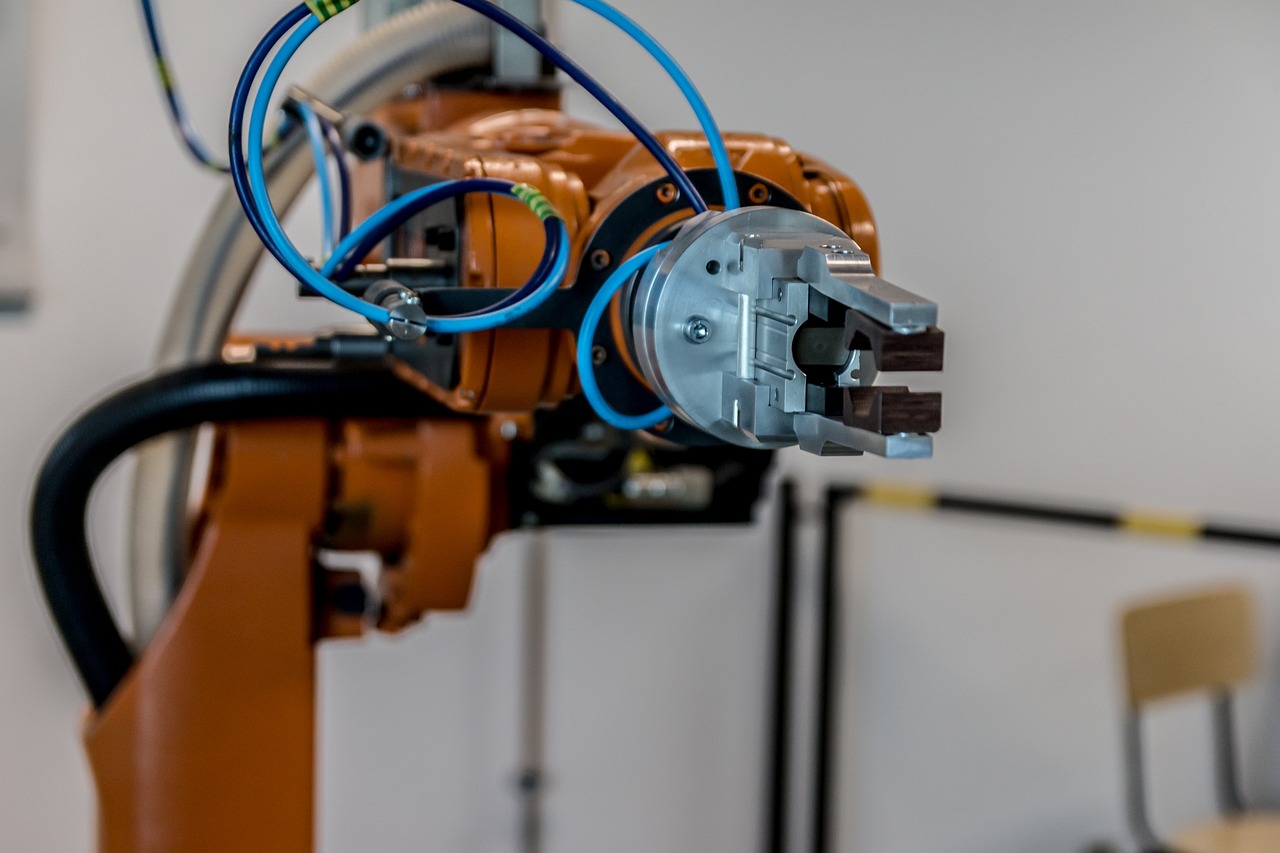
Claude for Manufacturing is software-only. It does not control physical equipment — a deliberate limit, and one that matters. Instead, Anthropic is developing a separate effort for the physical side: the Model Hardware Standard, currently a research preview.
The standard connects AI agents to devices such as robotic arms and microscopes through standardized drivers. Anthropic says this cuts setup time from weeks or months down to hours or minutes. The caveat sits in the same breath as the promise: the system still requires human oversight, because the AI's grasp of physical processes remains limited.
The takeaway: faster deployment of AI-controlled hardware is coming, but Anthropic itself says the AI is not yet reliable enough to operate it unsupervised.
What does this mean for the market?
The product is available now to Team and Enterprise customers. That pricing tier signals Anthropic's target: mid-size and large industrial firms, not individual engineers or small shops.
For Anthropic, the release extends a strategy of verticalized AI products — purpose-built versions of Claude trained and tooled for specific industries rather than general-purpose chatbots. Manufacturing is attractive terrain for this approach because workflows are document-intensive, repetitive, and spread across incompatible systems: CAD files in Fusion, inventory in NetSuite, procurement in Infor, correspondence in Microsoft 365.
The competitive context: enterprise software vendors are racing to embed AI agents into their own platforms, and Anthropic is positioning Claude as the connective tissue between them rather than a replacement for any of them.
The open question is adoption. Anthropic has announced the capability set; it has not, in this release, published case studies, efficiency figures, or customer names. Factories are slow, audit-heavy environments, and a plugin that drafts quotes and analyzes downtime will earn trust only if its outputs survive review by the engineers and buyers who use them.
The takeaway: the technology now exists to automate the paperwork of manufacturing — whether industrial customers hand over their workflows is the test ahead.
Original: claude.com
More from James Calloway
Show full bio
News editor covering people, launches and day-to-day practice in artificial intelligence and machine learning at AI In Context.
574 articles
Related articles
- Anthropic's Claude for Manufacturing Ships With 17 Skills and a Hard Boundary
- Infor's New Claude Connector Can Execute Manufacturing Changes
- Anthropic Puts Sheets, Whiteboards and Live Dashboards Inside Claude
- Claude Duet arrives October 21: Anthropic's $20 answer to OpenAI's $100 agents
- Anthropic folds Claude Cowork back into Claude chat