551,864 Students Sit Korea's CSAT Under Anti-AI Cheating Crackdown
South Korea held the CSAT for 551,864 applicants with 75,000 proctors, glasses inspections and nationwide phone alerts, after a tax exam cheating scandal involving AI.
Why it matters
- 551,864 people applied for the CSAT, held at 1,312 test centers nationwide on Thursday.
- About 75,000 proctors and 8,400 additional personnel were deployed to catch cheaters.
- Cheaters face a 10-year exam ban; misconduct reports can earn up to 100 million won ($75,000).
- All aircraft takeoffs and landings were banned from 1:05 p.m. to 1:40 p.m. for the English listening test.
- The crackdown follows a tax accountant exam top scorer's confession to cheating with AI.
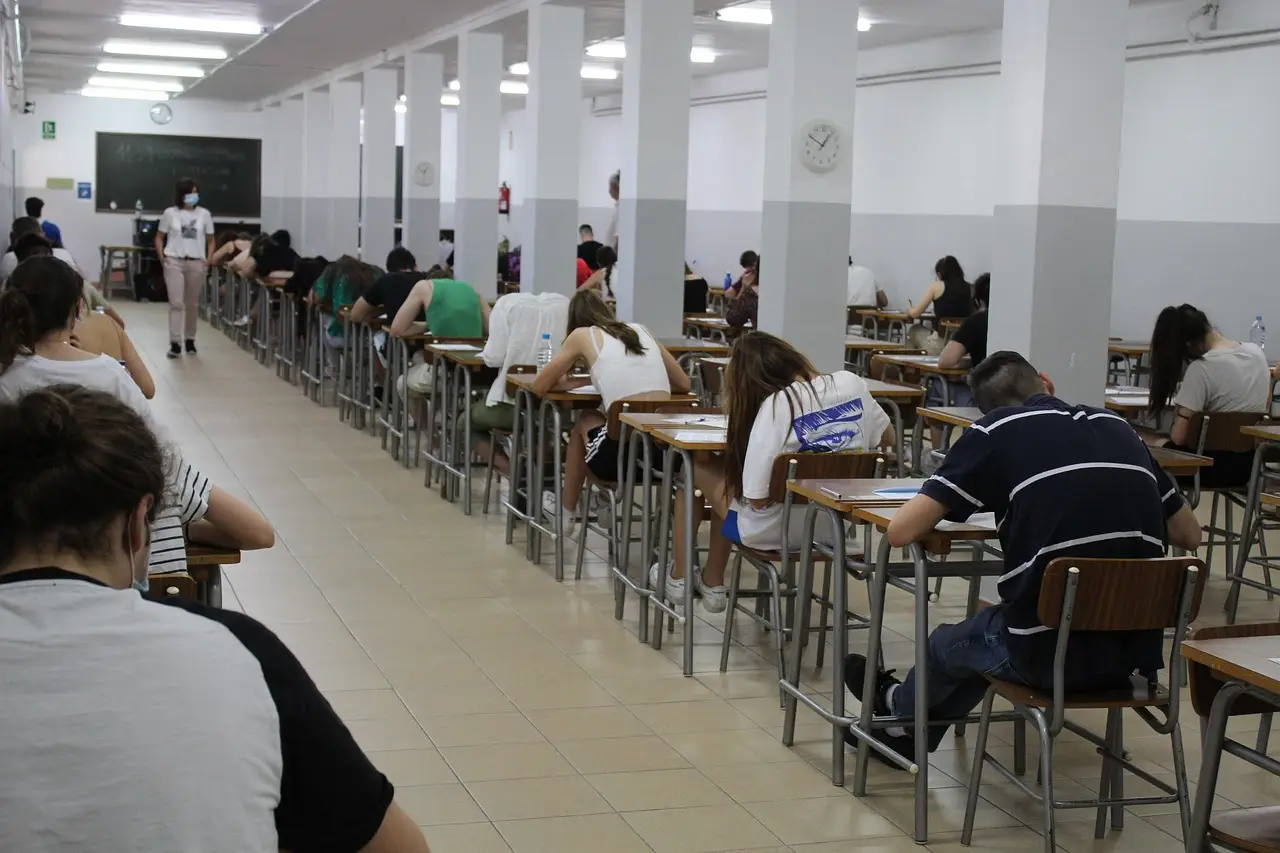
Some 551,864 people sat South Korea's College Scholastic Ability Test (CSAT) on Thursday, as authorities deployed roughly 75,000 proctors and 8,400 additional personnel to stop cheating involving smart devices and artificial intelligence. The exam began at 8:40 a.m. at 1,312 test centers nationwide and was scheduled to end at 5:45 p.m.
The measures mark the most visible escalation yet in the country's response to AI-assisted exam fraud, a concern that moved from speculation to scandal after the top scorer on this year's certified tax accountant exam confessed to cheating with the help of AI and digital devices. The confession sparked a public outcry and prompted the government to strengthen anti-cheating protocols for the CSAT, the nation's most consequential academic exam.
Why does this exam justify grounding every plane in the country?
The CSAT is the culmination of years of grueling study for many South Korean students, and it is widely treated as a major life event. In a country where the university one attends can heavily influence career prospects, the government mobilizes the state apparatus on exam day to an extent few other nations match.
The most striking example concerns aviation. All aircraft takeoffs and landings across the country were banned from 1:05 p.m. to 1:40 p.m. to minimize noise during the English listening portion of the exam. Aircraft already in flight, excluding those in emergency situations, were required to remain at an altitude of at least 3 kilometers under the direction of air traffic control authorities.
Transport and finance also bent to the exam schedule:
- Seoul added 27 subway runs so students could reach test centers on time.
- The local stock market, which normally opens at 9 a.m. and closes at 3:30 p.m., shifted its opening and closing times one hour later to ease morning rush-hour traffic.
The scale of the mobilization, measured in proctors, subway runs and grounded aircraft, reflects the exam's weight in Korean society — and the government's determination to protect its integrity against a new generation of tools.
What are the anti-AI cheating measures?
The crackdown targets the specific mechanisms by which smart devices and AI could be smuggled into exam rooms. Every pair of glasses worn by test-takers was checked for hidden cameras, and buttons on clothing were covered with stickers to block miniature cameras.
All electronic devices are banned from exam rooms. Test takers could bring in only pencils.
Authorities also weaponized the country's emergency alert system against concealed phones. A nationwide disaster alert, designed to reach nearly all mobile phones and ring a loud alarm even when devices are muted, sounded at 8:30 a.m. to expose any phone that had not been handed in. A second alert was planned at an unspecified time during the test.
The deterrent framework extends beyond detection to punishment and incentives. The government seeks to bar anyone caught cheating from taking the exam again for 10 years, and it has offered rewards of up to 100 million won ($75,000) for people who report misconduct. The 10-year ban and the whistleblower bounty together represent one of the harshest enforcement regimes attached to any standardized test.
How did students and parents react?
The strengthened checks produced friction of their own. Outside a high school in southern Seoul before the exam, 18-year-old test-taker Yoon Seong-hwan said he switched to contact lenses to avoid the glasses inspection.
"I usually wear glasses but I wore contact lenses because I felt a bit uneasy about being checked (for misconduct)," Yoon said. "I hope all students take the CSAT well without any misconduct."
Parents cheered on their children as they entered test centers, but many worried the anti-cheating measures could create unwanted distractions during the high-stakes test. Lee Jeong-ok, whose son was taking the exam at a high school in central Seoul, said she removed all the buttons from her son's clothes at his request — a household-level adaptation to a surveillance-level protocol.
That tension between exam integrity and exam-day calm is the core trade-off now facing Korean authorities. A single cheating scandal involving AI was enough to impose glasses inspections, sticker-covered buttons and mid-exam nationwide alerts on more than half a million people, most of whom, like Yoon, simply want to sit the test without misconduct.
What is at stake beyond one exam day?
The CSAT episode is a concrete case study in how generative AI is forcing institutions to redesign high-stakes assessment. The trigger was not the CSAT itself but the certified tax accountant exam, where the top scorer admitted using AI and digital devices to cheat — proof that the threat has already materialized in professional licensing, not just in student folklore.
The government's answer combines physical inspection, network-level detection through the disaster alert system, punitive exclusion measured in years, and financial incentives for informants. Each layer assumes a different attack vector: cameras in glasses, cameras in buttons, phones held back during collection.
The question that follows the class of this year is whether such measures scale. Glasses checks and button stickers add minutes per candidate; multiplied across 551,864 applicants at 1,312 centers, the overhead is substantial, and parents already report concern about distraction. As AI tools shrink in size and grow in capability, Korea's 10-year bans and $75,000 bounties signal that the country intends to treat AI-assisted exam fraud as serious misconduct — and that Thursday's checks are likely to become a fixture of the exam rather than a one-year reaction.
Source: feed.koreatimes.co.kr
More from Marcus Bennett
Show full bio
Senior reporter covering companies, deals and strategy in artificial intelligence and machine learning at AI In Context.
791 articles
Related articles
- South Korea orders A-to-Z overhaul of national exams over AI cheating
- Korea Will Blast Emergency Alerts Mid-Exam to Catch AI Cheaters
- Wi-Fi blocks and 'pea-sized cameras': South Korea's CSAT faces an AI cheating crisis
- Korea Blocks Wi-Fi at Exam Sites, Bans Pens in AI-Cheating Crackdown
- Korea to Cut Wi-Fi at College Entrance Exam Sites Over AI Cheating