Korea Blocks Wi-Fi at Exam Sites, Bans Pens in AI-Cheating Crackdown
Korea shut down public Wi-Fi within 100 meters of every CSAT site and restricted students to graphite pencils, aiming to block hidden cameras and smart glasses from feeding questions to AI.
Why it matters
- SK Telecom, KT and LG Uplus suspended Wi-Fi within 100 meters of every CSAT test site from 6 p.m. Wednesday to 6 p.m. Thursday.
- The Ministry of Education now allows only graphite pencils; felt-tip pens, correction tape, erasers and pencil lead are provided at test sites.
- The crackdown follows a tax accountant exam top scorer who admitted photographing questions with a hidden camera and checking AI-generated answers.
- The Korean Federation of Teachers' Associations said proctors were called up two days before the exam and trained the next day.
- Private routers and phone tethering cannot be blocked in bulk, leaving gaps in the Wi-Fi shutdown.
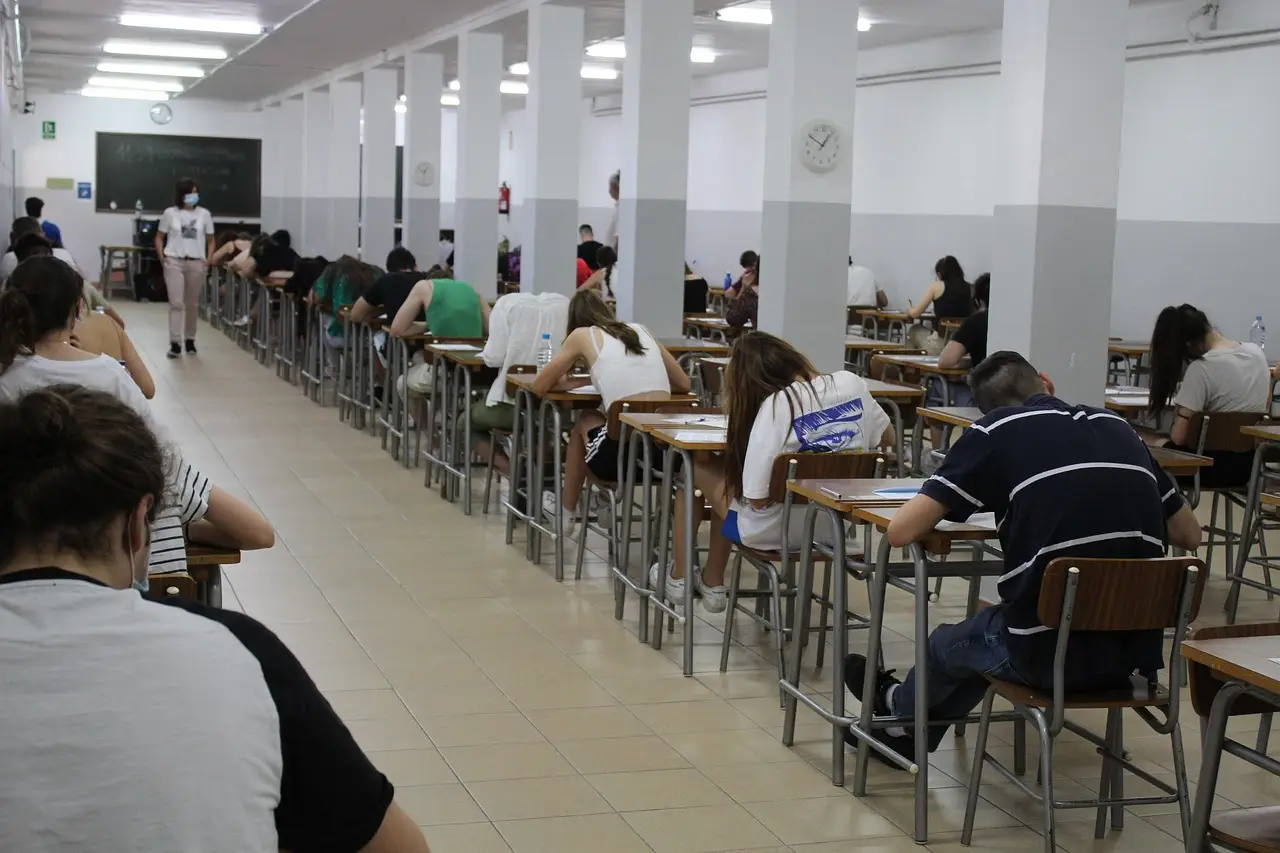
Korea's three mobile carriers — SK Telecom, KT and LG Uplus — suspended Wi-Fi within 100 meters of every College Scholastic Ability Test (CSAT) site from 6 p.m. Wednesday until 6 p.m. Thursday, as the government scrambled to block AI-assisted cheating on the nationwide exam. The Ministry of Education simultaneously restricted test-takers to graphite pencils, banning felt-tip pens, correction tape and other stationery that could conceal cameras or communication devices. The measures, announced hours before the exam, represent the government's response to a cheating incident that exposed how generative AI has changed the threat model for one of the country's most consequential institutions.
Why is the CSAT imposing emergency measures?
The CSAT is a nationwide standardized exam that largely determines university admissions in Korea. Its stakes are difficult to overstate: a single day of testing shapes the academic and professional trajectories of an entire age cohort. That weight is precisely why the government moved so aggressively this week.
The trigger was this year's certified tax accountant exam, where the top scorer admitted to photographing questions with a hidden camera and checking AI-generated answers on a smartphone. The case demonstrated that a determined cheater no longer needs accomplices or smuggled notes — only a concealed camera and a data connection. Educators and officials concluded that the CSAT, with far higher stakes, faced the same vulnerability.
The response came in two parts: cutting off the data connections that AI cheating requires, and removing the physical objects that could hide cameras inside exam rooms.
How did the Wi-Fi shutdown work?
The government asked each operator to cooperate separately, because the affected networks belong to different owners — central and local governments, regional education offices and the three carriers. The shutdown covers networks inside schools as well as public hotspots nearby.
The technical methods varied by equipment:
- Most networks were disabled remotely by stopping the broadcast of network names, known as SSIDs, so that devices cannot see the networks.
- Some operators cut the backhaul, the line linking the equipment to the internet.
- Older equipment was switched off on site, requiring physical visits by staff.
The shutdown is meant to stop test-takers from using smart glasses or tiny cameras to send questions out and receive AI-generated answers back. The 24-hour window, from 6 p.m. Wednesday to 6 p.m. Thursday, covers the evening before the exam and the full testing day.
The carriers said they will hand over access times, locations and other records to investigators on lawful request if suspected cheating comes to light after the exam. That commitment means the shutdown is not only preventive but also evidentiary: network logs could identify who connected, where and when.
What changed for students?
The Ministry of Education issued an urgent notice Wednesday that rewrites the list of permitted items. Test-takers were previously allowed to bring their own black felt-tip pens for marking answer sheets, correction tape, erasers and pencil lead. Now they may bring only graphite pencils. The other four items will be handed out at test sites.
The ministry said the change is meant to stop cheating with tiny cameras or communication devices disguised as stationery. Personal pencil sharpeners are also banned.
The enforcement rules are strict:
- Students who bring banned items must leave them in their bags outside the classroom.
- Anyone found carrying them during the test will have them confiscated and checked for misuse.
Only graphite pencils survive the new rules. The logic is straightforward: standardized, government-supplied stationery leaves fewer hiding places for electronics.
Can the measures actually stop AI cheating?
Educators questioned whether last-minute steps of this kind will work. The Korean Federation of Teachers' Associations said the plan shifts the burden onto proctors with little preparation.
"Proctors are being called up in a rush two days before the exam, trained the next day and sent in the day after," the group said.
"Will that give them the expertise to identify sophisticated AI cheating?"
The criticism targets a structural gap in the government's response. Detecting a hidden camera sewn into eyewear or a communication device disguised as a pen requires trained observation, and the teachers' federation argues that a one-day crash course does not provide it.
The technical coverage has limits as well. Routers installed by private individuals and tethering — which lets a phone share its mobile data connection — cannot be blocked in bulk. The carrier shutdown applies to public Wi-Fi and carrier-operated networks; it cannot reach the Wi-Fi hotspot a neighboring resident runs from a home router, nor a phone quietly sharing its cellular data. A student with a prepared device and a prearranged tethering setup would not necessarily be stopped by the SSID blackout.
The carriers' promise to hand over access records partly addresses this gap, but only after the fact. Investigation is not prevention.
What is at stake for AI policy in education?
The measures mark one of the most visible state responses in Korea to AI-assisted academic fraud, and they arrive through infrastructure rather than detection. Instead of relying on proctors to catch cheating in real time, the government is attempting to make the act technically impossible by removing the network layer it depends on.
The approach has clear economic and logistical costs. Coordinating three national carriers, multiple government network operators and regional education offices across every test site in the country, all within a 24-hour window, is an operational undertaking with no recent precedent. The decision to disable equipment physically where remote shutdown was impossible signals how uneven the installed base of public Wi-Fi hardware remains.
The tax accountant case showed the vulnerability. The CSAT response shows the countermeasure. Whether the countermeasure holds depends on questions the source leaves open: whether proctors can recognize concealed devices, and whether private networks and tethering create gaps wide enough for determined cheaters. The teachers' federation's doubt — voiced two days before the exam — now falls to the test results and any post-exam investigations to answer.
Source: feed.koreatimes.co.kr
More from Marcus Bennett
Show full bio
Senior reporter covering companies, deals and strategy in artificial intelligence and machine learning at AI In Context.
718 articles
Related articles
- Korea Will Blast Emergency Alerts Mid-Exam to Catch AI Cheaters
- Wi-Fi blocks and 'pea-sized cameras': South Korea's CSAT faces an AI cheating crisis
- South Korea Cracks Down on AI Cheating Before Thursday’s CSAT
- Korea to Cut Wi-Fi at 1,312 CSAT Sites to Block AI Cheating
- Korea to Cut Wi-Fi at College Entrance Exam Sites Over AI Cheating