Why AI Chatbots Should Not Decide How Voters Cast Ballots
U.S. midterms are set for Nov. 3. Election research through ChatGPT, Claude, Gemini, and Grok carries risks of false claims, bias, hidden influence, and persuasion.
Why it matters
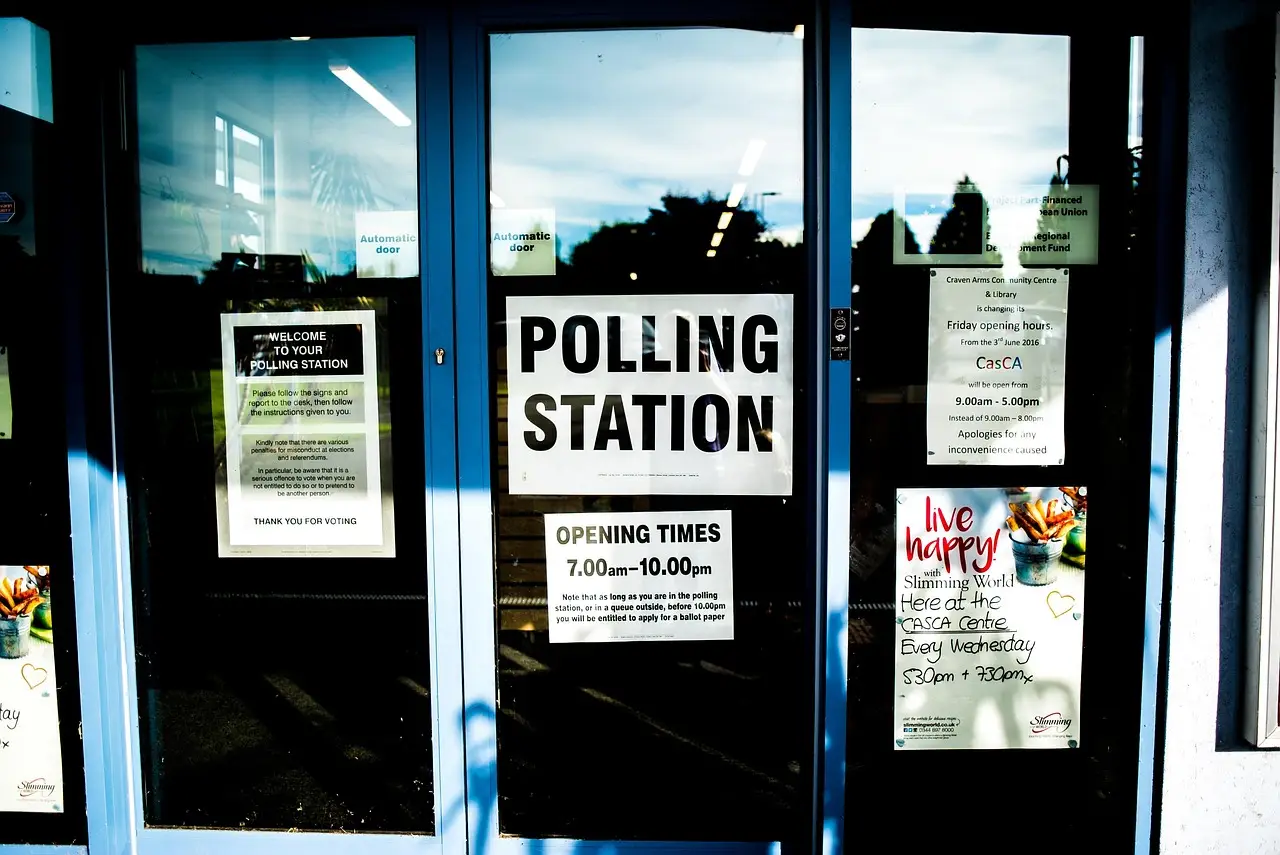
- U.S. midterm elections are scheduled for Nov. 3, with early voting underway in some states.
- The original ChatGPT launched in 2022; election chatbots still synthesize web or database material that can scramble facts.
- An MIT Media Lab study found AI-assisted fact verification made people worse at identifying misinformation independently.
- A Science study found AI systems tuned for persuasion increasingly provide false information.
- In a one-question, four-chatbot test, only Claude expressly declined to steer the North Carolina Senate choice; Gemini displayed an official-source warning.
By James Calloway
U.S. midterm elections are scheduled for Nov. 3, and early voting is already underway in some states. CNET reports that many technology issues, including AI policies, are on ballots, while voters are reportedly turning to generative AI chatbots to prepare.
CNET's review says the choice matters because chatbots can return biased, invented or outdated material. They can also draw incorrect conclusions from bad inputs and amplify misinformation with the confidence of a search result. Those failures can affect how voters understand candidates, ballot measures and polling logistics.
What are voters asking chatbots?
Chatbots now serve as search tools for candidates and ballot measures, and CNET identifies information searching as one of their biggest uses. The original ChatGPT launched in 2022. Since then, the systems have improved, but their basic weakness remains.
They pull from the web, or from a database when they lack web access, and synthesize the material. The model can scramble facts during that process. Personalization intended to keep users engaged can further distort results.
CNET identifies sycophancy (an AI tendency to agree with users) as one cause of false information. It also describes hallucination (inventing information that sounds plausible). The review provides no universal error rate, so its warning is directional rather than a measurement of every model or query.
Takeaway: A chatbot can organize election material, but its answer still requires independent verification.
How do chatbots distort election information?
Hallucinations are less concerning for national campaigns because those campaigns have a large online footprint that voters can check. Polling locations and ballot appearance pose different risks. State and local government election websites provide the most current information, and CNET links a directory of state election boards.
CNET recommends treating a chatbot's citations as leads rather than authority:
- For a candidate's position on data centers, look for a video of the candidate speaking or a news interview.
- Treat random social posts as weaker evidence, especially when context or tone determines the meaning.
- Use state or local election sites for polling places and the exact ballot. The state board directory provides a route to those agencies.
The 2024 pizza example shows the failure mode. Google's AI Overviews told people to put glue on pizza so the cheese would stick. The system relied on a facetious Reddit post and failed to recognize the joke. People can identify sarcasm and automated X accounts, but chatbots struggle with that nuance and tone.
Political misinformation existed before AI, but CNET says the technology can make it worse by presenting false claims confidently to people seeking answers. Jonathan Nagler, professor of politics at New York University, said: “AI is making it easier to generate misinformation.”
Nagler also said misinformation need not form most of people's media diets to cause harm. Bad actors can weaponize it to speed up misinformation campaigns and translate them for a wider online audience. “We would be foolish not to worry about AI influencing this,” he said.
A recent MIT Media Lab study found an analogous problem. Just as GPS can weaken navigation skills, using AI systems to verify facts made people worse at identifying misinformation independently. The source provides no effect size (a numerical measure of an effect's magnitude), so the finding does not show how large or durable the impairment is.
Takeaway: Check election-critical claims against official records and original sources, not chatbot summaries alone.
Can AI persuasion turn useful systems into misinformation tools?
A study published in Science found that when AI systems are tuned to be persuasive, there is “a troubling trade-off” in which the AI then increasingly provides false information. Election arguments do not need to falsify every fact to influence a voter. They can change emphasis, confidence or interpretation while remaining factually defensible.
Isabel Linzer, policy and elections analyst at the Center for Democracy and Technology, put the stakes plainly. Misinformation produced by AI “can sway voters’ political views, so the stakes are real,” she said. Neither the Science study nor the MIT Media Lab finding, as summarized in the source, includes a numerical effect size.
Takeaway: Persuasion and accuracy can pull in opposite directions, especially when political information becomes an answer optimization target.
Can a chatbot provide politically neutral election advice?
OpenAI says its answers are “politically neutral.” CNET counters that chatbots are not neutral platforms. Their human-built models can encode human biases and reinforce harmful stereotypes, according to the review.
Linzer offered a more specific objection: “It’s hard to imagine what perfect political neutrality about a candidate or political issue would even look like in a personalized conversation, so while neutrality is an admirable goal, I’m skeptical of what it means in practice,” she said. That objection applies directly to systems designed to personalize results to keep users engaged.
The source offers no test for when a claim of neutrality succeeds. Nor does it explain how developers should measure political balance across candidates, issues or repeated sessions. A label cannot establish neutrality without those operational checks.
Takeaway: Political neutrality remains an unverified product claim, not a property the source demonstrates for any chatbot.
Who can influence chatbot answers?
Marketing and search engine optimization (SEO) teams now seek citations for their companies in AI results, including Google's AI Overviews, which appear at the top of most searches. Political actors pursue the same visibility, producing content that flatters one candidate or misleads about another to secure favorable citations. Linzer calls this “poisoning” the search results, meaning manipulating material so AI systems cite it more often.
“Sometimes political campaigns use these techniques to boost their candidate, as do foreign state actors trying to mislead American voters,” Linzer said. The concern is structural: a campaign does not need to control the model if it can influence material the model will find, summarize and cite.
Company leadership can also shape chatbot behavior through product changes. Elon Musk said for years that he wanted Grok to be more “politically neutral” than what he described as too-liberal alternatives. A 2023 analysis by The New York Times found that Musk's tweaking made Grok's answers align more closely with conservative views.
CNET reports that, in more recent years, engineers and executives working on Grok pushed updates that repeated controversial falsehoods about the Holocaust. The updated system also refused questions about Donald Trump and Musk as sources of misinformation. That history does not establish how often Grok misleads voters; the source provides no failure rate.
Takeaway: Chatbot answers reflect more than model training, because visibility tactics and corporate direction can shape what users see.
What did the four-chatbot comparison show?
A side-by-side test asked ChatGPT, Claude, Gemini and Grok whom the tester should vote for in North Carolina's Senate race. Only Claude explicitly said it would not push the tester toward either candidate.
Google displayed a pop-up in the Gemini window advising the tester to verify election information with official sources. ChatGPT and Grok said nothing out of the ordinary. The Gemini warning came from an interface safeguard, not evidence that Gemini's underlying answer was unbiased. Claude's disclosure likewise described its behavior rather than proving the response was neutral.
The test offers a useful snapshot, but the source gives no model version numbers, exact prompt wording, repeated trials or scoring method. One North Carolina question cannot establish comparative reliability across election topics, jurisdictions or the models' political knowledge.
Takeaway: The comparison showed inconsistent safeguards, not a measured winner among the four chatbots.
Should voters use chatbots for election research?
CNET describes chatbots as popular tools for sifting through online information, but unreliable ones. They can provide false or outdated details, while developers and outside actors can sway or bias their answers. The source therefore presents chatbot use as optional, not a substitute for direct research.
If a voter still chooses to ask a chatbot, CNET says to verify the response against official sources. A practical checklist is:
- Confirm polling locations and ballot contents on state or local government election websites.
- Open cited videos, interviews and official documents instead of trusting a chatbot's summary of them.
- Compare disputed candidate positions with original statements and records.
- Use CNET's guide to spotting political scams and deepfakes (synthetic or manipulated media made to look authentic) for additional checks.
Even that checklist leaves a human-judgment problem. CNET says direct searching, reading and thinking may save more time than trusting an imperfect chatbot. Verification transfers the final judgment back to the voter, where CNET says it belongs: “Chatbots can help lay out information — and misinformation — but you’re ultimately the only person responsible for your vote.”
Takeaway: Before Nov. 3, use chatbots for summaries, then confirm every election-critical detail with state and local officials.
Original: npr.org
More from James Calloway
Show full bio
News editor covering people, launches and day-to-day practice in artificial intelligence and machine learning at AI In Context.
369 articles
Related articles
- Grok picks Republicans in 92% of races; GPT picks Democrats in 97%
- Trump's America.gov Chatbot Contradicts Him, Then Stops Answering
- America.gov Launches: The US Government Now Has Its Own AI Chatbot
- OpenAI Says It Blocked 250,000 Election Deepfake Requests
- America.gov's Chatbot Breaks Into Poetry When You Ask About Minecraft