Viture's Vonder Glasses Map Your Life Without Cameras
Viture's $299 Vonder glasses drop cameras and displays in favor of bone-conduction sensors and a multi-model AI that builds a personal memory graph of your daily life.
Updated
Why it matters
- Viture announced the $299 Vonder smart glasses on Tuesday: no cameras, no virtual display, preorders September 28, shipping November, 16-hour battery.
- Vonder's assistant routes queries across ChatGPT, Claude, Gemini and DeepSeek based on speed and cost, and builds a personal memory graph from bone-conduction audio of the wearer's voice.
- CEO David Jiang says the glasses' AI unprompted told him to stop criticizing his son at tennis tournaments: 'This is not only a tool that can summarize your life, but also a tool that can help yourself to be a better person.'
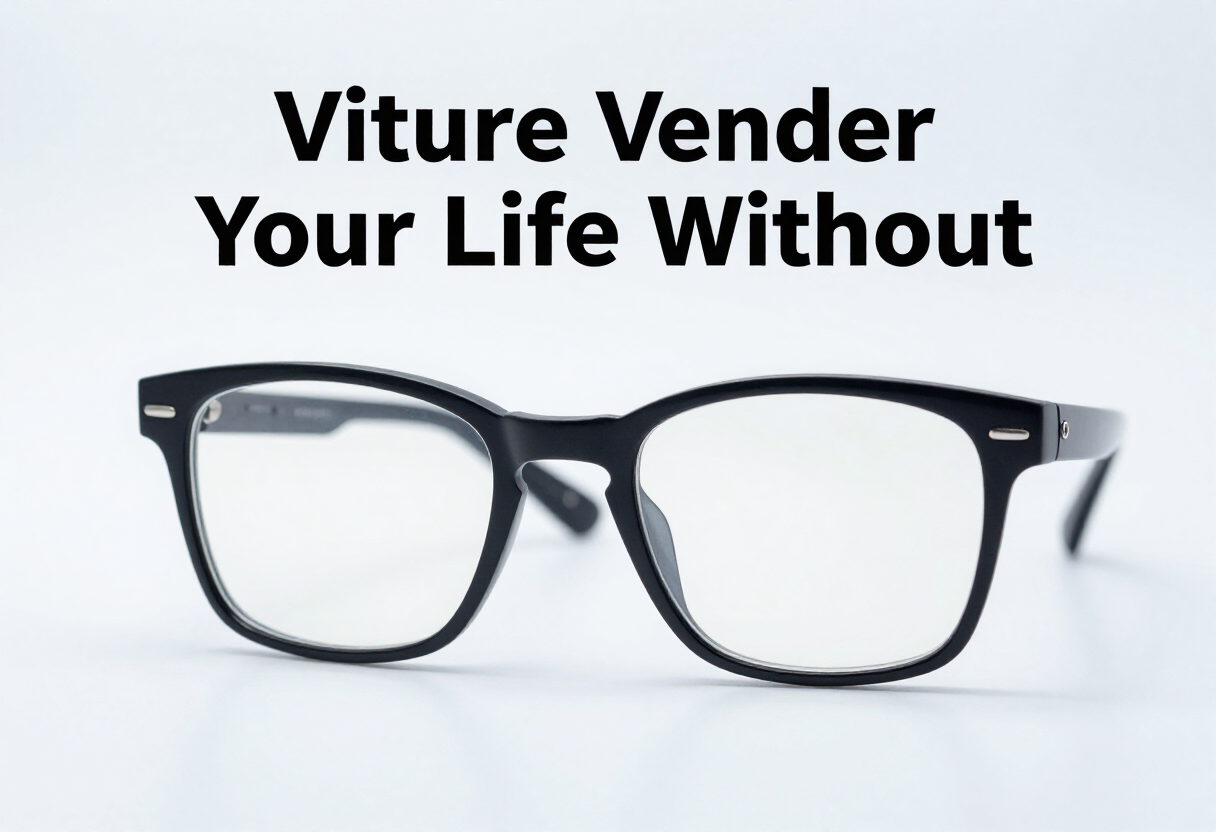
Viture announced its first pair of smart glasses with no virtual display and no cameras on Tuesday. The $299 Vonder glasses instead aim to map the wearer's memories, ideas and goals onto a digital vision board, using microphones and bone-conduction sensors rather than lenses that record the world.
The stakes in the smart-glasses market are clear: Viture, like competitors Xreal and Even Realities, is working hard to distance itself from Meta, whose camera-equipped Ray-Ban smart glasses have drawn sustained criticism over privacy-encroaching features. Viture's pitch is that its product should first be a good pair of glasses — ones people will wear without being labeled a creep.
Founder and CEO David Jiang frames the device as a behavioral mirror, not just a recorder. He says Viture's unreleased AI assistant once messaged him unprompted during his 10-year-old son's tennis tournaments, telling him to stop shouting and criticizing the boy's mistakes and to simply be present. "I didn't know this until Vonder could find my pattern," Jiang says. "This is not only a tool that can summarize your life, but also a tool that can help yourself to be a better person."
The San Francisco-based company, now co-headquartered in California and Beijing, built its business on plug-in virtual display glasses like the Viture One and the Viture Beast — chunky USB-C-tethered wearables aimed at gamers and big-screen entertainment. Vonder marks a pivot toward everyday eyewear. The arms carry mics and speakers for music, map directions and phone calls. A built-in assistant combines multiple large language models — OpenAI's ChatGPT, Anthropic's Claude, Google's Gemini and DeepSeek — and picks whichever model is fastest and cheapest for a given task's complexity.
The glasses cost $299, support prescriptions, come in multiple frame shapes and colors, and offer clear, transition or shaded sunglass lenses. Preorders open September 28, with shipping in November. Battery life is about 16 hours.
Privacy design choices set the device apart. A blue indicator light — a small dot on the arms, less prominent than the indicator on Ray-Ban Meta glasses — turns on when audio is recording. Most of the time, the glasses collect data only when the wearer speaks. Bone-conduction sensors in the frames passively pick up the audio vibrations of the wearer's own voice all day. A meeting mode can switch to the onboard microphones to record the surrounding environment.
From that data, the assistant builds a personal memory graph tracking details like the coffee shops the wearer visits, the sports they play, or whatever else they confide to the glasses. The app renders the connections as a web graphic. In a demo, Jiang showed that his pair has tracked his life over the past three months — surfacing his caffeine preferences, possible reasons for recent stress, hiring decisions he has been mulling, and even a plan for announcing the glasses one day before Meta Connect. It also compiled a dossier on the visiting journalist, complete with suggested discussion topics.
"We just want to mimic the way your brain works," Jiang says. "This is not a transcript or a summary. This is just how your memory organizes in your brain, even better than your memory."
The system has an obvious limitation: it captures one perspective — the wearer's. Jiang argues the gap is small because conversation is turn-based; repeating what someone else said anchors the missing context. "Even though there's a missing part, it's not 50 percent missing. It's maybe only 10 percent or 15 percent," he says. He adds that AI today has "really, really powerful somatic knowledge, but the missing part is the human episodic memory there."
Jiang's verdict after three months of dogfooding: "I feel my life has been changed or improved." Whether consumers share that assessment — and accept all-day voice harvesting in exchange for it — will determine whether Vonder's camera-free bet pays off when it ships in November.
Original: meta.com
More from Sophie Lindqvist
Show full bio
Staff writer covering marketplaces and e-commerce at AI In Context.
115 articles