Suno's Visuals turns AI songs into AI video, up to 15 seconds per clip
Suno's new Visuals feature pairs its AI-generated songs with AI-generated video clips up to 15 seconds, built on a safety-filtered version of MiniMax's H3, weeks after a German court found the company liable for copyright infringement.
Why it matters
- Suno's Visuals feature generates video clips up to 15 seconds on H3 Move, a safety-filtered version of MiniMax's video model H3.
- Visuals launched weeks after the Munich Regional Court I ruled in late July that Suno infringed copyright in a GEMA lawsuit.
- Universal and Sony are still suing Suno; Warner Music has reached a deal with the company.
- Filters block prompts and uploads referencing specific artists, celebrities, or copyrighted works; shared content carries an embedded watermark.
- Visuals is available on web, iOS, and Android with separate credits; Pro and Premier subscribers get a temporary trial allotment.
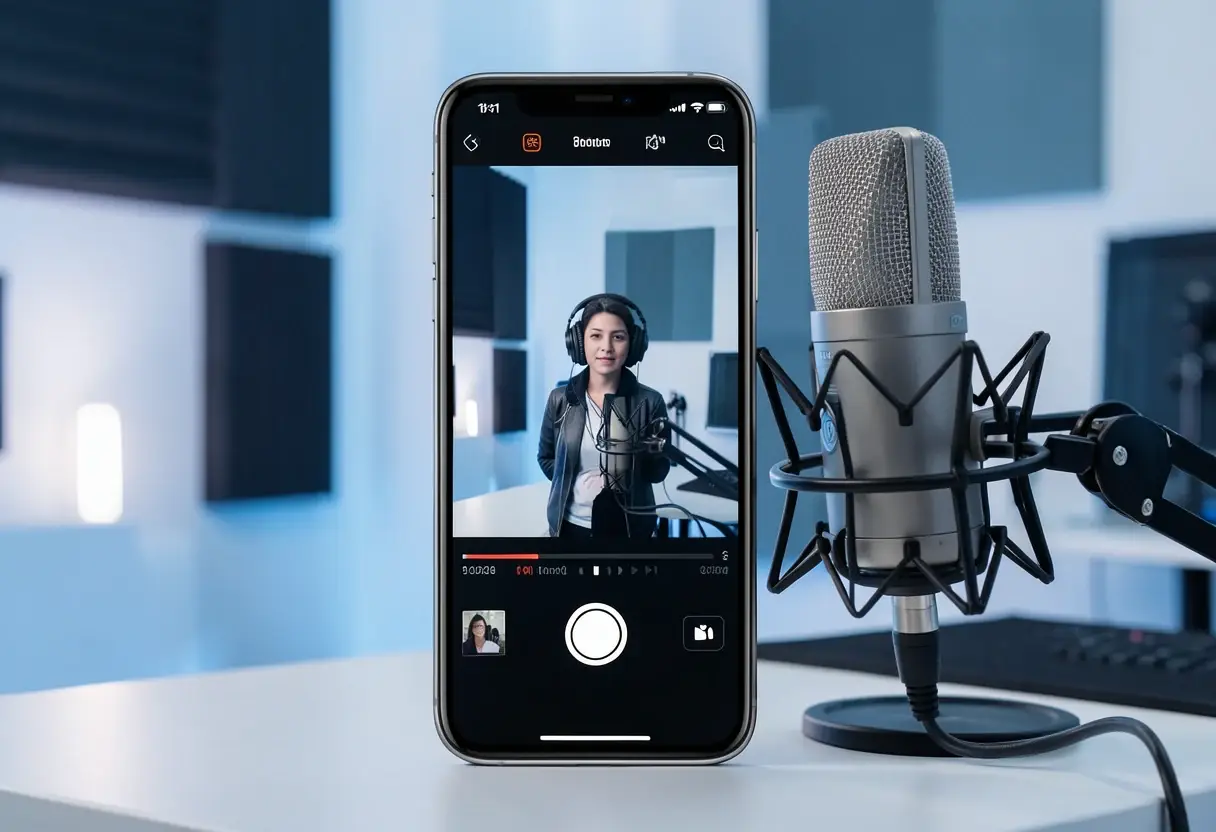
Suno, the AI music generator facing an active copyright ruling in Germany, has launched Visuals — a feature that automatically creates images and video clips to accompany the songs it generates. The company built the feature on H3 Move, a customized and safety-filtered version of Chinese AI company MiniMax's video model H3. The launch arrives weeks after the Munich Regional Court I ruled against Suno in a suit brought by GEMA, Germany's music rights organization, finding copyright infringement.
The stakes are straightforward. Suno is expanding its creative footprint — from audio into full audiovisual output — while Universal and Sony, two of the three major labels, are still pursuing litigation against it. Only Warner Music has reached a deal with the company. Visuals puts more AI-generated content into circulation at the exact moment courts and rights holders are testing where the legal boundaries sit.
What does Visuals actually do?
The feature generates video clips that run up to 15 seconds each. Suno says the clips follow the song's structure, respond to the lyrics, and support lip sync — meaning a generated character can appear to sing the generated song. That is the core pitch: a self-contained music video produced end to end by a single platform, with no human performer, camera, or editor in the loop.
H3 Move, the underlying model, is not off-the-shelf. Suno describes it as a customized and safety-filtered variant of MiniMax's H3. That filtering is doing legal work as much as technical work, and the details of what the filter blocks — and what slips past it — will determine how much protection it actually provides.
Users can start a Visual from three entry points: a reference photo they upload, a text prompt, or one of Suno's preset characters. For lyric videos specifically, the feature offers typography controls — fonts and colors are adjustable. A timeline lets users extend clips, and users can choose the output length and the aspect ratio (the width-to-height proportions of the video, which determines whether it fits phone screens or horizontal formats).
Two quality tiers are on offer: "Fast" and "Standard." Suno did not detail the differences between them, and did not say how much credit each consumes.
What guardrails has Suno built in?
The safety architecture has two visible layers. First, filters block prompts and uploads that reference specific artists, celebrities, or copyrighted works. That is an attempt to stop users from generating video of, say, a named musician — a foreseeable abuse of any lip-sync-capable video model. Second, any content shared outside Suno gets an embedded watermark identifying it as AI-generated.
Both measures are notable precisely because they respond to the criticisms Suno already faces over audio. The question is enforcement quality, not intent. A prompt filter that blocks artist names is only as good as its coverage of nicknames, misspellings, and indirect references, and Suno has not published data on filter efficacy.
There is a pattern here. In late July, shortly after the Munich ruling, Suno announced tools to label Suno-made songs as AI-generated on other platforms. Visuals' watermarking extends that same labeling logic to video. The company is visibly building provenance and disclosure infrastructure while its court cases proceed — a posture that reads as preparation for a regulated environment rather than defiance of one.
How much does it cost and who gets it?
Visuals is available now on the web, on iOS, and on Android. It requires its own credits, separate from whatever users spend on music generation — a monetization structure that treats video as a distinct, separately billed product rather than a free add-on.
Pro and Premier subscribers receive a temporary allotment of credits to try the feature. Suno has not said how long the allotment lasts or what Visuals will cost once it expires. That omission matters: "temporary" trial credits are a common launch tactic, and the eventual pricing will determine whether casual users adopt the feature or whether it stays a tool for power users.
Why is the legal timing the real story?
The late July ruling from Munich Regional Court I is the sharpest fact in Suno's recent history. The court found copyright infringement in a case filed by GEMA, which represents the rights of composers and lyricists in Germany. It is one of the first concrete judicial findings against a major AI music generator, and Suno has not publicly detailed its appeal plans in the source material available.
The label landscape is split three ways. Warner Music has signed a deal with Suno — the terms of which remain undisclosed. Universal and Sony continue to litigate. That split means Suno operates under different legal pressure in different jurisdictions and with different partners, even as it ships new products.
Visuals adds a second copyright dimension to that picture. The audio lawsuits concern how Suno's music model was trained and what its outputs reproduce. Video generated from reference photos introduces a new surface: users can upload images of real people or copyrighted characters, and the filter's ability to catch those uploads is untested. H3 Move's safety filtering is the stated mitigation, but Suno has offered no public benchmarks for it.
Does AI-generated music video have a market?
The product logic is coherent. Music videos drive discovery on short-form platforms, and independent artists — Suno's natural user base — often cannot afford production. A tool that turns a generated song into shareable, lip-synced, lyric-typed video clips closes the loop from idea to distribution inside one app. The 15-second clip ceiling aligns neatly with short-form video formats, and aspect-ratio control signals the feature is aimed at phone-first sharing.
But adoption depends on output quality, credit pricing, and — above all — whether platforms and rights holders accept watermarked AI video at scale. Suno's disclosure tools and embedded watermark suggest the company expects scrutiny.
What happens next?
The unanswered questions define the next phase. Suno has not said what Visuals costs after the trial credits run out, how effective its artist and celebrity filters are, or how the Universal and Sony litigation will interact with a product that now generates video as well as audio. What is clear is the direction: Suno is betting that a one-stop AI audiovisual studio, wrapped in labels and watermarks, is a defensible business — and courts in at least one jurisdiction have already said its foundation is not entirely legal.
Original: suno.com
More from James Calloway
Show full bio
News editor covering people, launches and day-to-day practice in artificial intelligence and machine learning at AI In Context.
722 articles