Socceroo Cristian Volpato licenses his AI 'synthetic twin' to a California startup
Socceroo Cristian Volpato granted Callandor exclusive rights to his AI likeness, voice and biometric data, as athletes race to monetise clones before others exploit them.
Why it matters
- In mid-September, 22-year-old Socceroo Cristian Volpato licensed his AI likeness, voice, biometric profiles and performance data to California-based Callandor.
- Callandor, founded in February, also represents Brazilian footballer Jorginho and American sailor Chris Poole.
- Neymar licensed his AI likeness to a Chinese-owned entertainment platform in June, with videos published during the FIFA World Cup.
- Earlier this month the AFL ordered Sportsbet to stop using AI images of players without consent after a players' union complaint.
- Australian sporting league player contracts currently make no mention of AI.
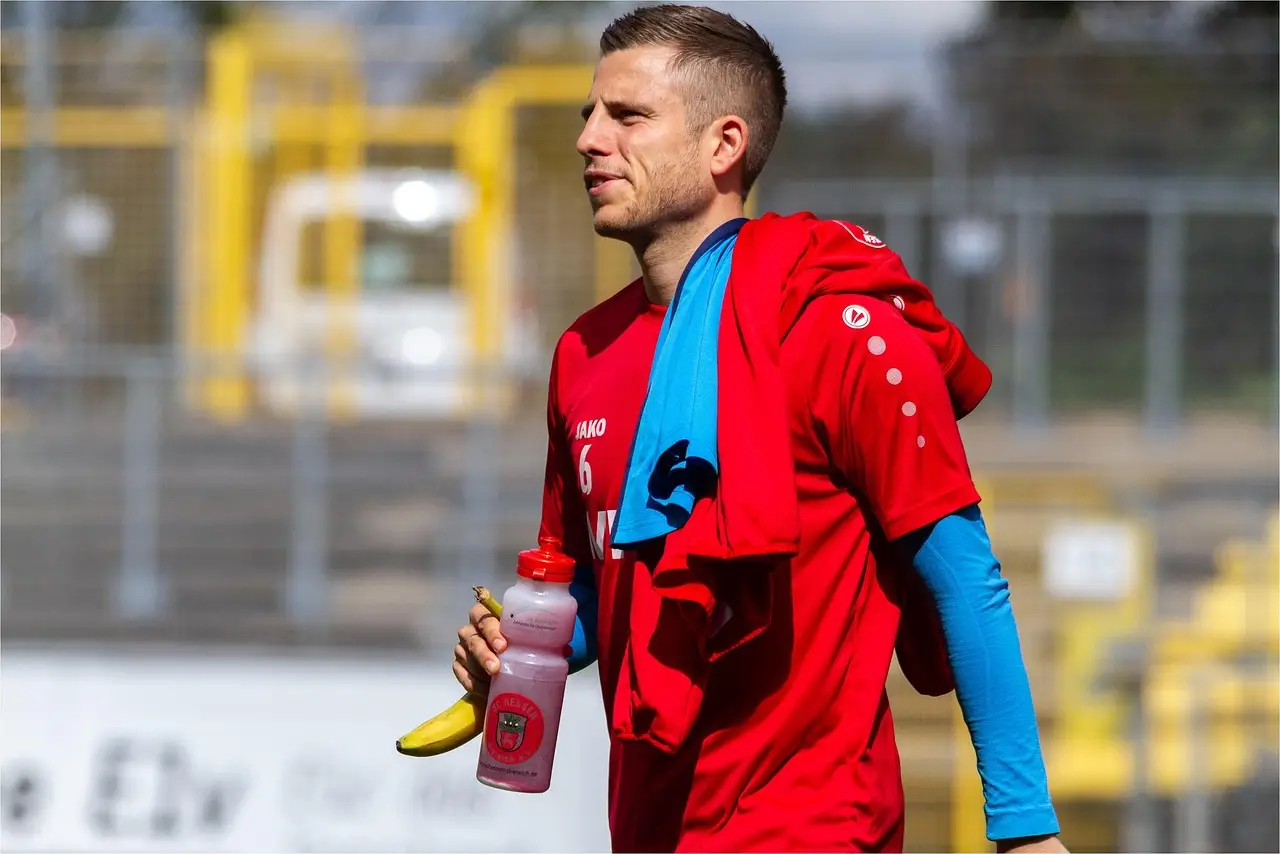
Socceroos midfielder Cristian Volpato has signed a deal giving a California-based company exclusive rights to his AI likeness, voice, biometric profiles and performance data. The 22-year-old, who plays for Italian Serie A club Sassuolo, struck the agreement in mid-September with Callandor, a firm founded in February that acts as a licensing agent for professional athletes.
The deal's public face is a social media video. Volpato strides through an enormous atrium, his boots echoing on polished concrete, before spawning four digital clones that peel off into different settings around the world. One wears a white linen suit on a beach with the Twelve Apostles limestone stacks behind it. Another dominates a digital billboard in a football jersey. A third adjusts a grey suit in a mirror.
Every frame is AI-generated. And every frame is authorised by the real footballer.
What is a 'synthetic twin'?
Callandor co-founder Michael Fisk, a former executive at Sony Pictures and MGM, calls his products "synthetic twins" — digital replicas of athletes that brands can deploy without booking the athlete's time.
"Cristian is constantly training," Fisk told Guardian Australia from Los Angeles. "He's constantly out there playing. If he has any free time whatsoever, he'll probably want to spend it with family and friends, so he loses on a lot of opportunities on brand placements.
"A synthetic twin could be used 24-7, year-round by brands. Assuming it's approved, right?"
Under the deal, Callandor will monetise Volpato's AI image by landing brand deals and taking a cut, while also helping restrict unapproved content that uses his likeness. The company's campaigns are still in the pilot phase, but its ambitions stretch well beyond traditional advertising. Fisk talks about AI-generated book voiceovers with foreign-language editions, and apps that offer fans a personal relationship with a synthetic twin.
"Ultimately, the holy grail of an athlete is to have that one-on-one interaction with fans," Fisk says.
He sketches one concrete product: an app that monitors how people play football, with a digital clone of Volpato giving real-time instructions. "He's realising I'm not handling the ball well [so] his synthetic twin can tell me, 'Hey, you should be doing this and this and this'," says Fisk. "Volpato would never be able to do that one-on-one with [them]."
Callandor's stable is small but international. It includes Brazilian footballer Jorginho and American sailor Chris Poole.
Volpato is not the first footballer down this path. In June, Brazilian superstar Neymar licensed his AI likeness to a Chinese-owned entertainment platform, which published short videos featuring his clone during the FIFA World Cup.
Why now? Consent has become the battleground
The deals arrive as bookmakers, broadcasters and brands increasingly use athletes' images in AI-generated content without permission — and as some players push back.
Earlier this month, the AFL told its gambling partner Sportsbet to stop using AI images of players without their consent. The intervention followed a complaint from the players' union, which is now considering whether to negotiate stricter rules.
"Sportsbet shows us what happens when companies and technology get ahead of consent," says William Saunders, who leads Hyperknown, a small Sydney-based startup chasing similar licensing deals. "Volpato represents the counter-move: people establishing their rights before others start making decisions about their identities.
"We're watching a race between what technology can do and what people have actually authorised."
Many in the Australian sports industry — content creators, bookmakers, broadcasters and athletes themselves — have started embracing the technology. Australian cricketer Travis Head personally appeared in an ad for broadcaster Kayo earlier this month, joking that his AI clone had already finished filming before the video cut to him riding a flying kookaburra.
The commercial stakes are substantial. Brand deals and endorsements have become major money makers for athletes, with some securing multimillion-dollar contracts. Whether brands will pay as much for a clone as for the real person remains unclear.
Saunders argues the opportunity is bigger than translating ads into languages for countries athletes have never visited. He frames consent itself as the emerging asset.
"The next trust signal won't just say 'made with AI'," he says, referencing a common social media tag. "It will say 'made with this person's permission'.
"AI can make content abundant. It can't manufacture someone's permission. That's becoming a new commercial requirement."
What does the law actually protect?
Jonathan Harlen, an intellectual property law expert at Southern Cross University, calls the rise of AI brokers "the obvious next step" in a "supercharged global market". Legally, he says, the industry presents "a tangle of different interests and rights" that will need careful negotiation.
"While copyright already subsists in voice recordings, artistic works and cinematographic images, it is only recognised where there has been human authorship, as well as a degree of independent or creative human effort involved in the making of the work," Harlen says. "It doesn't apply to AI reproductions."
Celebrities and athletes retain some protection against unauthorised AI use of their image and voice through "passing off" laws. But those laws apply only when public figures can prove they have suffered an economic loss.
That gap has not slowed an explosion of deepfakes built with increasingly sophisticated off-the-shelf software. In the UK last month, a campaign backed by the global player union Fifpro and featuring top footballers including Cole Palmer and Lucy Bronze highlighted concerns about deepfakes and regulators' inability to slow them. Earlier this year, an offshore casino used a deepfake video of Manchester United's Bruno Fernandes in advertising.
Meanwhile, governments worldwide are still considering basic AI regulation. Player contracts with major Australian sporting leagues currently make no mention of AI at all.
Fisk says the technology isn't waiting. His synthetic twins are blurring the line between real and fake. "It's becoming almost impossible to detect, that look and feel, the difference, particularly when you see it on a mobile device," he says.
Does enforcement risk killing fan content?
Not every unauthorised deepfake will be unwanted, and Fisk cautions against a heavy-handed crackdown on "fan art" made with AI tools.
"You don't want fans to use your image and put you in [content] using brands that you don't use, or saying something that you would never say," he says. "Obviously, anything with religion and drugs, or whatever it might be, you have to be very, very careful. So it does complicate things a bit, but the opportunities are phenomenal."
The complications are real, and in this emerging realm the consequences may be hard to predict. But with Neymar, Volpato, Jorginho and Poole already licensed, and startups like Hyperknown rushing to sign more athletes, the licensing race appears to be underway whether the law understands it or not.
Original: facebook.com
More from Elena Vasquez
Show full bio
Market editor covering technology and product news in artificial intelligence and machine learning at AI In Context.
357 articles