Seedream 5.5 targets 100-round edits and native transparency
ByteDance's Seedream 5.5 supports edits across as many as 100 rounds, native RGBA assets and clearer small text, with a gradual rollout across major creation tools.
Why it matters
- ByteDance Seed introduced Seedream 5.5 on November 9, 2026.
- The model targets stable editing across as many as 100 rounds.
- Seedream 5.5 can generate native RGBA assets with full or partial transparency.
- ByteDance reported severe and minor text-corruption rates of 0.4% and 1.7%.
- ByteDance reported a +55.62% preference score for image-to-image realism against Seedream 5.0 Pro.
By Rebecca Stone
ByteDance Seed introduced Seedream 5.5 on November 9, 2026, with image-editing sessions designed to remain stable across as many as 100 rounds. In the same announcement, ByteDance said the release adds native transparent assets, more natural rendering and improved handling of small text.
ByteDance described Seedream 5.5 as its “next-generation image creation model for professional visual production.” The announcement locates the stakes in the work between generated images: preserving approved regions during revision and supplying transparent assets that can move directly into compositing.
How does Seedream 5.5 handle repeated edits?
ByteDance framed the central editing problem as cumulative error: each generated output can become the input for another revision. Repeated passes can introduce color changes, lost detail and degradation, so a change that looks clean in isolation may become less reliable as a series grows.
The company says targeted training preserves unedited regions at the pixel level, eliminates color shifts in those areas and reduces detail loss and image degradation over successive edits. The claim addresses revision continuity rather than only the visual quality of the latest generated frame.
In a company demonstration, clothing, accessories and tabletop objects around the same person changed repeatedly. Seedream 5.5 still adjusted small items such as rings and eyeglass frames while the sequence continued to show the same person.
According to ByteDance, those changes accounted for the subject’s pose, contact between accessories and skin, occlusion and lighting. The demonstration therefore tested more than object replacement: it also tested whether the model could reconcile small accessories with a body and the space around it.
A separate interior demonstration moved a box around a changing study. According to ByteDance, Seedream 5.5 adjusted perspective, cast shadows and newly exposed areas as the room evolved, including the parts of the scene revealed after the box changed position.
The stated objective extends to long chains. ByteDance says the model can preserve approved material across as many as 100 rounds, a limit aimed at production workflows that revise an image repeatedly rather than treating generation as a one-shot task.
What does native transparency change?
ByteDance says Seedream 5.5 can generate RGBA images directly, using an alpha channel to represent full or partial transparency. Creators can produce those assets from text descriptions or reference images rather than receiving only a flattened image with a background.
ByteDance says the resulting elements can enter layout, compositing and production workflows “without a separate background-removal and edge-cleanup step.” The company presents transparency as part of generation, removing a cleanup stage before an asset reaches a finished layout.
One company example is a transparent snowy owl. ByteDance highlights the retained feather tips, small gaps between feathers and claw outlines as evidence that the model can preserve difficult edge details.
Another demonstration reuses character assets in different settings. According to ByteDance, the model preserves defining features and textures while changing poses, groupings and composition, testing whether reusable assets remain consistent when their placement and arrangement change.
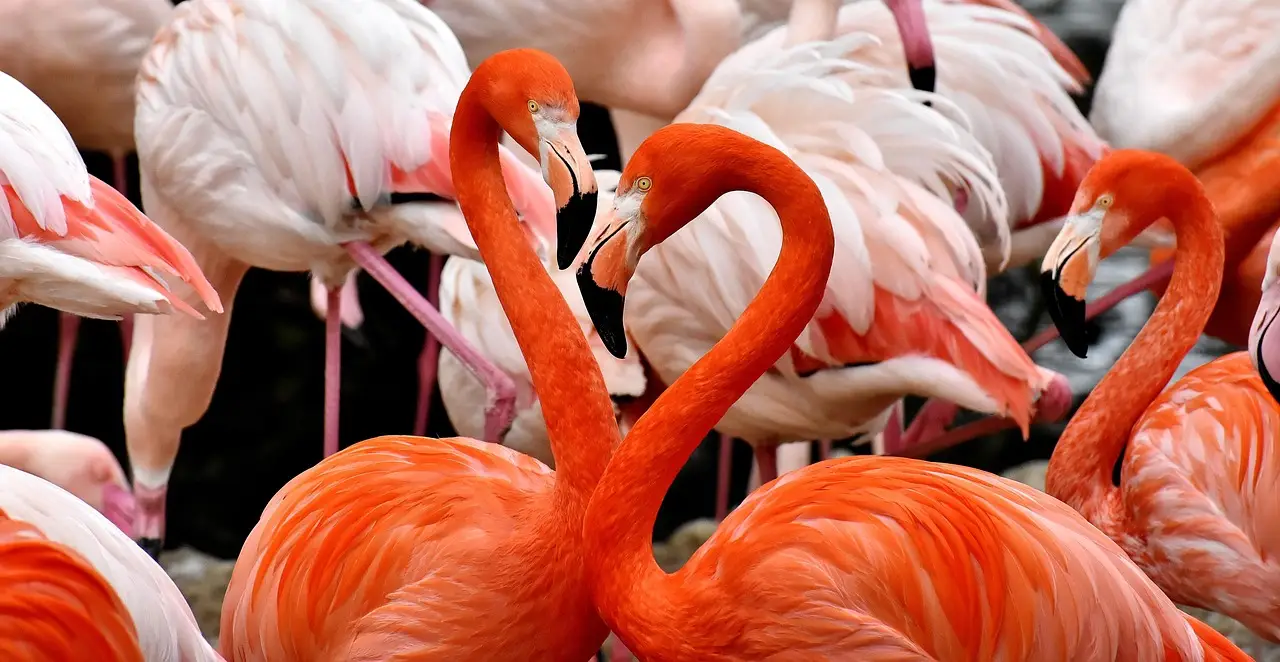
The official model page provides two more production-oriented examples: extracting a flamingo as a separate transparent RGBA layer and generating a running-girl sequence in which each image occupies its own transparent layer. Both examples focus on separation and reuse rather than background replacement alone.
The announcement’s practical implication for professional visual teams is direct compositing. ByteDance says the release supplies movable transparent elements and preserves approved regions during revision, two functions that narrow the gap between a generated concept and a production-ready asset.
Does Seedream 5.5 improve realism and small text?
ByteDance says Seedream 5.5 renders lighting, materials and skin textures more naturally. The company also reports fewer problems with excessive gloss, overexposure and blotchy textures in some outputs, changes aimed at images used in professional visual production.
The text-rendering work targets complex character shapes and densely arranged small type. ByteDance says the model handles those structures more reliably, including pages that carry dense editorial copy or infographic labels rather than a few large words.
One demonstration shows a compact Shakespeare newspaper page, with English articles arranged around illustrations. ByteDance included the example to show how the model places small text alongside a complex page structure and its artwork.
A second example uses a Chinese blue-morpho infographic with eight illustrated explanatory notes. According to ByteDance, the small Chinese characters remain legible in those notes, extending the text test beyond English and into a page with both image and information density.
How did ByteDance evaluate the model?
ByteDance evaluated Seedream 5.5 on MagicArena, where experienced image-generation evaluators scored quality and usability across six categories:
- E-commerce
- Marketing
- Film and television
- Gaming
- Office productivity
- Fashion design
ByteDance reports gains over Seedream 5.0 Pro in both quality and usability across every category. It says usability rates in film and television and office productivity were more than twice those of the previous version.
ByteDance also ran a separate expert pairwise evaluation. Reviewers assigned “Good/Same/Bad” preferences for text structure and realism in both text-to-image and image-to-image tasks, producing four comparisons against Seedream 5.0 Pro.
The company reported positive results against Seedream 5.0 Pro in all four comparisons, with the largest reported gain reaching +55.62% for image-to-image realism. The announcement provides the percentage for that result but not the underlying preference scores for the other three comparisons.
Comparisons with GPT Image 2.5 Sunburst and Nano Banana 2.1 also favored Seedream 5.5 in text structure for both text-to-image and image-to-image work. ByteDance additionally reported a substantial text-to-image realism advantage against those two models, without giving a percentage for that result.
Text-rendering tests in Chinese and English, including dense small type, produced company-reported severe and minor text-corruption rates of 0.4% and 1.7%. ByteDance defines corruption as wrong or missing characters and disordered character structure.
Where is Seedream 5.5 rolling out?
The Chinese-language announcement says Seedream 5.5 is rolling out gradually through several ByteDance creation and productivity products. The release is not presented as available everywhere at once.
- Jimeng web creation and canvas tools
- Doubao app and web image generator
- Doubao Work skills
- Volcengine Ark visual-model experience center
ByteDance plans to support more complex contextual inputs and creative instructions. It also intends to expand Seedream 5.5’s use in agent workflows and release a Pro version, though the announcement gave no launch date for either addition.
The next test is whether Seedream 5.5 preserves that stability and native transparency as agent workflows expand and the planned Pro version reaches broader production use.
Source: unite.ai
More from Rebecca Stone
Show full bio
Correspondent covering companies, deals and strategy in artificial intelligence and machine learning at AI In Context.
467 articles
Related articles
- Black Forest Labs ships Flux 3 Image with surgical multi-step editing
- Ideogram 4.5 Targets Surgical Image Editing at 0.8 Cents a Picture
- OpenAI Ships ChatGPT Images 2.5 With Sketch Tool and 50% Faster Generation
- Alibaba's Qwen Releases 8-Step Image Model, 5x Faster Than Base
- OpenAI's Images 2.6 brings animated GIFs to ChatGPT