Russia's Teledroid humanoid robot reaches orbit aboard Progress MS-36
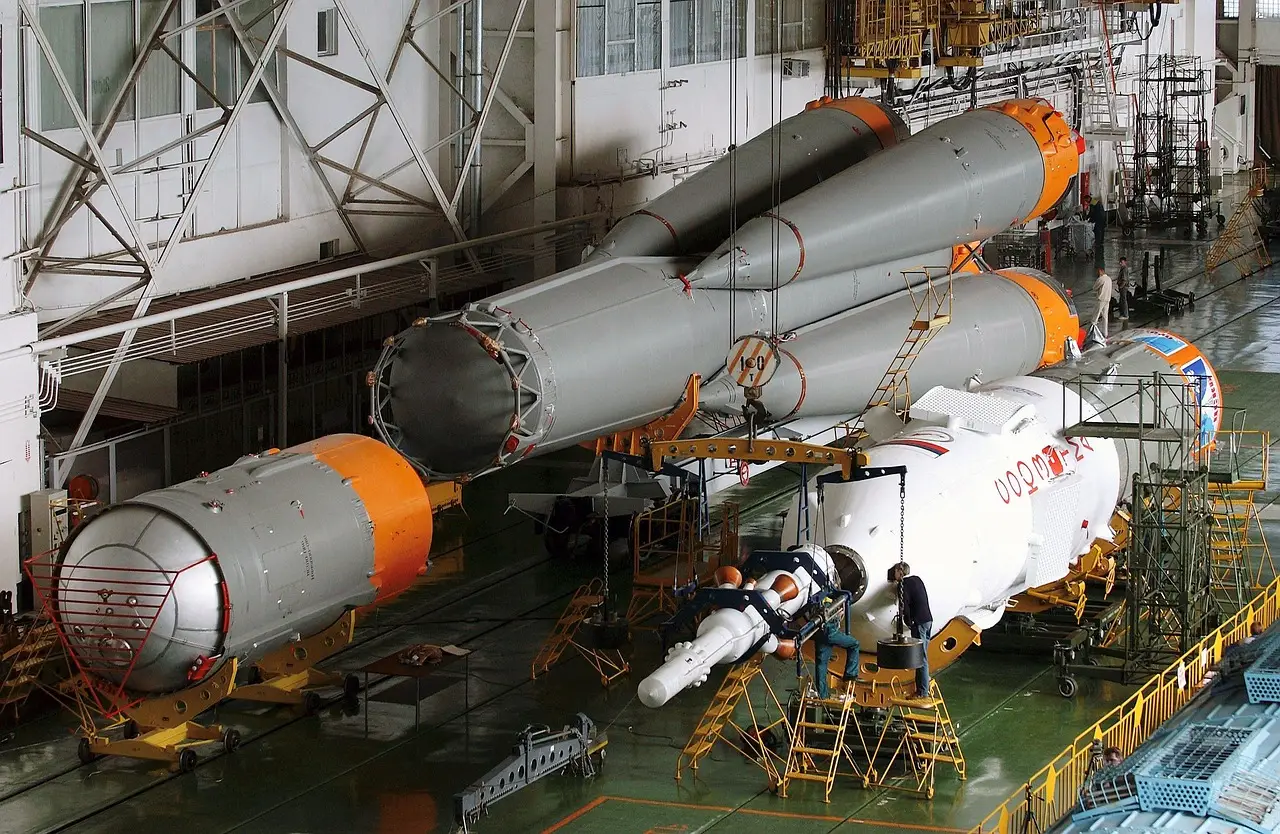
A Soyuz-2.1b launched Progress MS-36 from Baikonur on November 24, 2026, carrying Russia's Teledroid robot avatar, which cosmonauts Dubrov and Kikina will install and test outside the ISS.
Why it matters
- Roscosmos launched Progress MS-36 on a Soyuz-2.1b from Baikonur at 13:17 Moscow time on November 24, 2026, carrying over 2.4 metric tons of cargo.
- Docking at the ISS Small Research Module is scheduled for November 26, 2026, at 15:10 Moscow time.
- Progress MS-35 delivered Teledroid's control equipment, including the cosmonaut workstation, in September 2026.
- Cosmonauts Pyotr Dubrov and Anna Kikina rehearsed the robot's exterior installation underwater and prepared tasks with virtual models as of October 28, 2026.
- NPO Android Technics and RSC Energia built Teledroid to cut cosmonaut spacewalk time via teleoperated copying and autonomous task execution.
A Soyuz-2.1b rocket lifted off from Baikonur's Site 31 at 13:17 Moscow time on November 24, 2026, carrying more than 2.4 metric tons of cargo — including the robot avatar for Russia's Teledroid experiment — toward the International Space Station.
The Progress MS-36 cargo spacecraft reached its intended orbit, separated from the rocket's third stage, and deployed its antennas and solar-panel arrays as planned, according to Roscosmos. The agency expects docking at the station's Small Research Module on November 26, 2026, at 15:10 Moscow time.
The robot is in orbit. The harder part — installing it on the station's exterior and proving it can do useful work — starts after docking.
Why does this matter?
Spacewalks are among the riskiest, most physically demanding tasks crews perform. Roscosmos frames Teledroid as a direct answer to that cost. The experiment's main goal is to reduce the time cosmonauts spend outside the station.
That matters beyond one mission. If a robot avatar can handle exterior preparation work under human control from a pressurized compartment, agencies could shift routine maintenance off crew schedules and lower exposure to the hazards of open space. It also slots into a broader global push toward robots that work alongside humans in extreme environments — physical AI applied where radiation, vacuum and temperature swings rule people out.
What exactly launched?
Roscosmos launched Progress MS-36 as a resupply flight, not a dedicated robotics mission. The prelaunch mission description lists equipment for four experiments among the cargo:
- Teledroid — the humanoid robot avatar and its remaining hardware
- Aseptik — additional research equipment
- Kaskad — additional research equipment
- Orbita-MG — additional research equipment
Provisions and other equipment for crew life and work round out the manifest. So the robot shares the ride with everyday station supplies, which tells you its mass and footprint fit inside a standard cargo profile rather than demanding a special flight.
How does the robot actually work?
Here's the mechanism, and it's the most interesting part of the story. Teledroid is built to be copied. An operator — either aboard the ISS or at a ground control point — wears a special suit and performs movements, and the robot repeats them on the station's exterior.
The system calls this approach teleoperated copying, but it's not purely puppet-on-a-string. Some tasks are intended to run autonomously, with the robot executing them without a live human mirroring every motion.
The task list Roscosmos describes focuses on preparation work: opening casing and installing equipment to prepare a worksite before cosmonauts go outside. Think of it as a robotic stagehand setting the scene so the human performers spend less time in the danger zone.
Who built it, and with whom?
A project record from developer NPO Android Technics says the system was implemented jointly with RSC Energia to test operational-support technologies for cosmonaut spacewalks. That pairing makes sense: NPO Android Technics brings the robotics, RSC Energia the station-side integration.
Control can come from either end of the link. An operator can sit inside the station's pressurized compartment or work from a ground control point. The project consequently treats operator procedures and robotic execution as parts of one exterior-work system, not as separate problems.
What did the earlier flights deliver?
The robot didn't arrive first — the ground game did. Teledroid's equipment comprises four pieces:
- A copy-type master device called the cosmonaut workstation
- A computing module
- The robot itself
- An external camera that lets operators see the robot from outside
Progress MS-35 delivered several of those elements, including the workstation, to the ISS in September 2026. So by the time the robot launched, its control chain was already staged on orbit.
An October 28, 2026, update reported that cosmonauts Pyotr Dubrov and Anna Kikina were installing that equipment and preparing initial tasks using virtual models — while the physical robot was still absent. In plain terms: they rehearsed with software stand-ins until now.
What have the cosmonauts rehearsed?
Earlier crew-training material documented Dubrov and Kikina preparing to carry Teledroid outside the ISS, install it on the exterior, and connect its communications during a spacewalk. They rehearsed those operations underwater, the standard technique for approximating weightlessness on the ground.
That training record clarifies the next phase. Someone still has to take the robot outside and mount it by hand — the very kind of spacewalk labor Teledroid is meant to reduce, at least for this first deployment.
What happens after docking?
Docking on November 26 starts the clock, but it doesn't finish the story. The sequence ahead runs roughly like this: crew unloads the robot, a scheduled exterior installation takes place during a spacewalk, communications get connected, and then physical testing begins on the station's hull.
Those steps will test whether the avatar and its autonomous modes can genuinely support preparation work while cutting the time crews must spend outside. Successful orbital insertion merely opens that phase — the planned installation and operating tasks will establish Teledroid's practical value to spacewalk support.
The takeaway
Russia has now shipped both halves of a human-robot exterior work system to orbit: the control hardware in September, the robot in November, and trained operators in between. The next few months of exterior installation and physical testing will show whether teleoperated copying plus partial autonomy can pull cosmonauts back inside — and whether Teledroid earns its keep as more than an experiment.
Source: unite.ai
More from Sophie Lindqvist
Show full bio
Staff writer covering regulation, policy and their impact on artificial intelligence and machine learning at AI In Context.
941 articles
Related articles
- OpenAI confirms it will build a humanoid robot; Altman says the brain is the hard part
- YYForce sends humanoid robot Six Seven to man a Singapore hotel lobby
- Robotics' 2027 Test: Interventions Per Hour, Not Demo Reels
- ASUS Gives Gallop Humanoid a 99.5% Packing Target on Its Own Factory Line
- Atlas set for chip factories as GlobalFoundries scales Spot