Ring Launches Robotics Subbrand With a $249 Indoor Security Drone and $999 Patrol Robot
Ring Robotics launched with the $249 Drone Cam, an autonomous indoor security drone shooting 2K video, and the $999 4K Rover Cam patrol robot for businesses.
Why it matters
- Ring announced the Ring Robotics subbrand with two products: the $249 Drone Cam and the $999 Rover Cam.
- The Ring Drone Cam flies autonomous patrols for 5–8 minutes on a single charge and ships Jan. 27, 2027.
- The Ring Rover Cam, a 4K autonomous patrol robot for businesses, ships Dec. 16, 2026 and is available for preorder now.
- Both devices run Ring's custom 'AI Pilot' navigation software using cameras, sensors, vision models and cloud processing.
- The Rover Cam autonomously investigates disturbances triggered by other Ring devices and streams 4K footage in real time.
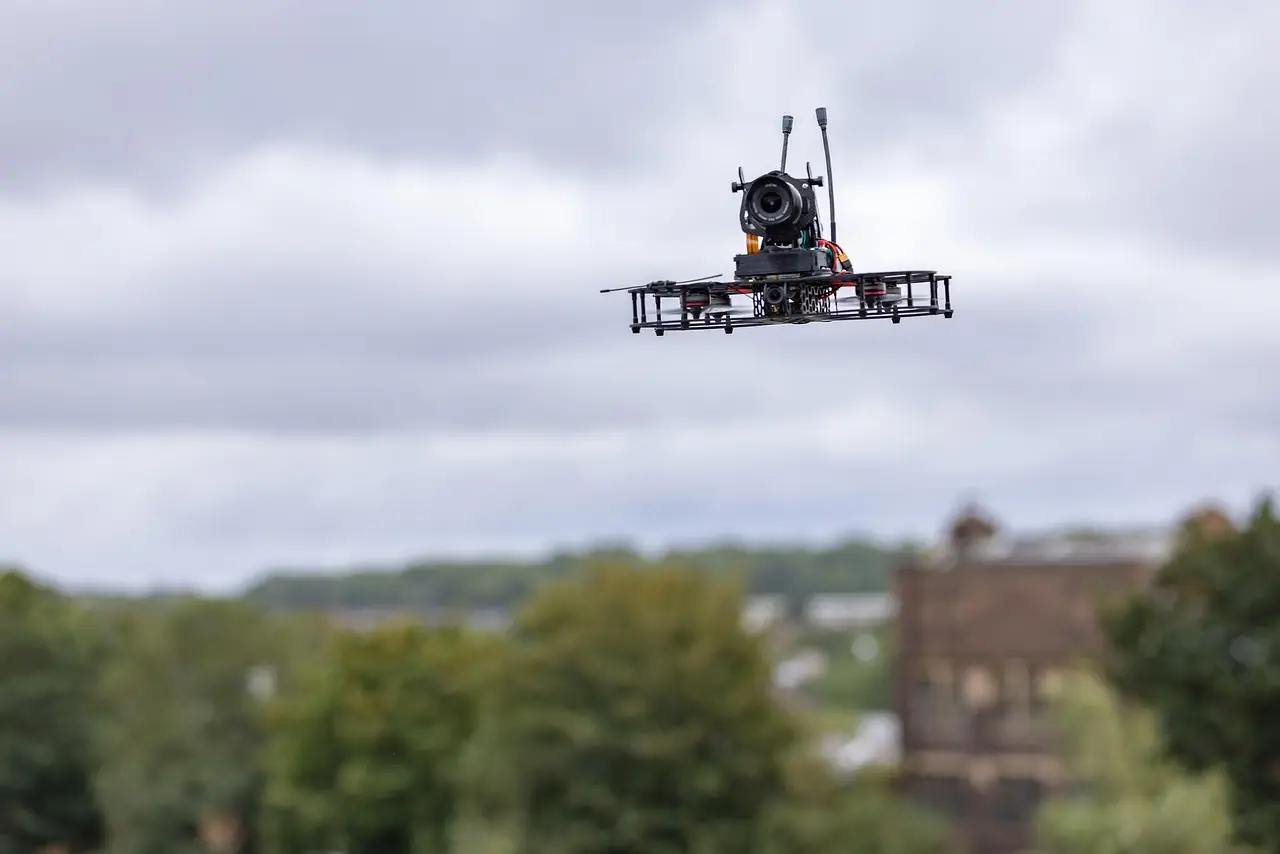
Ring announced a new subbrand, Ring Robotics, on Tuesday, headlined by a $249 indoor security drone that flies itself through your house and a $999 autonomous patrol robot for businesses. The Ring Drone Cam shoots 2K video while cruising between patrol points you set in the app — even up the stairs. The Ring Rover Cam is a 4K wheeled robot that patrols warehouses and offices, investigates disturbances triggered by other Ring devices, and never clocks out.
Both devices share one piece of core technology: Ring's custom navigation software, called AI Pilot. AI Pilot combines each device's cameras, sensors, and vision models with cloud processing to build interior maps. It then moves the devices autonomously between predesignated points — a side door, a window, a high-traffic room — rather than putting the user at the controls.
How does the $249 Ring Drone Cam actually work?
You don't fly it. The drone navigates itself. In the Ring app, you create the patrol points you want it to visit — a window, a doorway, a busy room — and the drone follows that set path. That makes its route predictable, so you always know where it will go, and relevant, so it only watches the areas you choose. It streams a live 2K feed to your phone whether you're in the next room or out of town.
The design accounts for one hard limit: flight time. The Drone Cam stays airborne for just five to eight minutes before it has to return to its charging dock. The dock is both the start and end point of every trip. When it lands, the drone hovers over the dock and lowers itself into place, dropping in to charge automatically. Ring told reporters the drone would only make an emergency landing outside the dock if it lacked the power to get home.
It climbs stairs. It flies at what Ring describes as an appropriate height, room to room. And it's designed to work out of the box with the existing Ring ecosystem, including the 2K Video Doorbell and Indoor Cam, plus Amazon's Map View.
The Ring Drone Cam starts shipping on Jan. 27, 2027.
Is the drone quiet enough to use at home?
No — and that's the product's biggest caveat. The four propellers emit a constant, high-pitched whirring loud enough to announce the drone's presence to anyone nearby, intruder or resident. The entire household is likely to hear it the second it undocks. There's no sneaking up on anyone with this device.
At the product briefing, Ring founder Jamie Siminoff suggested the noise was partly deliberate — a way to deter home intruders snooping around at night, especially paired with the drone's front-facing spotlight. But it's more likely a byproduct of the engineering on a first-generation product. The practical implication: the drone probably works best patrolling an empty house. How household pets react to a buzzing object floating through the living room is, as the announcement itself acknowledges, a whole other issue.
What is the $999 Ring Rover Cam?
The second product is the Ring Rover Cam, a mobile robot with a 4K camera built to monitor large spaces — warehouses, offices, and other businesses. Ring markets it as a "security guard that never clocks out." In practice, it's a slow-moving droid that follows set patrol paths, using the same AI Pilot technology to map its surroundings and navigate around shelving, furniture, and obstacles in real time.
Unlike its airborne sibling, the Rover Cam is quiet. It travels at low speeds and offers mobile surveillance as an alternative to wiring every square inch of a large space. The hardware will look familiar to Amazon watchers: it closely resembles the Amazon Astra, a smaller home-monitoring robot with a very similar build.
The workflow runs through the app. You deploy the robot to a specific area, then get 360-degree views once it arrives. It can run automated routes on set timing intervals — right after a business closes, or before it opens. During working hours, it chugs along, capturing everything in its view.
What happens when something goes wrong at 2 a.m.?
If another Ring device is triggered, the Rover Cam autonomously goes to investigate, streaming 4K footage in real time through the app. It carries a periscope camera that extends to see over obstacles like shelving, counters, and furniture for a high-level view when needed. Lose track of it in a big warehouse? A "light tower" projects light upward onto the ceiling so you can find it.
Even docked, it works like a Ring doorbell: motion-sensing technology starts recording the second it detects movement. In an emergency, it deploys a siren and red flashing lights to deter intruders.
The Ring Rover Cam is available for preorder now, starts shipping on Dec. 16, 2026, and costs $999.
Why does this launch matter?
The move signals Amazon's push to extend Ring from fixed cameras and doorbells into mobile, autonomously navigating machines — a step toward ambient, whole-premise surveillance with no human piloting involved. It also puts Ring in direct competition with dedicated security robotics firms that already sell patrol robots to commercial customers, at a price point under $1,000 that undercuts much of that market.
Both products lean on the same bet: that AI-driven navigation has matured enough to move consumer and small-business hardware around real, cluttered indoor spaces without anyone at the controls. Whether customers accept a loud, five-to-eight-minute drone as a home security tool will be the first real test when the Drone Cam ships in January 2027 — and the business-focused Rover Cam, arriving more than a year earlier in December 2026, will show first whether the AI Pilot navigation stack holds up in the field.
Original: cc.zdnet.com
More from Elena Vasquez
Show full bio
Market editor covering technology and product news in artificial intelligence and machine learning at AI In Context.
524 articles
Related articles
- Ring's Drone Cam Flies Again: $250, AI-Piloted, and Cloud-Brained
- Ring's $250 Indoor Security Drone Flies Itself Around Your Home
- Amazon's $999.99 Ring Rover Cam turns the Astro robot into a security guard
- Amazon's $250 Echo Studio Puts a Camera in Your Living Room
- Apple's HomeKit AI Video Summaries Can Cost Up to $59.99 a Month