Rankin says AI will replace photography jobs within a year
Photographer Rankin calls AI "disgusting" after nine months making his Faik project, predicts job losses in retouching and styling within a year, and answers with Contact, a book of unseen contact sheets.
Why it matters
- Rankin predicts AI will replace photography-industry jobs in less than a year, calling it "Photoshop on crack"
- He spent nine months on Faik, an AI art project and magazine launched after Damien Hirst introduced him to generative AI in 2021
- His new book Contact collects images shot between 1987 and 2006, published by Hunger at £30
- A Contact exhibition runs at Rankin's Annroy Gallery in London from 2 December to 3 February
- Rankin co-founded Dazed & Confused with Jefferson Hack in 1991 and founded Hunger magazine in 2011
Photographer Rankin predicts AI will start replacing photography-industry jobs in less than a year. "AI is like Photoshop on crack," he says, pointing at image-retouching agencies, hair, makeup and styling as the first roles to go.
He does not like the technology doing the replacing. "I hate AI," Rankin says. "A lot of people think I'm an evangelical twat about it, and I'm not. I think it's disgusting. I think the people who run it are disgusting. They've made a massive gamble with humanity and society and culture."
The quote lands harder because of what Rankin has actually done with AI. Since the artist Damien Hirst introduced him to generative AI in 2021, the British photographer has worked deeply with the tools, not just grumbled from the sidelines. "I'm not somebody who likes to be critical about something without actually knowing about it," he explains. "I've gone deep into trying to work it out."
That exploration produced Faik (thefaik.com), a conceptual art project and magazine that took nine months to make and functions as a scathing critique dressed as an AI showcase. Its artificially generated images include a skateboarding granny and Rankin-style magazine covers of Elvis, Frida Kahlo, Nelson Mandela and God. Billboards in the project carry bleak warnings: "The people who control AI will control history itself" and "When anyone can generate art in seconds, who will pay for it?"
Why the stakes matter for working photographers
Rankin's warning is aimed at the economic base of his industry, not at art photography's summit. He does not believe AI will replace people wanting to take or have "proper photos" taken. But he expects it to devastate the commercial ecosystem around the medium, with job losses across retouching, hair, makeup and styling starting within a year.
The Faik billboards spell out the broader cultural risk as Rankin sees it: control over generation tools becomes control over the historical record, and infinite supply collapses the price of images altogether.
His response to that threat is deliberately analog. "Trying to figure out what this new technology means for the craft and the thing I love reaffirmed how important the exchange between people is," he says. That reaffirmation became his new book, Contact.
What is Contact?
Contact is a hefty 500-plus-page tome collecting an ocean of images Rankin shot between 1987 and 2006: bands, actors, writers and models including Oasis, Blur, Tony Blair, Kylie, Kate Moss, André 3000 and Hugh Grant. Published by Hunger at £30, it runs alongside an exhibition at Rankin's Annroy Gallery in London from 2 December to 3 February.
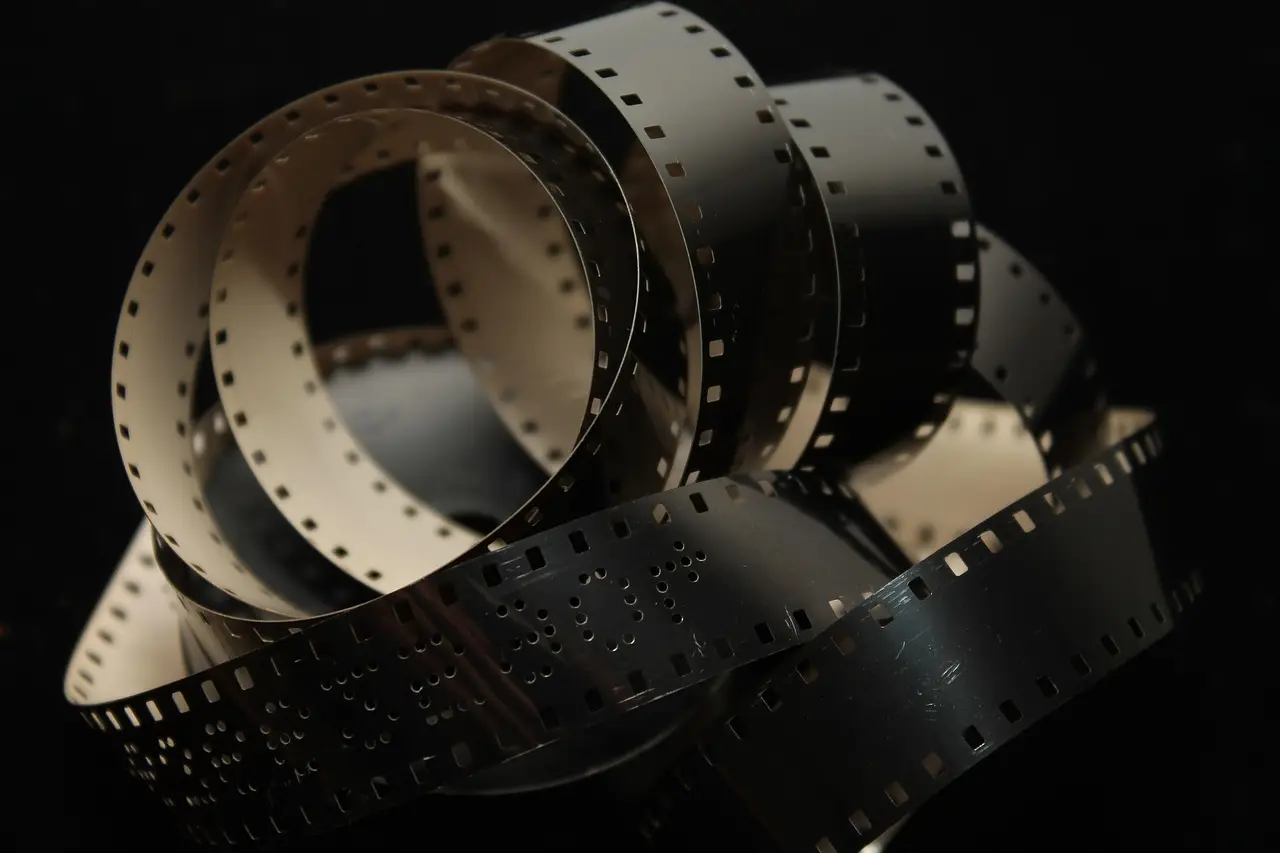
The book's conceit is the contact sheet itself. Instead of printing only the standout frame selected for a magazine cover or lead, Rankin shows the full thumbnail runs, which document the encounter between photographer and subject frame by frame. The title carries a double meaning: the contact sheet, and human contact.
"It's about how much you kind of fall in love with people each time – platonically, of course, unless it's my wife," Rankin says. "I'm always going for connection. You rarely see a picture of mine where the person isn't looking in through the camera. I tell them: 'Forget about me – connect through the lens.'"
Who is Rankin?
Born in Glasgow in 1966 as John Rankin Waddell, he grew up in St Albans and initially trained in accountancy before photography consumed him. In 1991 he and Jefferson Hack co-founded the influential arts, culture and fashion magazine Dazed & Confused, with Rankin's exuberant images dominating its covers. He went on to photograph everyone from the Rolling Stones to Queen Elizabeth II. In 2011 he founded Hunger magazine.
His next major project is a sequel to his 2006 book Tuulitastic, dedicated to the model Tuuli Shipster, his wife of 17 years. He also plans to immerse himself in wet-plate photography, a slow 19th-century process that he says feels like an antidote to AI.
Six stories behind the contact sheets
The book's contact sheets capture unguarded moments with some of the biggest names in music and fashion, and Rankin's captions explain what the camera actually recorded:
-
Liam and Noel Gallagher, 2002, Q issue 190. "I always loved photographing Liam and Noel. Liam was like a panther – you never knew if he'd scratch you or purr. And Noel had brilliant one-liners. I'd set up a studio. Keith Drummond, the art director, and I were obsessed with David Bailey's Lennon and McCartney shoot, so that inspired us. They looked so dapper, like real rock stars, and they played up the sibling rivalry for us."
-
Björk, 1994, Dazed & Confused issue 9. "Björk is the best person in the world to photograph; she's so experimental. I was trying to do a version of another photographer's image. She knew the photo and said: 'Don't do that – be yourself.' I must've taken 200 rolls of film with her."
David Bowie, 1995, Dazed & Confused issue 14. "I expected to meet the dude from The Man Who Fell to Earth film: a spaceman who was cold, serious and unemotional. Instead, I met Tigger," says Rankin. "Bowie was so excited. I sometimes say to people: 'Cuddle yourself' – it's a self-love thing. David Bowie was one of the first people I tried it on. You can see he's cuddling himself, but then there's a performance there."
Vivienne Westwood, 2002, POP magazine. "Vivienne was so funny – no ego. She was such a laugh to shoot. The editor who commissioned me for this hated editing my shoots, but you can see her mark on this one. Most people would think they look ugly in that picture but Vivienne loved it so much that picture ended up being her poster for her V&A exhibition."
Goldie, 1999, Dazed & Confused and INCredible Supplement. "What's great about Goldie is that he always performs to the camera. You never fail to get a good picture with Goldie. I like this one, as it's a bit less like Goldie – it's more subtle. He's often in-your-face, which is lovely, but I feel that there's a bit more of the softer Goldie in this photo."
Has Rankin actually quit AI?
Not entirely. He is not working on any AI-focused projects right now, but he has not closed the door. "I'm quite sick of it," he says. "But I do feel I've got more to explore. I'm looking at what you can create with it that you've never created before. People really hate it and I can't stand it. But I'm still inquisitive about what it will become."
That tension — revulsion and curiosity in the same breath — is where Rankin currently sits. Contact argues that the encounter between two people in a room, recorded on film at a specific time and place, is the thing generation cannot replicate, while the industry around that encounter braces for the job losses he expects within the year.
Original: thefaik.com
More from Elena Vasquez
Show full bio
Market editor covering technology and product news in artificial intelligence and machine learning at AI In Context.
870 articles