Nvidia board restores Jensen Huang after Trump security assurance
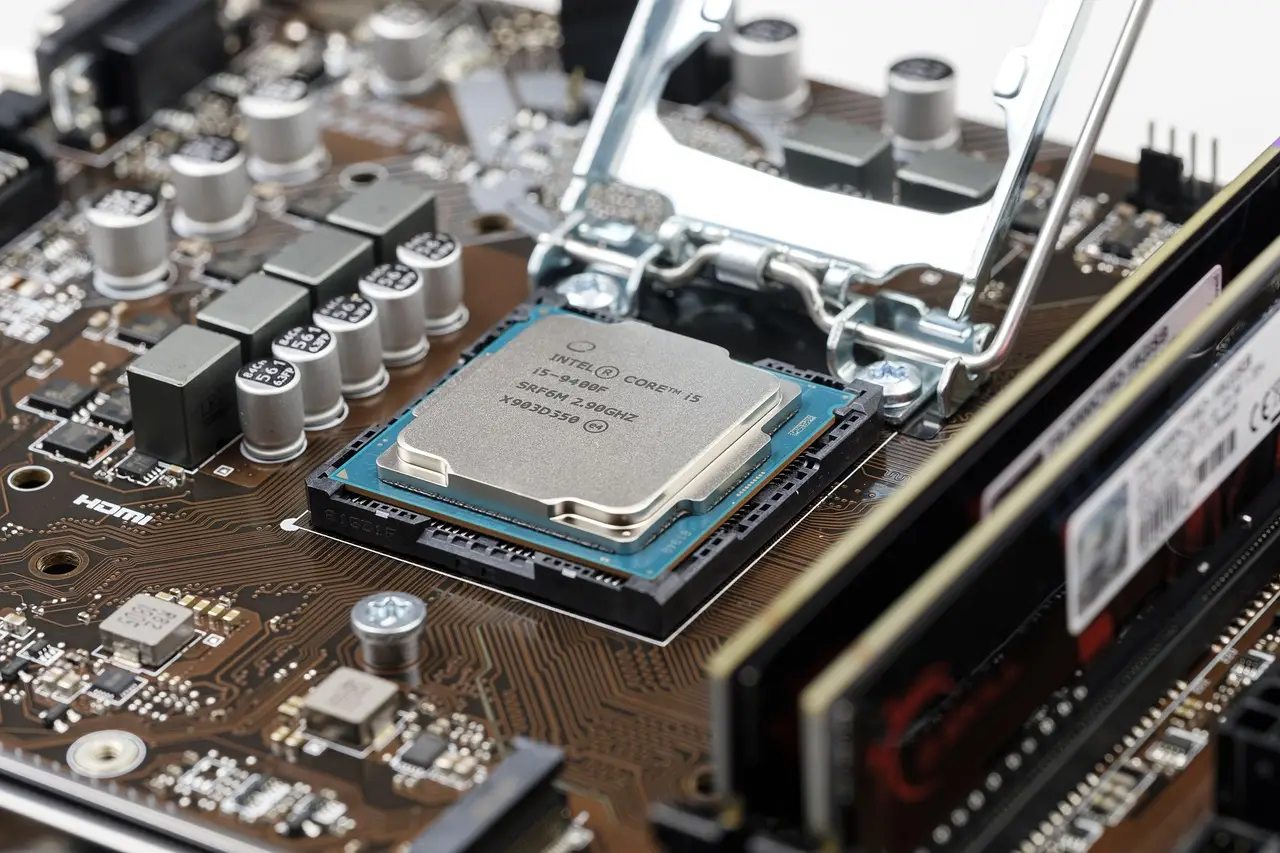
Nvidia’s share price rose about one-third after its board reinstated CEO Jensen Huang, a reversal economics and politics journalist Eduardo Porter links to an apparent White House call that may have involved Donald Trump.
Porter says the board restored Huang after concerns that he had slept with Nvidia employee Alice Huang, whom critics described as a potential Chinese spy. He stops short of establishing that allegation, noting that the available facts remain difficult to interpret.
Porter also notes that Trump owns a non-trivial number of Nvidia shares, giving the president a financial interest in the outcome. The darker alternative, he writes, is that Huang was deceived into handing valuable assets to China, the United States’ main geopolitical rival.
Porter calls Nvidia one of the most important companies of the artificial intelligence era. He assumes shareholders are happy with the decision because the board is supposed to represent their interests.
Porter also argues that Huang’s return is unlikely to strengthen Nvidia’s reputation as a paragon of corporate governance. The market reaction, in his telling, rewards the decision without resolving that governance question.
Porter’s concern is institutional, not merely personal. A board meant to represent shareholders instead appears susceptible to a call from a president with an ownership stake in Nvidia. Porter does not say shareholders opposed the decision or that its directors faced a formal conflict.
The market rewarded the decision, but Porter says its national security basis remains unproven.
What did Trump tell the Nvidia board?
Porter quotes Trump: “One of the things the board wanted to know is: ‘Is there a national security problem?’” He adds: “We said: ‘No, it’s not a problem.’”
Trump’s wording presents the board as reaching that answer, but Porter describes no independent investigation or supporting evidence. That gap matters because his argument depends on whether directors exercised judgment or merely accepted presidential reassurance.
Porter leaves room for another possibility: Alice Huang was not sleeping with Jensen, and their relationship was not a honey trap (an attempt to gain leverage through a romantic relationship). But he also rejects any broader assumption that the episode carried no national security risk.
Xi Jinping’s project to secure Nvidia chips could have used the relationship to entangle Huang and extract strategic assets, Porter suggests. That possibility remains an allegation rather than an established finding, and Porter provides no underlying evidence for testing it.
Porter then compares the episode with Fifa’s decision to defer a one-match suspension for US forward Folarin Balogun. The forward received the red card for a foul on Bosnia and Herzegovina’s Tarik Muharemović during the World Cup over the summer.
Porter says Trump demanded Balogun’s reinstatement, but the US team then lost to Belgium amid allegations of misuse of presidential power. He uses the sports case as a rhetorical parallel for presidential intervention, not as evidence establishing what the Nvidia board knew.
The football analogy dramatizes Porter’s concern about concentrated power, without proving the president shaped Huang’s reinstatement.
Why invoke the Gilded Age?
Porter sees a parallel with Sam Altman, whom OpenAI’s board fired before investors revolted and the company reinstated him within a couple of weeks. He attributes that outcome to Silicon Valley’s devotion to founders as untouchable geniuses whose autonomy serves profit and progress.
In Porter’s telling, the Huangs, Altmans, Musks, Amodeis and Zuckerbergs form a class of self-anointed technology titans. They expect nontechnical people to stay out of their way while pursuing revolutions they understand only vaguely.
Those revolutions could bring large-scale unemployment and other massive social disruptions to the planet’s 8 billion-plus people, Porter warns. Porter offers no unemployment forecast or empirical test for that claim, so it remains a warning rather than a prediction with measurable odds.
For Porter, the comparison carries a testable implication: boards should be able to question or remove founders when conflicts or security concerns arise. He identifies no additional cases or success rates, so the claim remains an argument from analogy.
Porter’s closest precedent arrived during the late-19th-century Gilded Age (an era he associates with concentrated industrial power). The frontier network technology was the railway, the dominant industrial input was steel, and the era’s dominant names included Vanderbilt, Carnegie, Rockefeller and Morgan.
Those industrialists controlled their companies with near-absolute authority, Porter writes. They bought political power through lobbying, campaign financing and outright bribes, while also benefiting handsomely from government largesse.
Porter links today’s massive federal subsidies to Elon Musk’s companies with railroad land grants covering millions of acres. He offers no line-by-line accounting of those programs, so the lineage functions as a historical argument rather than a direct fiscal comparison.
The Gilded Age comparison identifies concentrated power as the shared feature, while leaving its modern scale unmeasured.
What did the Progressive Era change?
Porter says the Gilded Age ended, and the Progressive Era (the reform period that followed) imposed meaningful limits on corporate and political power. The reforms included the first federal income tax, antitrust law (rules restricting anticompetitive conduct) and a large body of government regulation.
Porter says election reforms curbed political machines, while a salaried bureaucracy (a permanent civil service) emerged to reduce bribery. He notes that Elon Musk’s Doge has tried to dismantle that kind of bureaucracy, though Porter does not document the result.
By the late 1970s, the richest 1% held somewhat less than one-quarter of the nation’s wealth, according to Porter. Earlier, in 1913, the richest 1% of taxpayers drew almost 18% of national income and held nearly 40% of national wealth.
Porter says those historical shares resemble what the richest 1% receive and hold today. He quotes President Rutherford B Hayes writing in his diary, while echoing Abraham Lincoln’s Gettysburg Address: “This is a government of the people, by the people, and for the people no longer. It is a government of corporations, by corporations, and for corporations.”
Porter uses Hayes’s warning to connect present concentration with an earlier cycle of corporate capture. His sequence suggests that concentrated wealth does not disappear without institutional intervention.\
Source: theguardian.com
More from James Calloway
Show full bio
News editor covering people, launches and day-to-day practice in artificial intelligence and machine learning at AI In Context.
902 articles
Related articles
- Nvidia waits as pressure grows to restore Jensen Huang
- Nvidia Loses $430 Billion as CEO Affair and China Chip Claims Escalate
- Trump Assured Nvidia Board That Huang Posed No Security Threat
- Nvidia Reinstates Jensen Huang as CEO After Security Clearance
- Trump Backs Jensen Huang as NVIDIA Faces Congressional Scrutiny