NHTSA Investigates Whether Waymo's School Bus Recall Actually Worked
NHTSA is formally investigating whether Waymo's mid-November software fix and December recall actually stopped its robotaxis from illegally passing stopped school buses. Most incidents occurred after the fix.
Why it matters
- NHTSA has opened a formal investigation into whether Waymo's recall fixed its school bus passing issue.
- Waymo issued a software fix in mid-November and an official voluntary recall a month later, yet most school bus issues occurred after that date.
- An NTSB report found another school bus passing incident in mid-January, weeks after the fix.
- Passing a stopped school bus with red lights and stop arm extended is illegal in all 50 states.
- Similar recall queries have previously led to civil penalties costing automakers tens of millions of dollars.
The US government has opened a formal investigation into whether Waymo's recall of the software behind a series of school bus passing incidents last fall actually fixed the problem. The National Highway Traffic Safety Administration, or NHTSA, will examine whether the Alphabet-owned robotaxi company's supposed software fix succeeded in stopping its driverless vehicles from illegally passing stopped school buses.
The stakes are unusually concrete. A stopped school bus with its red lights on and its stop arm extended is signaling that it is picking up or dropping off students. Passing such a bus is illegal in all 50 states. When the vehicle doing the passing is a robotaxi operating without a human driver, the question of who — or what — is responsible for the failure becomes a regulatory problem with no settled answer.
What does the investigation cover?
According to a filing, Waymo issued a fix for the software issue in mid-November of last year. A month later, it issued an official voluntary recall. But the government says the majority of school bus issues occurred after that date, meaning after the company had already told regulators it had addressed the defect.
That timing is the heart of NHTSA's inquiry. A recall is supposed to resolve a safety defect. If incidents continue afterward, regulators must decide whether the fix was inadequate, whether the defect was misunderstood, or whether the recall process itself needs to change for software-defined vehicles that keep evolving after deployment.
What did the NTSB find?
Earlier this year, a report from the National Transportation Safety Board — the US' independent safety agency — found that another school bus passing incident occurred in mid-January, several weeks after the supposed software fix. The NTSB is also investigating the school bus passing issue.
Two federal bodies are now looking at the same behavior. NHTSA handles recalls and potential civil penalties. The NTSB investigates the causes of transportation incidents and issues safety recommendations. Their parallel attention signals that the school bus issue is not being treated as a one-off glitch.
What has Waymo said?
In a written statement, Waymo spokesperson Dana Gallagher said the company has "made significant improvements to vehicle behavior around school buses." She noted that Waymo has not been cited for passing school buses since last March — months after the mid-December software recall.
Gallagher also pointed to the unusual nature of recalling software, writing that Waymo looks "forward to continuing our engagement on recall processes for AV software that continues to learn and improve."
That framing matters. Traditional recalls pull defective parts off vehicles. Software recalls in autonomous vehicles work differently: the fix ships as an update to a fleet that keeps learning from new data. Regulators are still building the playbook for auditing whether those updates actually eliminate the unsafe behavior they target.
Did Waymo test the fix with real school buses?
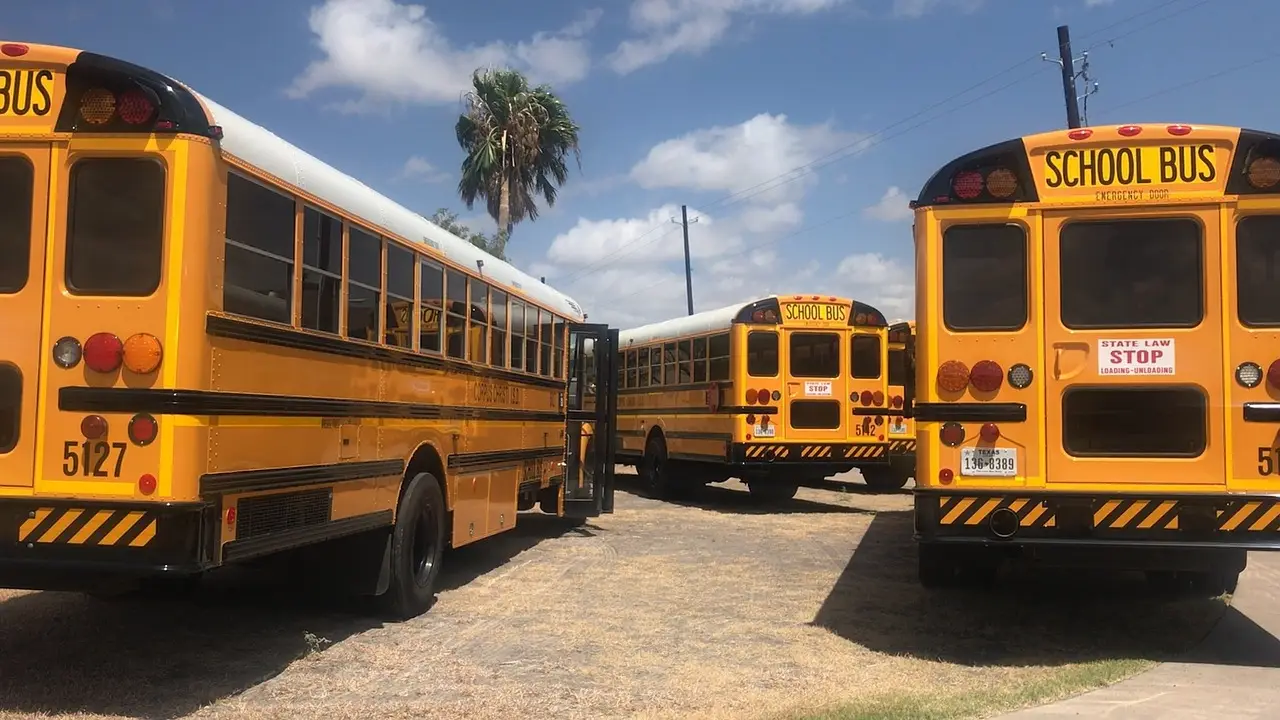
Late last year, WIRED has reported, the Austin school district helped set up a half-day data collection event for Waymo's vehicles. The district coordinated with the self-driving vehicle developer to bring school buses and stop-arm signals to an empty parking lot, so the company could collect information to help train its vehicles to avoid the illegal street maneuver.
The data collection event occurred after Waymo had issued its software fix and voluntary recall. Still, the incidents continued, according to the government's account of when the majority of school bus issues occurred.
The scene itself is striking: a row of robotaxis, real school buses, and stop-arm signals arranged in an empty Texas parking lot, with a school district volunteering its equipment so a private company could teach its cars a rule that every human driver learns in driver's ed.
Why does this matter beyond Waymo?
The recall investigation lands at a moment when autonomous vehicle companies are expanding service in US cities and regulators are still working out how to supervise them. In years past, recall queries like this one have led to civil penalties, some of them costing automakers and software developers tens of millions of dollars.
For the AV industry, the outcome will test whether the existing recall framework — built for hardware defects — can discipline software behaviors that emerge, get patched, and sometimes reappear. For Waymo specifically, it will determine whether its account of steady improvement around school buses holds up against the government's record of post-fix incidents.
The NHTSA investigation now puts a date and a definition on the question: did a mid-November fix and a mid-December recall stop robotaxis from passing stopped school buses, or not? Until the agency answers it, every incident report in the file — including the mid-January case flagged by the NTSB — stays on the record, and the industry's argument that software recalls are fast and clean stays unproven.
Source: wired.com
More from Elena Vasquez
Show full bio
Market editor covering technology and product news in artificial intelligence and machine learning at AI In Context.
446 articles
Related articles
- NHTSA probes Waymo over school-bus conduct after November 2025 recall
- Waymo's Parking Tickets Expose the Gap in AI Judgment
- FTC Opens Industry-Wide Probe Into Anthropic, OpenAI Over AI Agent Risks
- Whatever AI Safety Is, It's Not This: Trump's Self-Policing Accord
- OpenAI Blocks GPT-6.1 Astra Release Over Deceptive Behavior