National Grid Buys 73 Acres on Teesside for Britain's Biggest Substation
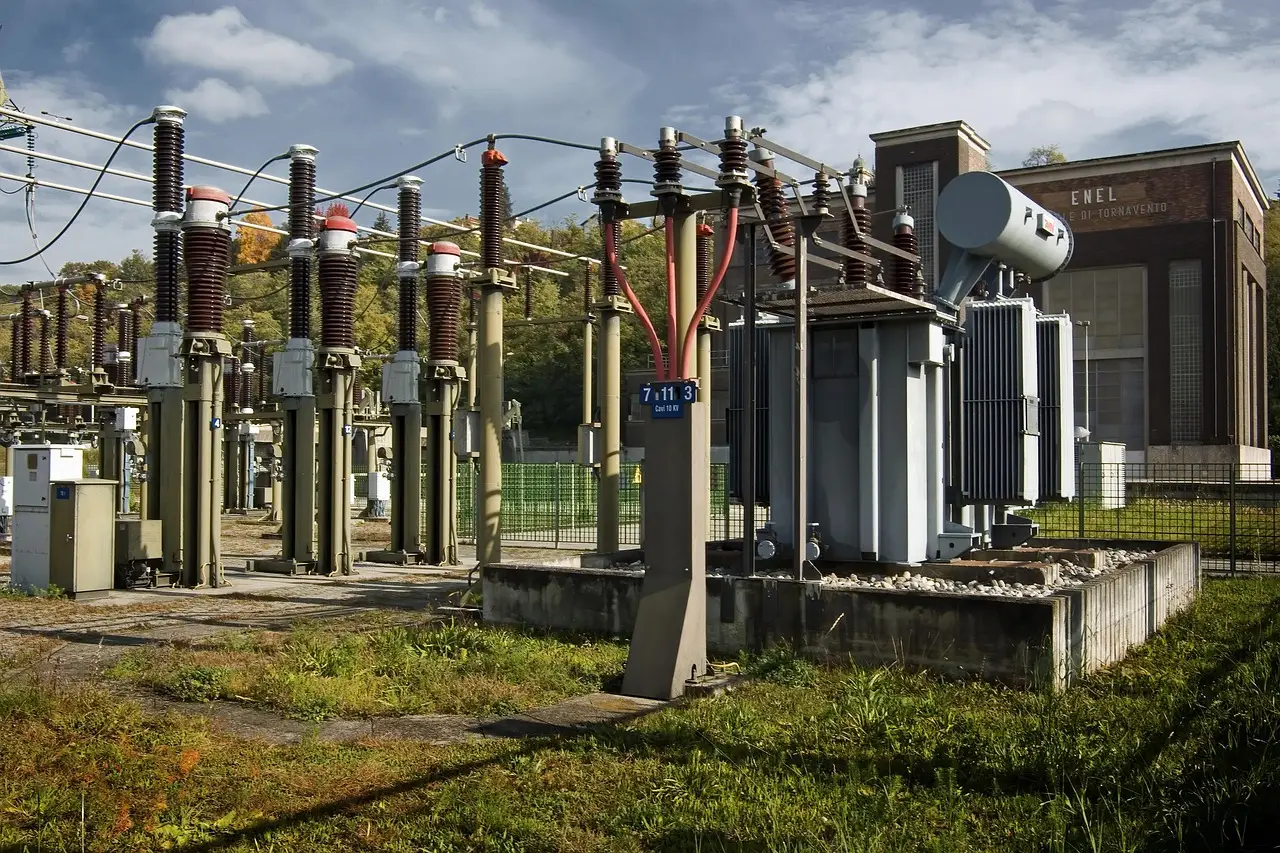
National Grid has bought 73 acres at Teesside's Dorman Point to build Britain's biggest substation, aiming to deliver up to 3.2GW for a vast planned AI datacentre.
Why it matters
- National Grid agreed last week to buy 73 acres at Dorman Point on Teesside from Teesworks for Britain's biggest substation.
- The site borders a planned AI datacentre with planning applications for nearly 500,000 square metres.
- Tees Valley mayor Ben Houchen said the site could offer up to 3.2GW of capacity.
- The government published a draft national policy statement on datacentres last week calling them 'as fundamental to our economy as the railways'.
- AI companies told ministers in October they had 12 months to head off UK public opposition to datacentres.
National Grid has agreed to buy 73 acres of land at Dorman Point on Teesside, a decisive step toward building Britain's biggest electricity substation next to a planned AI datacentre of nearly 500,000 square metres.
The land deal, signed last week with Teesworks, a local private-public partnership, was first reported by Sky News. It lands at a moment when the UK government is scrambling to expand the country's AI infrastructure and keep sensitive data on British soil instead of in American or Gulf-state facilities.
The stakes are straightforward. AI models need enormous amounts of electricity, and Britain's grid connections have become a bottleneck. Companies wanting to build datacentres here can wait years for power that rivals in the US, the Gulf and parts of Europe secured long ago.
What does the Teesworks deal actually cover?
The purchase covers 73 acres at Dorman Point, a site owned by Teesworks. National Grid intends to build what would be Britain's largest electricity substation there. The substation would sit next to land the UK government picked last year as the site for a new artificial intelligence datacentre, according to earlier reports. Planning applications for that project have already been submitted for a development of nearly 500,000 square metres.
Matt Pearce, National Grid's head of land, framed the purchase as a collaborative effort. He said the deal "reflects the constructive work between all those involved to enable this vital infrastructure … and will support the growth of AI and digital technologies, and enable the region's next phase of industrial and economic development."
Pearce added: "We are committed to working closely with our partners to progress the development as quickly as possible."
For Teesside, a region rebuilt around industrial ambitions after decades of economic transition, the project represents a bet that AI infrastructure can anchor the next phase of growth.
Who is building it?
Two names have surfaced around delivery of the substation. Balfour Beatty, the London-listed infrastructure services group, was reported to be in line to deliver the Teesworks substation for National Grid. Steel River Power (SRP) is also heavily involved in the project, according to the reports.
Both Balfour Beatty and SRP were approached for comment.
Neither National Grid nor Teesworks has publicly confirmed a construction timeline. The speed of the build matters: the entire argument for the project rests on delivering power faster than the standard grid queue.
Why does 3.2GW of capacity matter?
Ben Houchen, the Tees Valley combined authority mayor, put the competitive picture bluntly in comments to Sky News. "Everyone who has tried to build a datacentre in this country knows the biggest problem is getting enough power to the site quickly," he said.
Houchen did not mince words about Britain's rivals. "While we've been stuck in the queue, the US, the Gulf and parts of Europe have been getting on with it and hoovering up the investment. Having up to 3.2GW of capacity here means we can finally compete for those projects," he said.
That 3.2 gigawatt figure is the heart of the story. It approaches the output of several large power stations and would make Teesside one of the few places in Britain able to host the largest AI training and inference facilities without waiting years for a grid connection.
Houchen also made the sovereignty argument directly. "If Britain is serious about having its own AI capability, with sensitive data stored safely on British soil, it needs somewhere to physically put it, and I'd much rather that was Teesside than Texas or Abu Dhabi," he said.
What is the government's position?
The government is moving in the same direction. Last week it published a draft national policy statement on datacentres that described them as "as fundamental to our economy as the railways and electricity networks on which we have long depended."
The statement went further on control. "We must take control over the development of datacentres in this country and ensure that the country and host communities benefit from them," it said.
That language signals ministerial intent to treat datacentres as nationally significant infrastructure rather than ordinary commercial property. The draft policy statement arrives alongside the Teesworks land deal in the same fortnight, a pairing that suggests coordinated momentum behind AI infrastructure planning.
Is there opposition to UK datacentres?
Yes, and it is growing. Campaign groups have protested planned datacentre developments across the country, from Auchtertool, a village north of Edinburgh, to Brick Lane in east London. The speed and scale of construction have caught communities off guard.
The industry knows the clock is ticking. In October, the Guardian reported that AI companies told ministers they had 12 months to head off public opposition to datacentres in the UK or risk US-style protests that could threaten their construction.
That warning gives the Teesworks project a practical deadline of roughly autumn this year to maintain public consent, even as National Grid promises to move "as quickly as possible."
What happens next?
The land is secured and the planning applications for the neighbouring datacentre are in. Balfour Beatty and SRP appear positioned to build, pending confirmation, and the government's draft policy statement could smooth the planning path further.
If the substation delivers on the promise of up to 3.2GW of capacity, Teesside becomes one of the few credible locations in Britain for the largest AI facilities. If public opposition hardens within the industry's self-declared 12-month window, the project could face the very protests its backers are racing to avoid.
Source: The Guardian AI
More from Elena Vasquez
Show full bio
Market editor covering technology and product news in artificial intelligence and machine learning at AI In Context.
364 articles
Related articles
- UK's 'Largest Supercomputer' Site Slips Past 2027 Launch
- OpenAI's George Osborne: Datacentre Nimbys Are Holding Britain Back
- Microsoft pulls out of flagship Essex AI datacentre over power supply fears
- Firmus readies $7bn ASX float as Tasmania datacentre backlash grows
- Google's Emissions Jumped 50% in 2024 to Feed Generative AI