Nasdaq Falls 2.3% as Huang Exit Tests the AI Stock Rally
The Nasdaq fell 2.30 percent to 24,556.89, more than 10 percent below its October 6 record close, as Jensen Huang's Nvidia resignation hit AI stocks ahead of Tuesday's earnings report and Anthropic's IPO.
Why it matters
- Nasdaq Composite closed at 24,556.89, down 579.38 points or 2.30 percent, more than 10 percent below its October 6 record close — a confirmed correction.
- Dow Jones Industrial Average fell 659.41 points, or 1.26 percent, to 51,688.96; the S&P 500 lost 134.27 points, or 1.78 percent, to 7,427.40.
- Philadelphia SE Semiconductor Index dropped 4.6 percent; Nvidia fell 4.2 percent and led all Magnificent Seven names lower.
- The SOX's 2026 year-to-date gain narrowed from 106.6 percent in mid-June to around 43 percent, roughly four times the S&P 500's gains so far this year.
- Analysts expect Nvidia to report a 90.4 percent year-on-year earnings increase on revenue of $109.10 billion at Tuesday's report.
- CME FedWatch pricing implies a 93.7 percent chance of a 25-basis-point Federal Reserve rate hike in December.
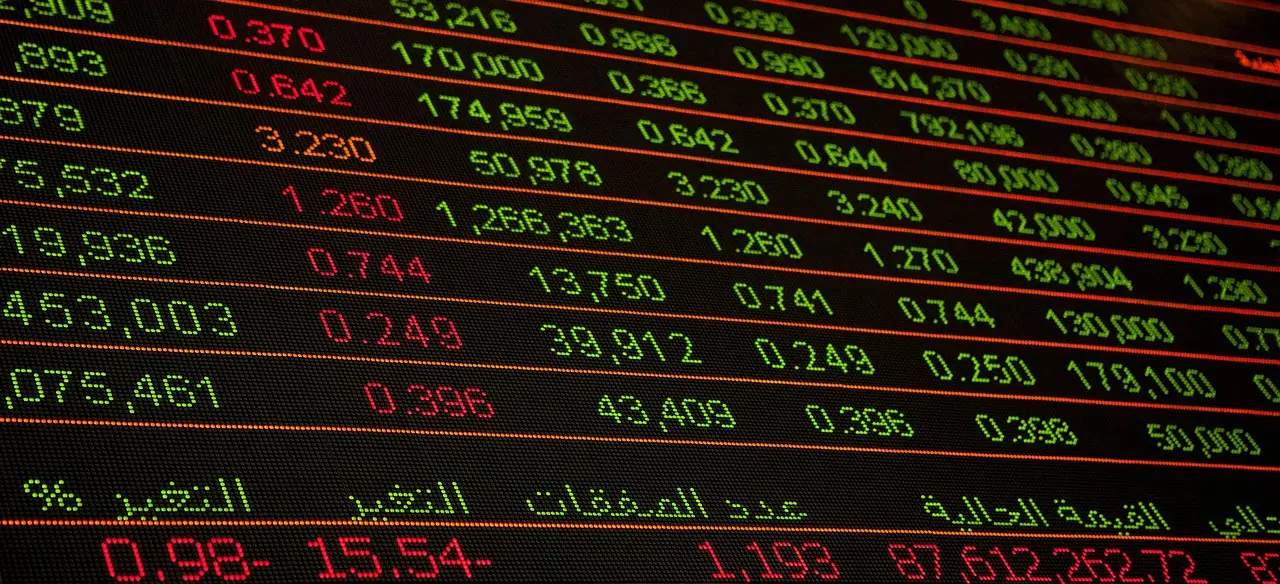
The Nasdaq Composite fell 2.30 percent on Monday to 24,556.89, more than 10 percent below its October 6 record close, a drop that confirms a correction. The Dow Jones Industrial Average surrendered 659.41 points, or 1.26 percent, to 51,688.96. The S&P 500 lost 134.27 points, or 1.78 percent, to 7,427.40.
The Philadelphia SE Semiconductor Index (SOX), the benchmark most tightly tied to AI hardware spending, fell 4.6 percent. Nvidia dropped 4.2 percent, and every member of the Magnificent Seven (the largest US technology companies) traded lower.
The trigger was Jensen Huang's resignation as Nvidia CEO, which followed allegations of an affair with an alleged Chinese spy. The report does not lay out the evidence behind those allegations, and it carries no statement from Nvidia or from Huang explaining the departure. What it does say is that the episode added a layer of doubt on top of a technology sector already absorbing bad news.
What did Huang's resignation change?
Huang's exit prompted the Trump administration to issue a new rule restricting China's access to the most advanced AI chips sold by companies such as Nvidia. The rule arrives ahead of US President Donald Trump's expected meeting with Chinese President Xi Jinping.
The report does not describe the rule's text, its effective date, or how it would be enforced, and it does not say whether existing export licenses are voided or merely narrowed. It also does not quantify how much revenue the restriction places at risk for any vendor. The policy signal and the personnel shock landed in the same session, which is what made the move sharp rather than orderly.
For investors, the read-through is that the trade now carries three separate exposures at once: the leadership of the dominant chip designer, the durability of US-China chip restrictions, and the profitability of the spending wave those chips are meant to serve.
How much of the AI rally has already unwound?
The retreat has a long tail. In mid-June, the SOX index was up 106.6 percent year-to-date. Its 2026 gain has since narrowed to around 43 percent, which the report describes as roughly four times the gains of the broader S&P 500 so far this year. The report does not state the S&P 500's own year-to-date percentage, so the multiple is the only anchor offered.
That pullback is what dragged the Nasdaq more than 10 percent below its all-time closing high, a threshold that defines a correction. Two sessions of 1.78 percent and 2.30 percent declines did not create the drawdown; they deepened one that had been building for months.
The selloff also gathered momentum through the session, with the S&P 500 and the Dow both down well over 1 percent as it progressed. That pattern matters for reading the closing numbers, because it suggests the selling was a reaction to intraday information rather than a pre-set de-risking at the open.
Is this a rotation out of AI, or an exit from it?
Ross Mayfield, an investment strategy analyst at Baird in Louisville, Kentucky, offered a more measured reading of the tape.
"It's the back-and-forth in this market of the AI-related stocks catching a bid versus this rotation trade," Mayfield said. "Over the last couple of weeks, it's like a day-to-day thing where, you know, some days the AI names absolutely rip and then the very next day, you know, they're in a freefall."
Mayfield also argued the damage stops short of abandonment. "There are signs underneath the surface that investors aren't panic-selling and running away from the asset class altogether, but are probing other corners of the equity market," he said.
The breadth data complicates that claim at least somewhat. On the New York Stock Exchange, declining issues outnumbered advancers by 3.22-to-1, with 56 new highs and 493 new lows. The Nasdaq saw 1,129 stocks rise against 3,613 declines, a 3.2-to-1 ratio of decliners, with 38 new highs and 413 new lows. The S&P 500 recorded 21 new 52-week highs and only six new lows. Those new-low counts are not the signature of a portfolio reshuffle.
What does Nvidia's earnings report on Tuesday need to show?
Analysts expect Nvidia to post a 90.4 percent year-on-year earnings increase on revenue of $109.10 billion. The report does not say whether that revenue figure is a consensus estimate, a company projection, or a trailing-year base, and it does not mention guidance.
The stakes are set by the comparison. A 90.4 percent earnings jump on $109.10 billion in revenue would arrive after a sector that has already given back a large share of its gains, with the selloff blamed partly on a chief executive's departure rather than on any reported demand miss. Investors are being asked to underwrite the spending cycle at the same moment the equities that track it are being repriced for reasons unrelated to orders.
Anthropic's initial public offering, planned later in the week, adds a second event to the same calendar. The report gives no pricing, no share count, and no implied valuation for the offering, so the only measurable claim attached to it is timing. A public listing would put a private AI lab's valuation against the public market's revised view of the sector hours after Nvidia's numbers.
Why is the Fed in the middle of this?
US Federal Reserve Chair Kevin Warsh said on Monday that technologies will have a significant impact on the economy, but that the possible scenarios range from rising growth with broadly shared gains to higher unemployment and a potential slowdown if anticipated investment returns prove disappointing. The report paraphrases those remarks rather than quoting him directly, and it does not indicate which scenario Warsh considers most likely or whether he addressed December policy.
Policy expectations have tightened. Markets price in a 93.7 percent likelihood of a 25-basis-point rate hike in December, according to CME FedWatch, the futures-implied odds tracker. A basis point is one-hundredth of a percentage point, so 25 basis points is a quarter-point move in the policy rate. Minutes from the Federal Open Market Committee's (the Fed's rate-setting body) latest meeting, due for release on Wednesday, could offer clues ahead of next month's decision.
The combination is awkward for the equity story. A December hike would raise the discount rate applied to long-duration growth expectations at the same time investors are being asked to accept a slower pace of earnings expansion from the largest AI beneficiary.
Who else got hit?
The damage spread well beyond Nvidia:
- Intel and Micron both fell more than 6.0 percent.
- CoreWeave, a neocloud provider (a smaller cloud operator renting Nvidia accelerators), slipped 6.2 percent, and rival Nebius dropped 7.5 percent.
- Among hyperscalers (the large cloud providers renting computing capacity to third parties), Alphabet, Amazon and Meta slid between 2.5 percent and 3.3 percent.
- Server maker Dell fell 6.6 percent, and Super Micro Computer dropped 5.8 percent.
The pattern is that the biggest losses landed on the companies with the most direct exposure to AI infrastructure revenue, while the megacap hyperscalers — the buyers of that infrastructure — fell less. It is a differentiated selloff, and the differentiation tells you the market is repricing the suppliers before the customers.
What to watch
Two data points will settle the argument the tape started on Monday. Nvidia's earnings report on Tuesday will show whether the 90.4 percent earnings growth analysts expect is still a conservative framing or an ambitious one, and Anthropic's debut later in the week will set a public price for AI work that investors have only ever valued in private rounds. If the chip numbers hold and the listing prices near private-market marks, Mayfield's rotation thesis holds. If either disappoints, the 493 new lows on the NYSE become a starting point rather than a scratch.
For now, the honest summary is narrower than a rout: the Nasdaq is in a correction, the semiconductor index has surrendered roughly two-thirds of its mid-June gain, and the sector's most powerful figure left his post the day before its biggest test of the year.
Source: feed.koreatimes.co.kr
More from James Calloway
Show full bio
News editor covering people, launches and day-to-day practice in artificial intelligence and machine learning at AI In Context.
722 articles
Related articles
- Nvidia Falls 4.1% as Wall Street Absorbs Jensen Huang Exit
- Nvidia Shares Plunge 7% as Board Weighs CEO Jensen Huang's Future
- NVIDIA Falls 9% as Board Reportedly Prepares to Oust CEO Jensen Huang
- Nasdaq Falls 5.52% as Midterm Sweep Triggers AI Regulation Selloff
- NVIDIA Falls 5% as Board Probes Jensen Huang's Ties to Alleged Chinese Spy