Nasdaq 100 falls 10.4% in a week, worst since pandemic, as AI doubts pile up
The Nasdaq 100 dropped 10.4 percent for the week, its worst since the pandemic, as Nvidia fell 14 percent on reports of an SEC accounting review and investors doubted multibillion-dollar AI buildouts.
Why it matters
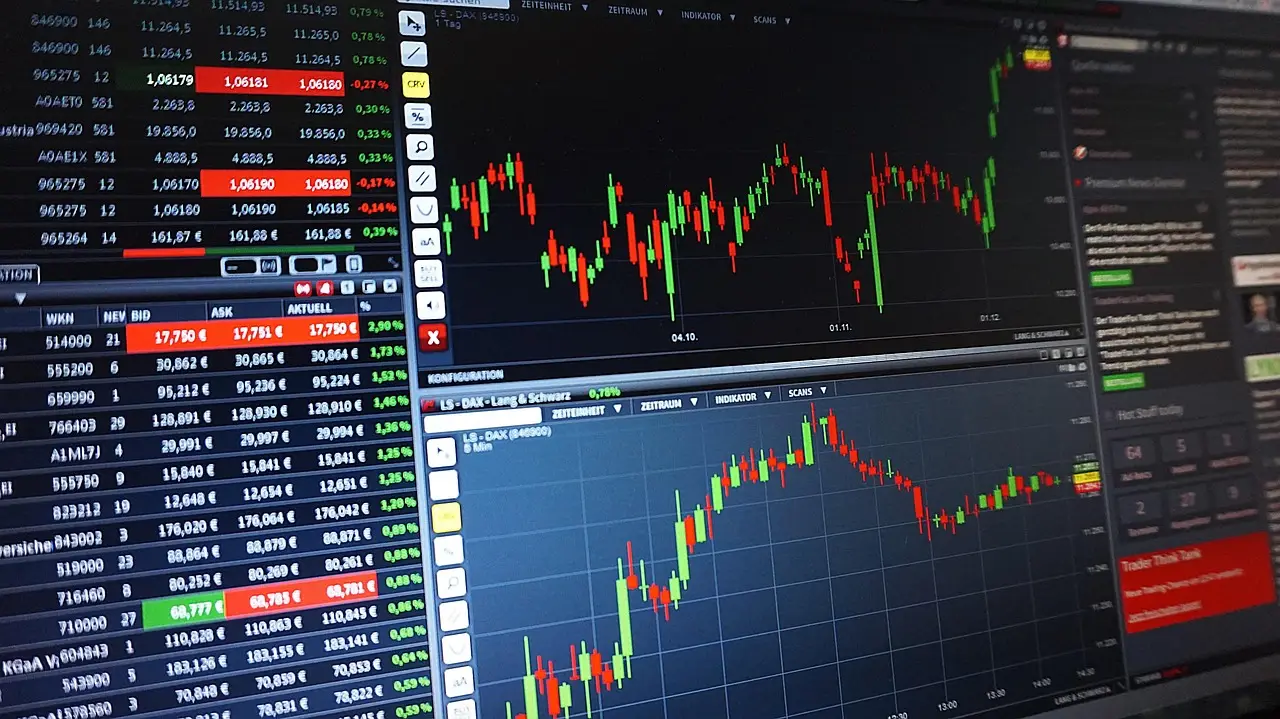
- Nasdaq 100 fell 5.6 percent Friday and 10.4 percent for the week, its worst week since the Covid-19 crisis, per the Financial Times.
- The index sits 20 percent below its October peak, in bear market territory.
- Nvidia plunged 14 percent after reports the SEC is reviewing its accounting; the US semiconductor index dropped 10.7 percent.
- Anthropic fell 9.1 percent a day after its market debut.
- Drivers include AI buildout doubts, Nvidia's China deals, the Democrats' midterm win, and Iran war-driven oil costs keeping inflation and rates high.
The Nasdaq 100 fell 5.6 percent on Friday and 10.4 percent for the week, its worst weekly performance since the Covid-19 crisis, according to the Financial Times. The drop leaves the tech-heavy index 20 percent below its October peak. That is bear market territory (a decline of 20 percent or more from a recent high), and it marks the sharpest reversal in US technology shares since the pandemic-era selloff.
The trigger is not one event but a convergence of pressures. Investors are questioning whether the multibillion-dollar buildouts in artificial intelligence infrastructure will deliver returns that justify their cost. Nvidia, the company most closely identified with the AI spending boom, is contending with a scandal and reports of questionable deals in China. And the political backdrop shifted after the Democrats' midterm win, adding headwinds that markets had not priced in.
The numbers tell the story in sequence. A 5.6 percent single-day drop on Friday. A 10.4 percent weekly loss. A 20 percent drawdown from the October peak. Each figure compounds the one before it.
Why did Nvidia fall hardest?
Nvidia took the hardest hit on Friday, plunging 14 percent after reports that the US Securities and Exchange Commission is reviewing its accounting. The company has not been charged with wrongdoing; the review, as reported, is an examination of how Nvidia books its financials.
The 14 percent drop stands out even within a brutal session for the sector. Nvidia's fall dragged the broader US semiconductor index down 10.7 percent, with losses spread across memory and chip stocks including Sandisk, Micron, and Broadcom.
The stakes are straightforward. Nvidia has been the single largest beneficiary of AI infrastructure spending, and its valuation has come to anchor investor confidence in the entire AI trade. An SEC accounting review strikes at the reliability of the numbers underpinning that confidence.
Anthropic, the AI company, fell 9.1 percent a day after its market debut. A first-day-after decline of that size signals weak demand for newly public AI exposure at exactly the moment investors are re-rating the sector.
Are chip and memory valuations still justified?
Beneath the headline selloff, investors are debating whether high valuations for chip and memory stocks remain justified given their cyclical nature. Semiconductors are a cyclical industry: demand and pricing move in boom-and-bust waves tied to broader economic conditions, rather than rising steadily.
That debate matters because much of the recent run-up in tech valuations has rested on chips and memory as the picks-and-shovels of the AI boom. If those businesses are cyclical rather than structurally transformed by AI, the premium pricing they command looks harder to defend.
The market's answer, at least for this week, was negative. The 10.7 percent drop in the US semiconductor index reflects a repricing across the sector, not a fall confined to a single company's bad news.
What role do macro pressures play?
High oil costs from the Iran war are fueling persistent inflation and keeping interest rates high. That combination pressures technology stocks twice over: inflation raises input costs, and high interest rates reduce the present value of future earnings, which growth stocks depend on.
The macro backdrop means the AI-specific doubts are landing on a market already strained. The Financial Times describes the combination of factors driving the selloff as a perfect storm: AI buildout doubts, the Nvidia scandal and questionable China deals, political headwinds after the Democrats' midterm win, and inflation-fueled interest rate pressure.
Why does this matter for the AI industry?
The selloff tests the central assumption of the current AI investment cycle: that multibillion-dollar spending on compute infrastructure will generate proportional returns. Investors pulling back from that assumption hit the whole chain, from chipmakers like Nvidia, Micron, and Broadcom to newly public AI companies like Anthropic.
A 20 percent decline from the October peak is not merely a statistic. It reprices capital for every company that planned to fund AI buildouts with expensive equity. It also hands ammunition to critics who have argued that AI infrastructure spending has outrun demonstrated demand.
The political dimension adds uncertainty. The Democrats' midterm win introduced headwinds that markets had not anticipated, according to the Financial Times, and regulatory attention on Nvidia's accounting suggests Washington's scrutiny of AI-sector champions is intensifying rather than fading.
What comes next?
The immediate question is whether the SEC's review of Nvidia's accounting widens or closes. A 14 percent single-day drop shows how sensitive the market remains to any signal about the sector's flagship company.
The longer question is whether the week's losses mark a repricing within a continuing AI buildout, or the start of a deeper unwinding of the investment cycle itself. With the Nasdaq 100 in bear market territory, inflation persistent, and rates high, the burden of proof has shifted to the companies spending billions on AI infrastructure to show the returns.
Original: ft.com
More from Marcus Bennett
Show full bio
Senior reporter covering companies, deals and strategy in artificial intelligence and machine learning at AI In Context.
872 articles
Related articles
- Nvidia's Nearly 13% Slide Reshapes the AI Investment Trade
- Nasdaq-100 Headed for Worst November Since 2008 as AI Stocks Slide
- Nvidia Wiped Out $913 Billion in Five Days, Its Worst Run Since 2022
- TSMC Down 12.8% in a Month Despite Earnings Beat and Record Guidance
- Nvidia Falls About 5% as Dow, Nasdaq Rally in Early Trading