Musk Warned SpaceX Revenue Falls if Compute Gets Cheap. Deutsche Bank Bet $18 Billion It Won't
Deutsche Bank raised SpaceX's 2028 forecast by $18 billion on compute scarcity — two days after Musk warned revenue "will drop" if compute gets cheap.
Why it matters
- Deutsche Bank raised SpaceX's 2028 EBITDA forecast by $18 billion to $237.1 billion on Nov. 10, keeping a Buy rating and $250 target.
- Musk wrote on X on Nov. 8 that SpaceX revenue "will drop" if compute becomes plentiful and cheap.
- Voters backed data-center limits in 40 of 41 local ballot contests last week, per Ballotpedia.
- SpaceX Q3 revenue was $14.575 billion, up 161% year over year, with capex of $19.593 billion.
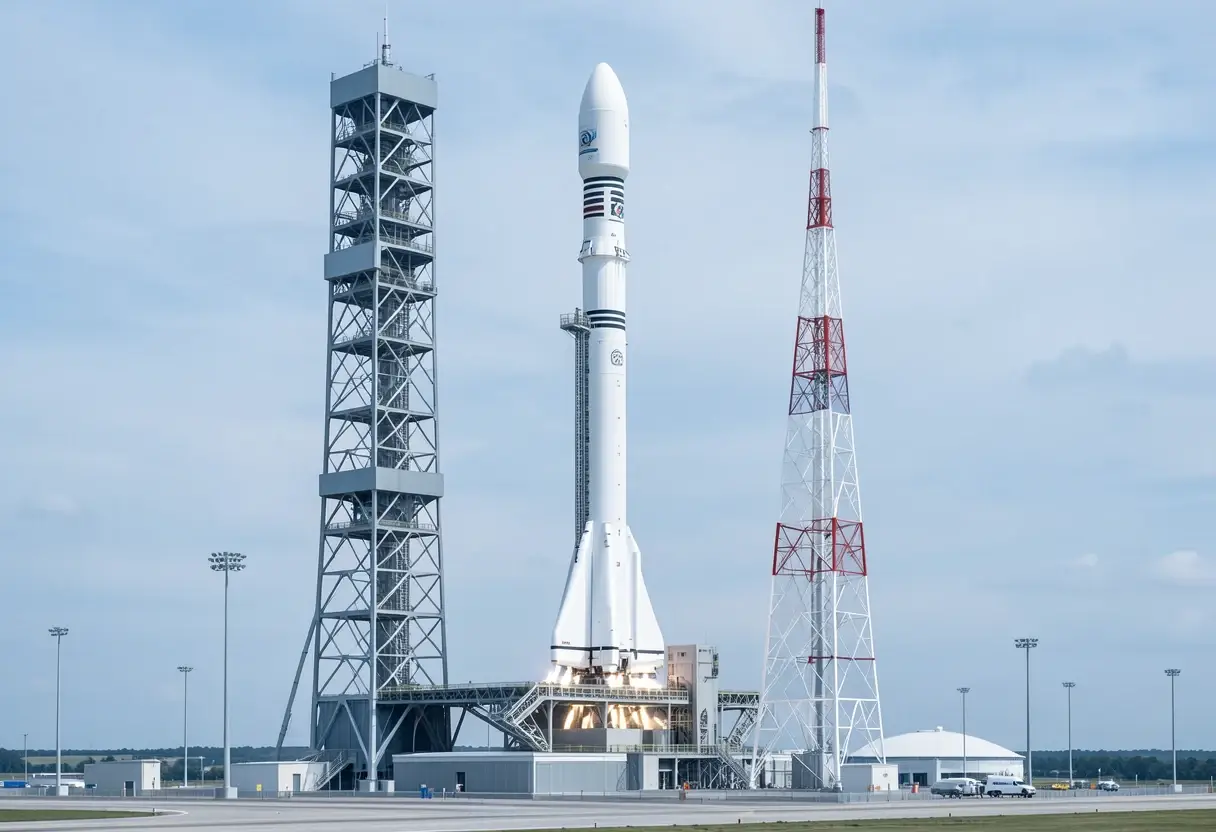
- Starship Flight 15 attempts the first-ever ship tower catch on Nov. 13.
By James Calloway
Deutsche Bank raised its 2028 EBITDA forecast for SpaceX by $18 billion, to $237.1 billion, just two days after Elon Musk warned in writing that the company's revenue "will drop" if computing power becomes plentiful and cheap. The raise, delivered to clients on Tuesday, Nov. 10, by analyst Edison Yu, rests on a single wager: that local political resistance keeps data centers scarce through 2028, and that SpaceX gets to keep naming its price for the capacity it already runs. Musk's own words set the limit on that bet, and the bank's own numbers leave its biggest risk out entirely.
What did Musk actually say?
On the evening of Nov. 8, Musk replied on X to a clip of investor Chamath Palihapitiya, who argued SpaceX could cancel its Anthropic compute contract on 90 days' notice and re-sign it at double the price. Musk's answer: "It works both ways, of course. If compute becomes plentiful and cheap, SpaceX revenue will drop. No crying in the casino for either party."
That is a candid admission from the CEO of Space Exploration Technologies Corp. (NASDAQ: SPCX). The core of the investment case — high-margin compute rental to AI labs — erodes the moment supply loosens. Musk said so himself, in writing, in a public post. Investors pricing the stock at a $1.9 trillion market value are underwriting the opposite assumption.
Why did Deutsche Bank raise its forecast?
Yu's case rests on election results. Voters backed limits on data-center development in 40 of 41 local ballot contests last week, by Ballotpedia's count. Texas Governor-elect Gina Hinojosa has pledged to halt new approvals until the legislature sets protections for electricity costs and water.
Yu expects that pressure to slow construction, mainly in 2028, keeping computing capacity scarce and rental prices higher for longer. He raised his 2028 EBITDA forecast by $18 billion to $237.1 billion and his 2028 revenue forecast by $18.7 billion to $315.3 billion. He kept a Buy rating and a $250 price target.
Two caveats belong next to that raise. First, Deutsche Bank left the potential contract repricing — the exact mechanism Palihapitiya and Musk were debating — out of its numbers. Second, the bank itself notes that SpaceX's planned $24 billion gas plant and computing site in Texas faces the same approval freeze that protects its existing capacity. The scarcity that flatters the installed base also blocks the expansion. The bank did not model that trade-off either.
A $18 billion raise on a two-year-out line item is a forecast, not a fact; it requires compute to stay scarce for two more years in every market that matters.
How has the stock traded since the IPO?
SpaceX sold 555,555,555 Class A shares at $135 on June 11 and opened for trading on June 12 at $150. The shares closed the first day at $160.95, hit a record close of $201.80 on June 16, fell to a low close of $108.27 on Aug. 5, and dropped to $123.62 on Nov. 5 after the midterm results. The stock closed Tuesday at $143.09, up 0.7% on the day, per Fuse's daily price history.
The arithmetic of that range:
- 6% above the $135 IPO price
- 29% below the June 16 record
- 12% below where it traded a month ago
- 16% above the Nov. 5 close
- 46 times forward earnings in Fuse's data
Of 39 analysts in Fuse's count, 31 rate the stock a buy, 6 a hold and 2 a sell, with an average target of $255 — about 78% above Tuesday's close. Consensus that lopsided deserves scrutiny, not comfort.
What sits behind the numbers?
The third-quarter report showed revenue of $14.575 billion, up 161% year over year, net income of $4.4 billion, and capital spending of $19.593 billion — more than the quarter's entire revenue. SpaceX ended September with 1.7 gigawatts of computing capacity and guided to 2.5 to 3 gigawatts by year end.
Trailing twelve-month revenue is $32 billion. Deutsche Bank's 2028 revenue forecast of $315.3 billion is nearly ten times that booked figure. Growth of that magnitude has been delivered by very few companies in history, and the forecast depends on the scarcity conditions Musk himself flagged as reversible.
What does the position look like for a day-one buyer?
The source frames this through a scenario: a retired 67-year-old engineer with $2.4 million, most of it in a rollover IRA at Fidelity, who bought 1,000 shares on June 12 at $161 — a mid-afternoon fill on a day the stock traded between $149.34 and $176.52. His position, straight from the price history:
- June 12 purchase: $161.00, position $161,000 (even)
- June 16 record close: $201.80, position $201,800 (+$40,800)
- Aug. 5 lowest close: $108.27, position $108,270 (-$52,730)
- Nov. 5 midterm selloff: $123.62, position $123,620 (-$37,380)
- Nov. 10 close: $143.09, position $143,090 (-$17,910)
- Deutsche Bank's $250 target: position $250,000 (+$89,000 against cost; +$106,910 from Tuesday's price)
He was up $40,800 four days in, down $52,730 by August, and sits on an 11% loss today after gaining $19,470 since Nov. 5. The tax mechanics matter: a sale before June 12, 2027 books a short-term loss. The $17,910 offsets capital gains first; with no gains, it cuts ordinary income by up to $3,000 a year — worth $660 a year in the 22% bracket, and taking six years to use up. Against $17,910 of gains taxed at 15%, the loss saves $2,686. Buying back within 30 days on either side of a sale disallows the loss, per IRS Publication 550.
At today's price the position is 6.0% of his $2.4 million, down from 6.7% at cost. It can fall to zero without changing his retirement — which is also why Deutsche Bank's $250 target would add only about 4.5% to the whole portfolio.
What happens Friday?
The next scheduled event is Starship Flight 15. The launch window opens Friday, Nov. 13, at 5:45 PM Eastern (4:45 PM at Starbase) and runs 75 minutes, pending the FAA license. Booster 22 is due back at the tower about six and a half minutes after liftoff. Ship 42 goes to orbit, releases 26 Starlink V3 satellites, and roughly 22 hours later attempts the first tower catch of a ship — never done before.
On the Oct. 20 earnings call Musk said a successful ship catch was "more likely than not." On Nov. 6 he wrote that if both catches work, "it will mark the first time that all parts of an orbital rocket return to Earth intact."
Starship is the vehicle the orbital compute plan rides on. A clean double catch is the kind of news that moves this stock; a failure is the kind that costs it. Musk also endorsed, in the same weekend post stream, a secondhand report that Larry Page expects 99.999% of computing to end up in orbit — a claim with no engineering detail attached, and one a $143,090 shareholder is carrying whether he thinks of it that way or not.
What is the bottom line?
Deutsche Bank's $315.3 billion 2028 revenue forecast assumes compute scarcity persists, and Deutsche Bank's own numbers exclude the contract repricing and the Texas approval freeze that could cut against it. Musk has stated in writing what happens if the scarcity assumption breaks. Friday's launch, the year-end tax window, and a stock that has traded between $108 and $202 in five months will each test the thesis before any 2028 model does.
Source: 247wallst.com
More from James Calloway
Show full bio
News editor covering people, launches and day-to-day practice in artificial intelligence and machine learning at AI In Context.
533 articles
Related articles
- Elon Musk predicts 'guppy-level death' for 200-plus AI neoclouds
- SpaceX Closes $40 Billion Debt Deal to Buy AI Chips, Musk Says
- Musk Says Terafab’s Trillion-Dollar Cost Is a Multiyear Plan
- Dan Ives on Musk's $1 Trillion Texas Problem: Why Florida Won't Help
- Sanders alleges $3 trillion in Big Tech debt, warns against bailouts