Mercedes prepares Drive Assist Pro for US and Germany
Mercedes-Benz is preparing a two-market Drive Assist Pro rollout for MB.OS cars. Ars Technica tested the system and said it handled complex traffic “like a champ.”
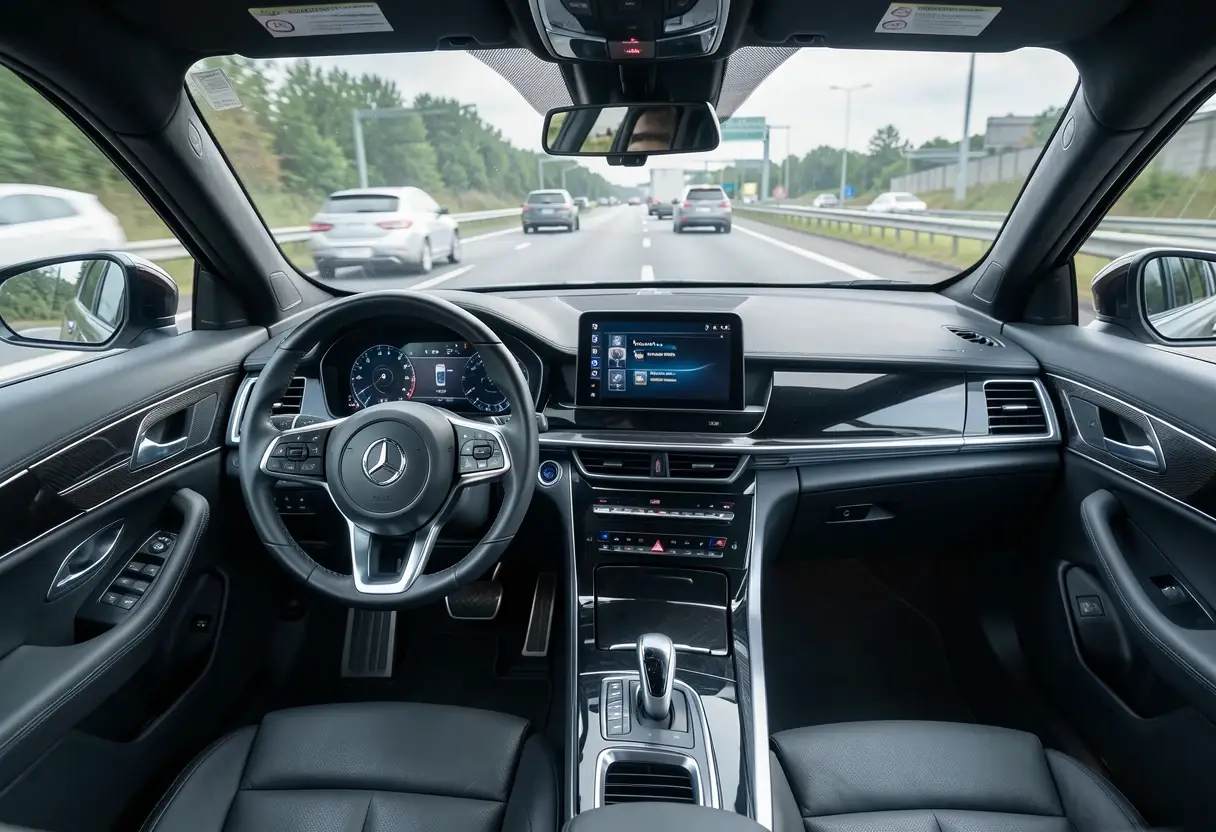
Why it matters
- Drive Assist Pro is headed for two markets: the US and Germany.
- The system combines steering, acceleration and braking, placing it at Level 2.
- Toyota introduced passenger-car lane-keeping assistance in 2004.
- Mercedes-Benz was among the first OEMs to introduce airbags, then added active safety systems a decade later.
- Ars Technica tested Drive Assist Pro after a passenger-seat preview during a Mercedes-Benz CLA drive last year.
Mercedes-Benz is preparing a two-market Drive Assist Pro rollout—the US and Germany—for cars running the new MB.OS operating system, according to Ars Technica. The assisted-driving system controls steering, acceleration and braking, but it remains partial automation, with the driver responsible for situational awareness.
Ars Technica has now taken Drive Assist Pro behind the wheel. Last year, the publication first drove the new Mercedes-Benz CLA and received a passenger-seat preview of the forthcoming driver-assistance system. Ars Technica called that demonstration “impressive.”
The hands-on drive produced a stronger verdict: Drive Assist Pro handles complex traffic “like a champ,” according to Ars Technica. That assessment gives Mercedes-Benz a favorable early signal as it moves a driver-assistance feature from a controlled preview toward customers in two markets. It also sharpens the test for the rollout: the system must assist in complex traffic without weakening the driver’s obligation to supervise the road.
What does Drive Assist Pro actually do?
Mercedes-Benz describes the feature as collaborative partially assisted driving, according to Ars Technica. The description fits the engineering progression from basic driver aids to systems that take over more of a car’s motion.
At Level 1, the first level of assisted driving in the scale used by automotive engineers, a car’s electronics control the brakes and throttle. At Level 2, the electronics also control steering. Drive Assist Pro therefore combines those three functions while leaving the human driver in charge.
The division of labor matters as much as the label. The driver remains responsible for situational awareness and for anything that follows from a lack of it. Ars Technica describes Level 2 as the category made famous by Tesla Autopilot, but that classification does not remove the driver’s role.
A useful way to read the Mercedes-Benz system is as three specific interventions:
- Braking and throttle: The electronics can operate both, the control pair associated with Level 1 assistance.
- Steering: Adding steering takes the system into Level 2.
- Supervision: The driver remains responsible for the road and must retain situational awareness.
That keeps Drive Assist Pro inside the partial-assistance category, even when the car can trace a lane and manage speed. The feature still depends on a person understanding the traffic around the vehicle. Ars Technica’s “like a champ” verdict addresses the vehicle’s behavior; it does not transfer responsibility to the vehicle.
Where does it fit in Mercedes-Benz’s safety history?
Mercedes-Benz has long built its safety reputation around passive and active technology, according to Ars Technica. The company was one of the first OEMs to introduce airbags. A decade later, it began adding active safety systems such as antilock brakes, electronic stability control and adaptive cruise control.
Ars Technica presents Drive Assist Pro as the next step in that sequence. The move from airbags to electronic vehicle control spans passive and active safety. Drive Assist Pro extends the active side by combining steering with control of the brakes and throttle.
Mercedes-Benz is also not the first automaker to put lane-keeping assistance in a passenger car. Ars Technica dates those first systems to 2004, when Toyota introduced one. They predated the Level 2 category’s association with Tesla Autopilot by almost a decade.
That timeline sets the commercial context for the rollout. On that timeline, the new variable is not assisted steering itself. It is how Drive Assist Pro combines steering, speed and distance control while handling complex traffic. The MB.OS requirement ties the feature to Mercedes-Benz’s new operating system and the cars built around it.
How is the system meant to work?
Ars Technica says the purpose of assisted driving is to make long drives less tiring and a little more effortless. In practical terms, the car can maintain a constant speed, preserve a constant distance from the vehicle ahead and remain between the white lines.
Those functions define the repetitive work the driver would otherwise handle. They also explain why Mercedes-Benz’s collaboration model keeps a person responsible for the scene. The car handles selected control inputs; the driver remains accountable for situational awareness and events outside those inputs.
Ars Technica’s test of complex traffic goes beyond the basic description of holding speed, distance and lane position. The publication’s wording indicates that the system continued to perform as the surrounding traffic became more complicated. That matters for a customer rollout because the assistance will encounter more than a constant line and a single lead vehicle.
What does the two-market rollout change?
The US and Germany are the two customer markets named for the initial Drive Assist Pro rollout described by Ars Technica. The system will reach cars using the new MB.OS operating system. By limiting availability to that operating system, Mercedes-Benz is coupling the driver-assistance feature to a specific software platform. The deployment will test the system in customer vehicles, not only in a controlled demonstration.
The report does not specify a calendar launch date, a price or the full model list. The initial rollout still puts a new assisted-driving system in front of customers in two markets while Mercedes-Benz continues to frame it as partial assistance, with the driver in charge.
For buyers, the central question will be whether the system’s behavior remains predictable when a road scene requires more than maintaining speed, distance and lane position. Ars Technica’s test answers that question favorably in at least one hands-on session. It does not answer every question about daily use.
How was the test arranged?
Mercedes-Benz provided Ars Technica with flights from Washington, DC, to San Francisco and accommodation so the publication could try its new driver-assistance systems. Ars Technica says it does not accept paid editorial content.
Those travel arrangements accompany the publication’s statement that it does not accept paid editorial content. The test still provides an eyewitness impression rather than a standardized benchmark. Ars Technica describes a passenger-seat preview, then a driver-seat test, followed by the judgment that complex traffic was handled “like a champ.”
For Mercedes-Benz, customer use in everyday traffic in the US and Germany is the next test, and Ars Technica’s positive hands-on result does not change the requirement for an attentive, responsible driver.
Source: arstechnica.com
More from Rebecca Stone
Show full bio
Correspondent covering companies, deals and strategy in artificial intelligence and machine learning at AI In Context.
728 articles
Related articles
- Mercedes takes on Tesla FSD with MB.Drive Assist Pro
- Mercedes-Benz's MB.Drive Assist Pro drives San Francisco with one intervention in an hour
- Mercedes tests point-to-point assist on San Francisco streets
- TU Delft Lets Passengers Talk Their Way to a Custom Autonomous Ride
- Rivian Will Let Outside AI Agents Like Claude Into Its Cars