Marvell to Buy Lumentum in $115 Billion All-Stock AI Bet
Marvell will acquire Lumentum in an all-stock deal with an implied enterprise value of $115 billion, betting on optical connectivity for AI. Shares of both companies fell on the news.
Why it matters
- Marvell will acquire Lumentum in an all-stock deal with an implied enterprise value of $115 billion, announced Monday.
- Lumentum shareholders will receive 4.5 Marvell shares per Lumentum share; the deal is expected to close in the first half of 2028.
- Marvell shares fell 3% and Lumentum declined about 4% in premarket trading on the announcement.
- Marvell closed a multibillion-dollar acquisition of optical interconnectivity startup Celestial AI earlier this year.
- Marvell's market value has more than tripled in three years; Lumentum's stock has more than doubled in 2026 alone.
Marvell Technology said Monday it will acquire optical components maker Lumentum in an all-stock deal with an implied enterprise value of $115 billion — one of the largest artificial intelligence bets of 2026. The takeover is a fixed-ratio, no-cash transaction, which means its real value will move with the price of Marvell shares between now and closing.
The deal's structure deserves as much attention as its headline number. Lumentum shareholders will receive 4.5 Marvell shares for each Lumentum share they own. Because no cash changes hands, Lumentum's owners are effectively being paid in a currency whose value floats daily. Marvell said it expects the transaction to close during the first half of 2028 — a long runway by acquisition standards, and one that leaves roughly two years for market sentiment, regulatory review, or AI spending trends to reshape the deal's economics.
The takeaway: a "$115 billion" deal announced today is a projection, not a wired transfer, and the final price will be set by Marvell's share price at closing.
Why optical connectivity is the prize
Marvell Chairman and CEO Matt Murphy framed the acquisition as a response to a structural shift in how AI data centers are built. "AI infrastructure is undergoing a fundamental architectural shift toward optical connectivity, creating an opportunity that comes along once in a generation," Murphy said in a release. "The companies that move first and help define this transition will set the standard for decades to come."
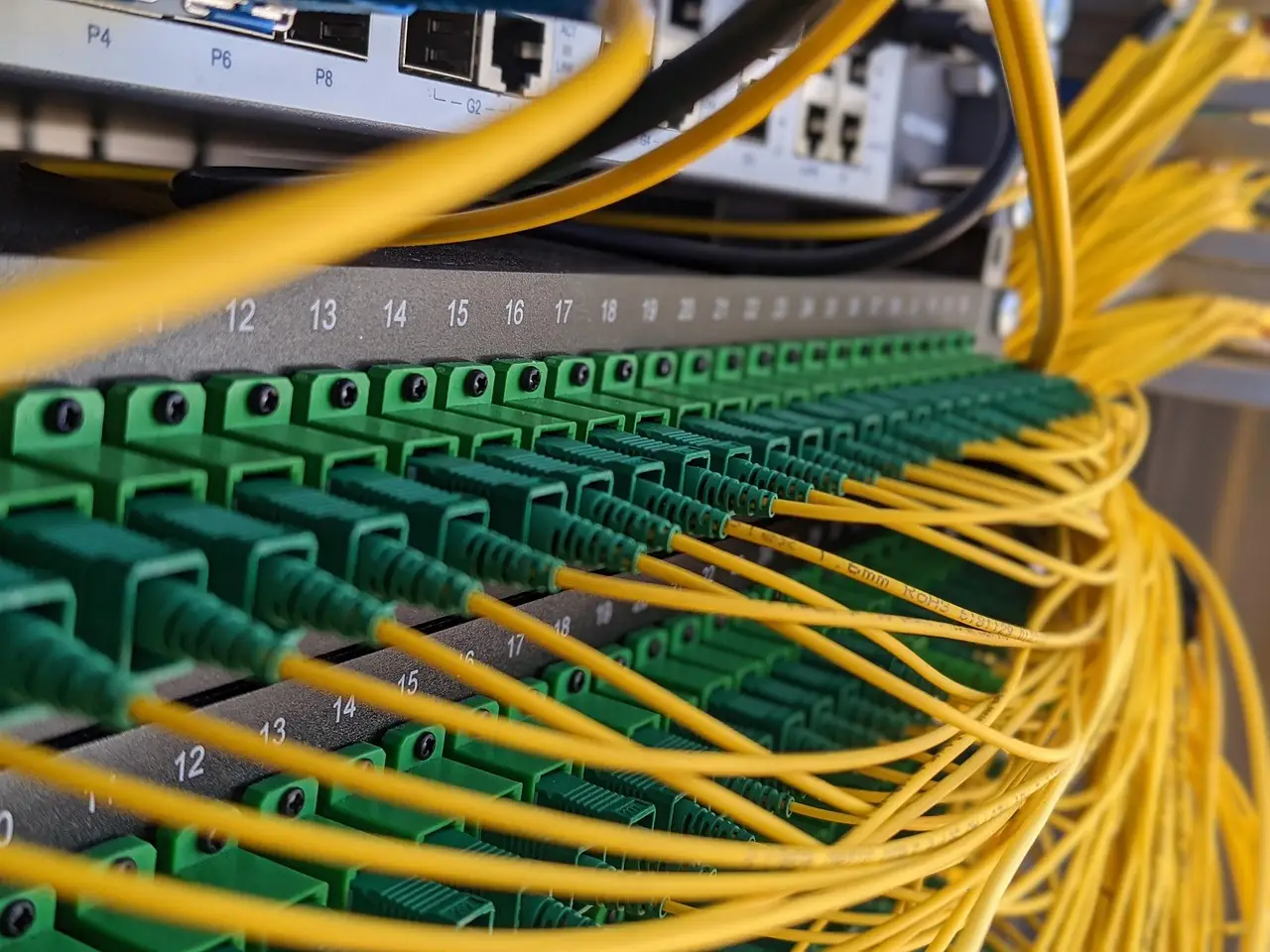
The technical logic behind the deal is straightforward. Companies assembling the clusters that train and run large language models increasingly rely on optical connections rather than copper to link chips together across racks, systems and regions. Marvell said the acquisition lets it combine its electrical technologies with Lumentum's optical components — covering both sides of the interconnect (the physical links that move data between processors) that AI infrastructure depends on.
That combination is the stated strategic core of the transaction: one company supplying the electrical and optical pieces of AI connectivity as demand accelerates and shifts across regions and systems. Whether the integration delivers is a question for 2028 and beyond; the release offers a rationale, not results.
The takeaway: Marvell is paying to own both halves of the pipe that connects AI chips, betting optics replaces more of today's wiring.
What does the market reaction say?
Investors did not cheer the announcement. Marvell shares slumped 3% and Lumentum's stock declined about 4% in premarket trading. For Lumentum's shareholders — who are receiving stock rather than cash — a declining acquirer share price directly erodes the value of the consideration they will receive. The premarket moves are small relative to the deal's size, but the direction cuts against the "once in a generation" framing.
The pullback also lands against a backdrop of rising doubt. Marvell's takeover comes despite recent concerns over the long-term sustainability of AI infrastructure spending, a debate that has intensified as capital commitments from hyperscalers have grown into the hundreds of billions. A deal this large, paid entirely in equity and closing as far out as mid-2028, is a leveraged wager on that debate resolving in AI's favor.
The takeaway: both stocks fell on the news, an early signal that investors see risk, not a bargain, in the combination.
How did Marvell get here?
Monday's announcement is not Marvell's first move on AI connectivity. Earlier this year, the company closed a multibillion-dollar deal for Celestial AI, a startup focused on optical interconnectivity technology. The Lumentum acquisition extends that same thesis at a far larger scale — from a startup purchase to a $115 billion consolidation of an established optical components supplier.
The market has rewarded the strategy so far. Marvell's market value has more than tripled over the last three years, buoyed by unrelenting AI enthusiasm, and Lumentum's stock has more than doubled in 2026 alone. Those gains matter for the deal's mechanics: an all-stock acquisition funded with richly valued shares is cheaper for the buyer, but it also means both companies' valuations already price in substantial AI growth. If that growth disappoints, the decline would hit the merged entity from a high base.
What are the risks the release leaves unsaid?
The announcement discloses the ratio, the enterprise value and the closing window. It does not disclose regulatory expectations, financing details — none are needed in an all-stock deal — or the accretion (earnings benefit) timeline that acquirers typically quantify. The 2028 closing date is unusually distant, which can signal anticipated antitrust review, integration planning, or simply deal size; the release does not say which.
The sustainability question hangs over everything. The source of the deal's value — AI infrastructure buildout and the shift toward optical connectivity — is the same market that analysts have recently flagged as potentially overbuilt. Murphy's claim that first movers "will set the standard for decades to come" is a competitive assertion, not a verifiable forecast, and the 3% drop in Marvell shares suggests some holders agree.
The takeaway: the deal's terms are public, but its regulatory path, integration plan and financial payoff remain unstated.
What happens next?
Lumentum shareholders will vote on the 4.5-to-1 exchange, and the transaction must survive nearly two years of market cycles before its projected close in the first half of 2028. Until then, the effective price of the deal will be recalculated daily through Marvell's share price — meaning the $115 billion figure announced Monday is best read as the opening estimate in a long negotiation with the market. If AI infrastructure spending holds up, Marvell will have locked in optical capability at 2026 prices; if it does not, the company will have spent its most valuable currency — its own stock — at the top of a three-year run.
Source: CNBC Tech
More from James Calloway
Show full bio
News editor covering people, launches and day-to-day practice in artificial intelligence and machine learning at AI In Context.
380 articles
Related articles
- Anthropic and Nscale Reportedly Near a Second $45 Billion Compute Deal
- Firmus readies $7bn ASX float as Tasmania datacentre backlash grows
- Firmus Cuts Valuation Ahead of ASX Float as Investor Appetite Wanes
- OpenAI's 2026 revenue projection drops $20bn short of investor guidance
- SpaceX commits $40 billion to GPU financing with Apollo