IREN’s 45% Drop Raises Questions About AI Cloud Financing
IREN fell 7% after losing 45% in a month, exposing a roughly $6 billion funding gap as Nebius and CoreWeave face AI buildout financing pressures of their own.
Why it matters
- IREN traded at $16.84 on November 16, 2026, down 7% at the open after a 45% one-month decline.
- IREN faces a roughly $6 billion funding gap, $4.43 billion in net debt and a $20.3 billion revenue backlog.
- IREN’s Q1 FY2027 AI Cloud revenue rose 182% sequentially to $200 million, while the company reported a $263 million net loss.
- Nebius expects 2026 revenue at the low end of $3 billion to $3.4 billion and plans about $27 billion in capital spending.
- CoreWeave’s Q3 2026 revenue rose 168.3% year over year to $3.66 billion, with a $132.5 billion backlog.
By James Calloway
IREN fell 7% to $16.84 at the market open on November 16, 2026, extending its one-month decline to 45%. 24/7 Wall St. reported that financing fears were hitting AI cloud stocks harder than before.
Nebius Group fell 6% to $109.41, while CoreWeave dropped 4% to $51.07. Their one-month losses stood at 41% and 22%, respectively, in the same 24/7 Wall St. market snapshot.
The outlet grouped IREN, Nebius and CoreWeave as neoclouds, meaning independent providers that sell accelerated computing for AI workloads. It framed the selloff as a financing test of whether debt-funded capacity earns enough revenue if customer spending weakens.
What is driving IREN’s selloff?
IREN reported on November 5 that Q1 FY2027 AI Cloud revenue rose 182% sequentially to $200 million. 24/7 Wall St. linked that growth to the company’s move from cryptocurrency mining into AI cloud services.
IREN still faces a funding gap of roughly $6 billion, with execution and financing identified as its central risks. Supplier timing and a customer-requested design change pushed the company’s target for more than $4 billion in annualized recurring revenue (ARR), a run-rate measure, from year-end into January. A possible extension could push the deadline to the end of February.
IREN CEO Daniel Roberts said owning the infrastructure “gives us more ways to fund growth and lets us set its pace.” The statement does not specify the size, pricing or timing of future financing, leaving the funding gap as the more measurable constraint.
IREN’s operating growth is accelerating, but its delayed revenue target leaves investors facing a $6 billion financing gap.
How do Nebius and CoreWeave compare?
Nebius management said on November 12 that 2026 revenue would land at the low end of its $3 billion to $3.4 billion range. It also lifted its 2026 capital spending (capex) plan to about $27 billion.
Customer prepayments are central to Nebius’s funding model. CEO Arkady Volozh said: “Prepayments on Q3 agreements covered more than 100% of the associated capex.” The company expects 75% to 85% of its 2027 capex of $40 billion to $45 billion to come from prepayments and asset-backed financing, meaning loans secured by assets.
CoreWeave reported on November 10 that Q3 2026 revenue rose 168.3% year over year to $3.66 billion. It also reported a revenue backlog of $132.5 billion.
Net interest expense reached $846 million during the quarter, while the debt-to-equity ratio stood at 8.94. That means CoreWeave carried $8.94 in debt for each $1 of equity, according to the reported figures.
Nebius covers more future spending through customer prepayments, while CoreWeave pairs rapid revenue growth with substantial quarterly interest expense.
What does NVIDIA’s turmoil change?
The Financial Times reported on November 16 that Jensen Huang was considering a return as NVIDIA chief executive. He had resigned days earlier amid reports about his personal conduct, according to the same report. 24/7 Wall St. said the chipmaker was under examination over those reports.
Technology became the market’s weakest sector, falling 2% as money rotated out of AI and semiconductor stocks at the start of the week. The NASDAQ 100 fell 1.6%, according to 24/7 Wall St.
That broad market move matters because NVIDIA helped finance infrastructure built around its chips. 24/7 Wall St. said turmoil at the chipmaker feeds directly into funding concerns for IREN and its peers.
The outlet did not quantify IREN’s direct dependence on NVIDIA financing. For IREN, net debt (debt exceeding cash) climbed to $4.43 billion from $216 million in one quarter.
NVIDIA’s next quarterly results are the next major test for the group, according to 24/7 Wall St.
NVIDIA’s next earnings report now matters because its turmoil is being read as a financing risk across the neocloud group.
Why do the business models matter?
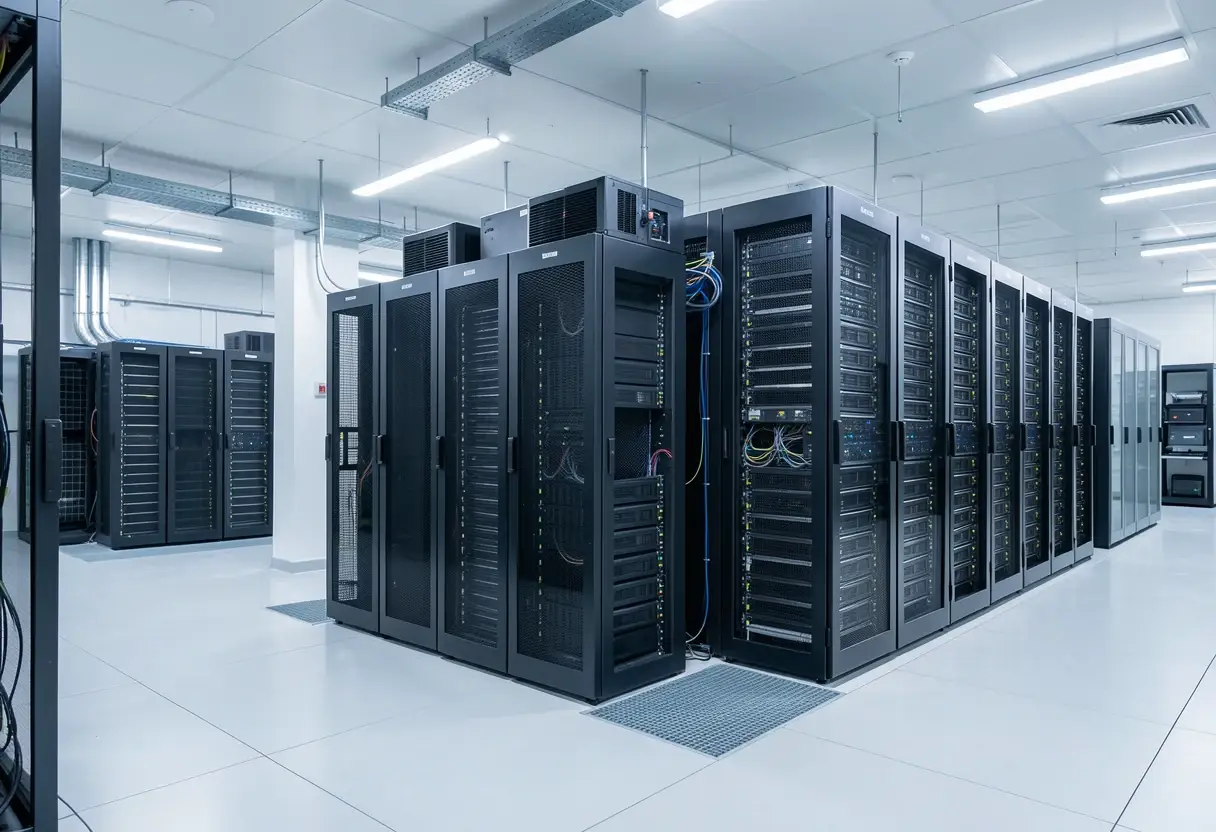
24/7 Wall St. described three distinct approaches to owning data centers, renting computing capacity and financing the hardware behind AI services.
- IREN: Owns the land, power and data centers beneath its AI computing fleet, including sites repurposed from cryptocurrency mining. It is winding down mining while racing to bring AI capacity online.
- Nebius: Sells a vertically integrated stack, meaning software and computing services delivered as one system. It adds cloud software and managed inference, or running AI models for customers, over owned and leased data centers. Partners also fund some capacity under an asset-light model, using third-party assets to shift spending from Nebius’s balance sheet.
- CoreWeave: Runs the largest operation of the three, selling multi-year capacity to AI labs and enterprises. It finances the buildout through contract-backed debt, convertible notes and equity sales.
- Applied Digital: Acts as the landlord, leasing purpose-built campuses to tenants such as CoreWeave. CoreWeave is its principal customer, leaving Applied Digital exposed to the same neocloud funding cycle.
24/7 Wall St. also noted that power, cooling and networking suppliers sit inside the same AI expansion. It separately rounded up seven non-chip companies in that supply chain.
Ownership can provide funding flexibility, but each model shifts some buildout risk to another balance sheet or supplier.
Can IREN close its funding gap?
24/7 Wall St. framed the central question for IREN: whether debt-funded AI capacity gets paid if the AI spending story wobbles. It called IREN one of the group’s most exposed names because of its funding gap.
The outlet’s bullish case rests on IREN’s $20.3 billion revenue backlog. Roughly two-thirds of that backlog is tied to counterparties with investment-grade credit ratings, and signed pricing is moving higher.
The bearish case includes a Q1 net loss of $263 million, heavy customer concentration and finance expense of $73 million that remains on the rise. IREN’s revenue growth therefore does not yet resolve either its cash demands or its dependence on favorable financing markets.
24/7 Wall St. said a steadier NVIDIA share price could lift the whole group. Fresh financing headlines could deepen IREN’s slide, while the company’s fiscal 2027 funding plan could set the tone for its stock.
IREN’s fiscal 2027 funding plan, NVIDIA’s next quarterly report and fresh financing news are the next concrete tests of whether neocloud growth can outrun its financing burden.
Source: 247wallst.com
More from James Calloway
Show full bio
News editor covering people, launches and day-to-day practice in artificial intelligence and machine learning at AI In Context.
722 articles
Related articles
- AI Data Center Stocks Crater as Capital and Politics Tighten
- CoreWeave Surges 16% After Q3 Beat-and-Raise Eases Debt Fears
- CoreWeave Stock Jumps 13% After Blowout Quarter and Raised Outlook
- AI Cloud Shakeout Looms, and Nvidia Stands to Lose the Most
- IREN Gives Back 20% Rally as AI Data Center Lending Tightens