House Speaker Johnson says he hopes AI guardrails stay 'voluntary'
Speaker Mike Johnson says he hopes AI guardrails stay "voluntary" as he meets Trump and executives from Anthropic, Meta and Alphabet, with Congress set to leave Washington until after the election.
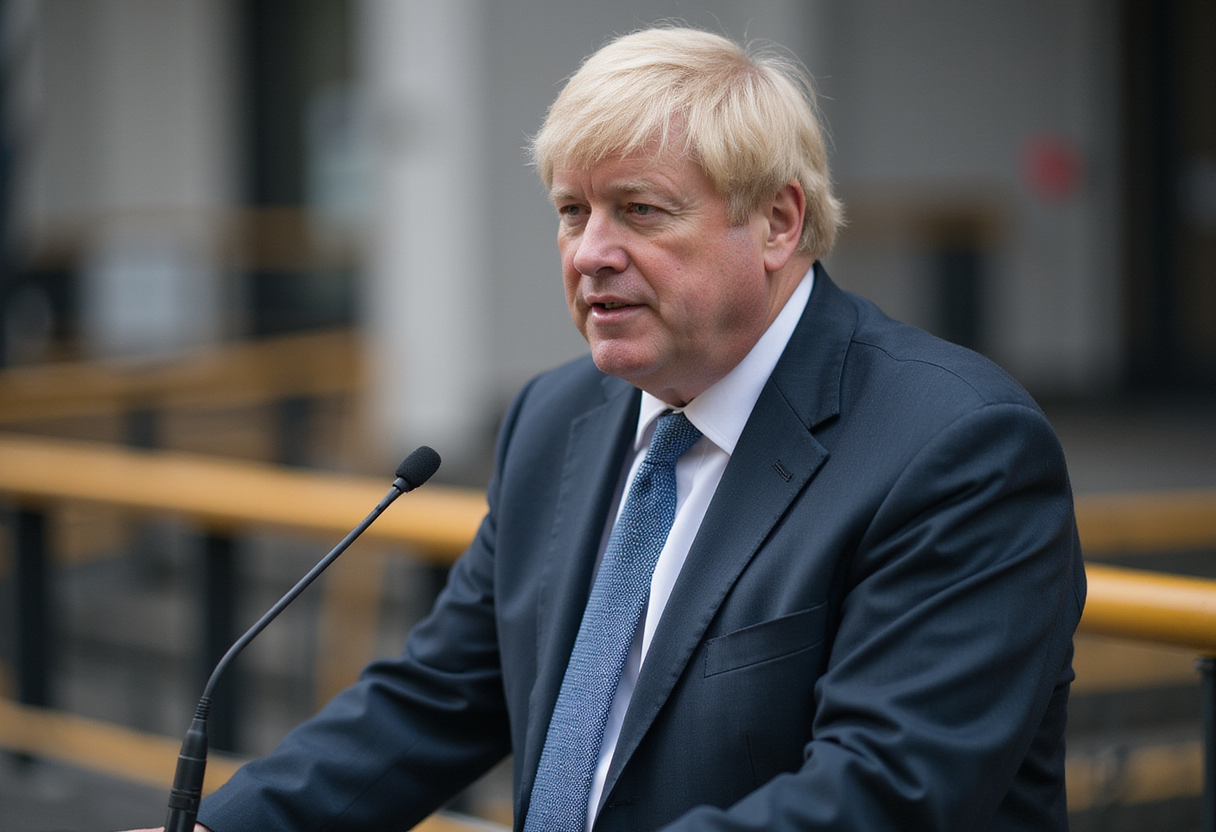
Updated
Why it matters
- House Speaker Mike Johnson told CNBC's 'Squawk Box' on Tuesday: 'I hope it's voluntary,' referring to AI guardrails.
- Johnson is meeting with President Donald Trump and AI executives including Anthropic's Dario Amodei, Meta's Mark Zuckerberg and Alphabet's Sundar Pichai.
- OpenAI said late Monday it would not release its upcoming model, GPT-6.1 Astra, after determining it did not adequately meet the company's safety standard.
- Anthropic warned in its IPO prospectus that its technology poses 'catastrophic or existential risk to humanity.'
- Congress leaves Washington at the end of this week and does not return until after November's election; proposals under discussion include independent auditors in frontier labs, new liability laws and regulatory reviews of AI models.
House Speaker Mike Johnson said Tuesday that he hopes guardrails for artificial intelligence will be "voluntary," signaling that the Republican-led House favors self-regulation by AI companies over binding federal rules.
"I hope it's voluntary," Johnson, a Louisiana Republican, told CNBC's "Squawk Box" before a meeting with AI executives and President Donald Trump scheduled for later Tuesday in Washington. "We'll find out what comes out of the meeting today. I think that that's where they're headed. I think they see the handwriting on the wall, and I think they want to ensure investors, you know, consumers, the American public, that they're going to do this in a very safe way, and and that will, I think, put us in the right place."
The stakes are considerable. Congress remains in the early stages of regulating artificial intelligence, and the Speaker's preference for voluntary commitments suggests the United States may continue without a statutory framework even as the industry itself warns of severe dangers. The meeting brings together the most powerful figures in the industry — including Anthropic's Dario Amodei, Meta's Mark Zuckerberg and Alphabet's Sundar Pichai — with the President and the House's top lawmaker.
A legislative clock that isn't ticking
Timing works against any regulatory push. The legislative branch is due to leave Washington at the end of this week and stay away until after November's election, according to the source report. That calendar leaves effectively no window for substantive action before voters go to the polls.
Johnson's comments arrive under pressure from two directions at once. Industry executives and members of Congress have urged lawmakers to move fast on legislation that would set a regulatory structure for AI and impose government limits intended to prevent the technology from causing harm. At the same time, AI undergirds the economy: it has driven market gains amid other headwinds, with the technology promising productivity gains and new breakthroughs.
That tension — between catastrophic risk on one side and economic upside on the other — defines the policy debate now playing out on Capitol Hill.
The industry's own warnings
AI executives have recently warned that the technology they built poses catastrophic risks if it goes wrong, and they have urged Washington to act to slow the advance of frontier technology. Those warnings have not remained abstract.
Anthropic stated in its IPO prospectus that its technology poses "catastrophic or existential risk to humanity" — a disclosure that is likely to keep the drumbeat strong for regulation, as the source report notes. A company going public while flagging existential risk in its own filing is an unusual posture, and it hands ammunition to lawmakers and advocates who argue that federal guardrails cannot remain voluntary.
OpenAI, meanwhile, which held a developer day on Tuesday, said late Monday that it had decided not to release an upcoming AI model, GPT-6.1 Astra, after determining the model did not adequately meet the company's safety standard. The decision illustrates the kind of self-restraint Johnson says he hopes the industry will continue practicing without statutory compulsion.
Critics of a voluntary approach point to exactly this arrangement: safety decisions at frontier labs currently rest with the companies themselves. Whether OpenAI withholds a model or ships it, no external body holds veto power under current federal law.
Proposals circulating on Capitol Hill
Proposals on AI safety have been flying around Capitol Hill in recent weeks. Among the ideas under discussion, according to the source report:
- Installing independent auditors inside frontier labs
- Introducing new liability laws
- Standing up regulatory reviews for AI models
Each proposal would convert what are now internal corporate judgments — like OpenAI's decision on GPT-6.1 Astra — into externally enforced obligations. Johnson's stated preference for voluntary guardrails puts him at odds with the direction these proposals would take.
Liability: "it doesn't come up"
One question hanging over any liability regime is whether AI companies will seek exemptions shielding them from legal exposure when their products cause harm. Asked whether the AI companies he meets with bring up potential exemptions from liability in prospective regulations, Johnson said the subject never arises.
"It doesn't come up," he said.
The Speaker then pointed to existing law as sufficient discipline. "Of course products liability law applies here directly, and we're going to make sure that that keeps everybody in check," Johnson told CNBC.
That answer matters because liability is one of the levers Congress could pull without creating a new regulatory agency. If products liability law already applies "directly," as Johnson claims, then the practical question becomes whether courts can adapt decades-old doctrine to harms caused by frontier AI systems — or whether Congress must write new rules for the technology.
The executives Johnson is meeting have direct commercial interests in how that question resolves. Liability exposure affects valuations, insurance costs and the pace of deployment for companies including Anthropic, Meta and Alphabet, all of which are racing to ship frontier models.
Why the meeting matters
Tuesday's gathering puts the industry's chief executives in the same room as the President and the Speaker of the House at a moment when the federal government has no comprehensive AI statute on the books. Johnson's framing — "striking the right balance" with the technology, with guardrails he hopes will be voluntary — suggests the White House and congressional leadership are converging on an approach that relies on industry commitments rather than mandates.
For the companies in the room, voluntary guardrails offer regulatory latitude while allowing them to tell investors and the public, as Johnson put it, "that they're going to do this in a very safe way." For advocates of binding rules, the same arrangement looks like self-policing by an industry that has itself warned of catastrophic and existential risk.
Anthropic's IPO prospectus language sharpens that contradiction. A company that discloses its technology may pose "catastrophic or existential risk to humanity" while its executives meet with lawmakers who prefer voluntary safeguards captures the core of the AI policy debate in a single scene.
What comes next
With Congress leaving Washington at the end of this week and not returning until after November's election, any legislative movement on AI will wait months at minimum. The proposals now circulating — independent auditors, new liability laws, model reviews — will remain proposals unless a post-election Congress revives them.
The clearest near-term signal will come from what the companies do on their own. OpenAI's decision to withhold GPT-6.1 Astra shows the voluntary model functioning as Johnson hopes; whether that model holds under competitive pressure to ship ever more capable systems is the question the Speaker's approach leaves unanswered.
Source: CNBC Tech
More from James Calloway
Show full bio
News editor covering industry trends and analytics at AI In Context.
126 articles
Related articles
- Khanna Bill Would Ban Self-Improving AI Until Federal Safeguards Exist
- Sanders and Casar Bill Would Permanently Ban Superintelligent AI
- Top House Democrat Presses US and China on AI Safety Treaty
- Trump Dismisses AI Safety Fears as a "Hoax," Plans "AI Force"
- Sanders Bill Would Ban 'Superintelligence', 20 Years Prison