Gritt and MasTec Renewables expand robotics on U.S. solar sites
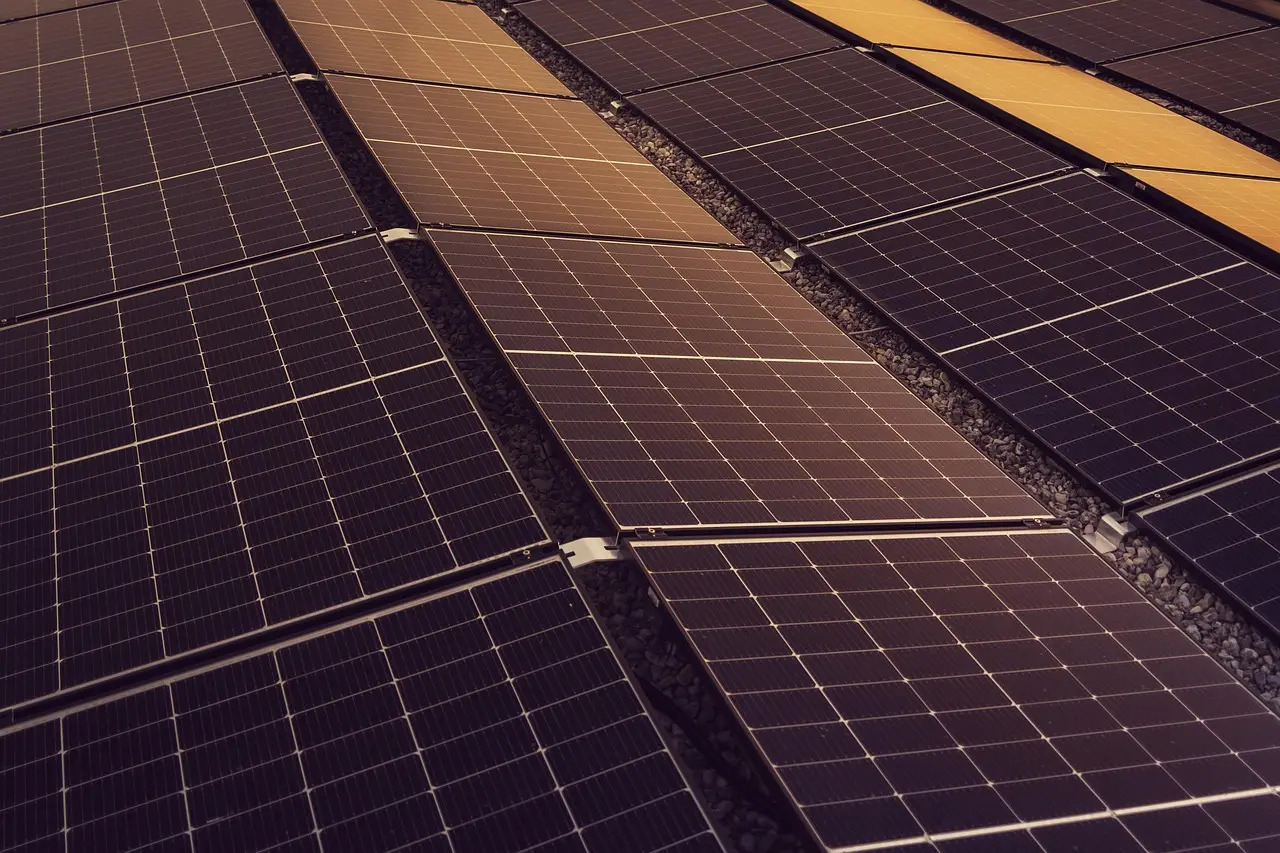
Gritt reports more than 35,000 panels installed. Its MasTec Renewables partnership will test robotic panel handling across changing U.S. solar sites while crews retain oversight.
Why it matters
- Gritt reports more than 35,000 panels and more than 18 MW of solar installed.
- MasTec Renewables evaluated Gritt on active projects where the systems helped install megawatts of panels; deployments will span multiple U.S. states.
- Gritt emerged in July with $32.4 million in pre-seed and Series A financing, including a $26 million Series A led by Obvious Ventures.
- Simulated workers in mined postures improved detection recall for low poses by 1.6 percentage points on real site footage.
- Gritt lists 2.8 GW of future contracted construction separately from its completed solar installations.
By Rebecca Stone
Gritt’s solar product page reports more than 35,000 panels installed and more than 18 MW of solar installed. MasTec Renewables will expand the use of Gritt’s physical AI systems on utility-scale solar projects across multiple U.S. states. The partnership pairs Gritt’s robotic systems with MasTec Renewables’ construction teams, carrying AI from planning software into material movement and installation.
According to the announcement, MasTec evaluated Gritt on active projects where the systems helped install megawatts of solar panels. The companies now plan a pipeline of deployments and will explore applications in other infrastructure sectors. They did not disclose the agreement’s financial terms or identify individual project sites.
MasTec Renewables Vice President of Construction Rob Turner said the evaluation showed “an opportunity to combine its workforce’s experience with Gritt’s technology.” The companies frame the rollout around supporting skilled crews, with people continuing to guide and validate work.
The partnership matters because it places a robotics system inside a contractor’s operating chain, not a standalone demonstration. The test is whether robots can perform repetitive installation work while conventional equipment and human crews remain coordinated.
Gritt identifies the operating environment as the central deployment challenge. A solar farm offers thousands of repetitive installation tasks, but they occur amid changing weather, uneven ground, moving equipment and people working nearby.
Gritt states the engineering goal as repeatable performance under variation rather than a successful demonstration. Its checks aim to keep an unexpected event from becoming a damaged component or a stopped project.
What does the partnership put on job sites?
Gritt’s launch announcement described robotic arms connected to vehicles such as skid steers and forklifts to perform material handling and assembly. The setup functions like a powered tool on existing machinery, adding automation without requiring contractors to introduce an entirely new vehicle platform.
Gritt emerged publicly in July with $32.4 million in pre-seed and Series A financing, including a $26 million Series A led by Obvious Ventures. The MasTec agreement follows that launch and an earlier solar-construction partnership with Burns & McDonnell.
Gritt’s solar product page identifies panel pick-and-place as a current application, while purlin assembly, component transport and oversight are expansion areas. A separate figure of 2.8 GW in contracted construction describes future work under contract, not completed installations.
How does Gritt train machines for changing sites?
In a technical explanation of its architecture, Gritt describes a foundation model trained on labeled and unlabeled images and video from construction environments. The shared representation supports task-specific models, including:
- Control policies.
- Segmentation.
- Six-degree-of-freedom pose estimation, identifying an object’s position and orientation in three-dimensional space.
Gritt surrounds model output with checks on execution. Observation systems assess uncertainty and validate proposed actions. The company says “new models first operate in shadow mode before taking control.” Takeover and recovery mechanisms allow work to continue when the system needs help and generate examples for subsequent training.
Gritt also describes a real-to-simulation-to-real pipeline. Site images and video help reconstruct scenes, which become simulated training and validation episodes. CAD models, reconstructed objects and randomized conditions let the company revisit unusual situations without depending entirely on encountering them again on a live site.
The pipeline gives Gritt a way to rehearse situations that remain rare on live sites. It also turns captured site conditions into material for later training and validation, rather than waiting for another real encounter.
Why does MasTec Renewables matter to deployment?
MasTec Renewables’ solar business spans development and design through construction and operations. Its capabilities include photovoltaic system modeling, materials logistics, foundation work, electrical collection systems, substations and high-voltage connections. It installs fixed-mount systems as well as single-axis and dual-axis tracking configurations.
That breadth puts robotic panel installation within a much larger delivery process. Placement speed matters only if crews, materials, foundations and electrical work remain coordinated. An attachment that performs well in isolation still has to fit the contractor’s sequencing, maintenance and safety practices.
The partnership therefore asks a robotic attachment to do more than place a panel. It must fit the order of work around materials, foundations and electrical connections while people guide and validate the task.
What does worker-detection research show?
Gritt’s published analysis of worker detection examined how automated data-quality filters can disproportionately discard images of kneeling, crouching or partly obscured people. Those positions are ordinary on construction sites even if they appear infrequently in a filtered dataset.
A bounding box may correctly identify a worker while a pose estimator struggles to reconstruct the person’s joints. Rejecting the entire example can remove exactly the cases a deployed robot needs to recognize.
Gritt reported that adding simulated workers in mined working postures improved detection recall for low poses by 1.6 percentage points on real site footage. The gain came from simulated examples of positions that real-site filters had difficulty retaining.
The result applies to that specific perception evaluation. It does not measure the MasTec deployment’s overall safety performance.
How does execution feed project planning?
Gritt’s broader ambition is to connect physical execution with site verification and planning. Its systems collect information while working, creating the possibility of comparing what has actually been built with what a project expects to complete next.
For MasTec, the immediate application remains solar construction. For Gritt, repeated deployments offer a route to adapting the technology across more tasks and conditions.
The partnership’s next test is operational: whether useful automation can be introduced consistently across projects while preserving the judgment and coordination that construction crews provide.
Source: unite.ai
More from Rebecca Stone
Show full bio
Correspondent covering companies, deals and strategy in artificial intelligence and machine learning at AI In Context.
551 articles
Related articles
- OpenAI Tells Energy Dept: Fast Permits and Federal Backing for AI Supercomputer Hubs
- Industrial Next promises factory retooling in minutes, with BMW as first test
- Destro AI exits stealth with $8M to orchestrate warehouse robots — and the humans beside them
- OpenAI and PNNL Launch Benchmark for AI in Federal Permitting
- Cerebras CEO Andrew Feldman to Tackle AI Scaling at TechCrunch Disrupt 2026