Google's Language Explorer Maps 7,000 Languages, With Caveats
Google Research's Language Explorer spans about 7,000 languages and 159 scripts, but its underlying repository was archived as read-only weeks before launch.
Why it matters
- Google Research launched Language Explorer on November 9, 2026, covering about 7,000 languages and 159 scripts.
- The underlying LinguaMeta dataset documents 7,511 languages harmonized from 19 cited sources, with BCP-47 and ISO 639-3 codes.
- The 2024 paper reported machine translation, speech recognition and text-to-speech are widely available in only about 100 languages.
- Speaker populations were available for 6,253 languages (83%); endonyms for only 1,136 (15%).
- The containing url-nlp GitHub repository carries an archive notice dated October 6, 2026 and is marked read-only.
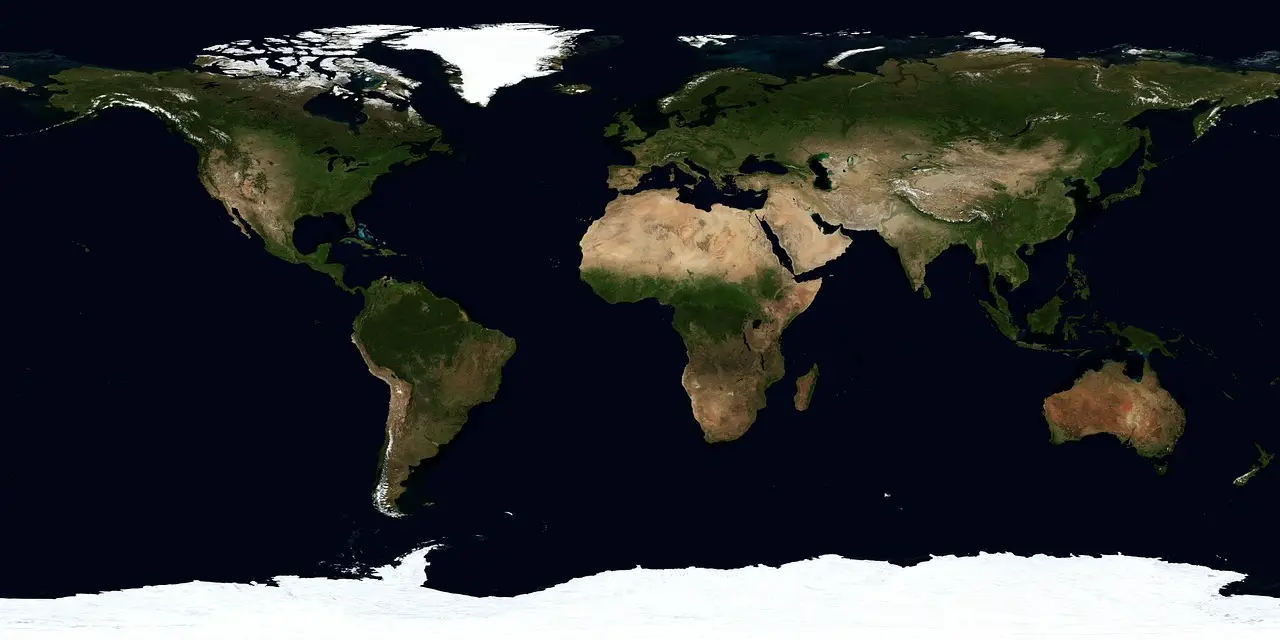
Google Research launched Language Explorer on November 9, 2026, an interactive platform covering roughly 7,000 languages written in 159 scripts. The tool lets anyone search language geography, scripts and speaker populations — and it doubles as a physical installation at the Museum of Communication Berlin.
The platform exists because most of the world's languages barely show up in AI. A 2024 paper behind the project reported that machine translation, speech recognition and text-to-speech were widely available in only about 100 languages, with low-quality or nonexistent coverage for most others. The metadata layer is Google's attempt to give researchers a shared map of what's missing.
What is Language Explorer, exactly?
It's a visual interface built on LinguaMeta, an open-source dataset. Google developed it under its 1,000 Languages Initiative, the company's effort to extend language technology across more of the world's linguistic diversity. The announcement came from Daan van Esch and Uche Okonkwo of Google Research, who framed the explorer as a bridge between raw data and the researchers who need it.
The site supports searches by language name, country or region, and continent or subcontinent. Users can browse by speaker numbers, endangerment status or scripts. Clicking a map pin opens a detailed language page.
Those pages pull together names, locations and identifiers, including:
- BCP-47 tags
- Glottocodes
- Wikidata IDs
The identifiers matter because they give consistent reference points across separate language resources. A researcher linking datasets, or an engineer building a localized product, can anchor every language to a stable code.
How solid is the underlying data?
Every value displayed on the site comes from LinguaMeta, an open-source repository that harmonizes language information from 19 cited sources. The 2024 LinguaMeta paper documented the dataset at 7,511 languages with BCP-47 and ISO 639-3 codes.
Traceability is built in. Every data point carries an origin tag, so users can check where a figure came from and propose corrections. When sources disagreed, the authors said they either preferred the more authoritative source or conducted further research using academic publications, census material and constitutions.
The coverage numbers vary sharply by field. Speaker-population figures were available for 6,253 languages — 83% of the dataset. Endonyms, the names communities use for their own languages, were documented for only 1,136 languages, or 15%. The map offers a broad entry point, but the depth of information varies considerably depending on which language and which category you're looking at.
Speaker counts also carry qualifications. The underlying methods:
- omit second-language totals, because reliable statistics were hard to obtain
- round larger speaker estimates by order of magnitude, to avoid false precision
- warn that aggregating locale populations can magnify errors in the sources
The dataset focuses on living spoken languages. Signed, ancient, historical and constructed languages are excluded. Macrolanguages and languages classified as extinct are included — the latter because some have retained small speaker communities. Esperanto is a stated exception to the constructed-language exclusion, because several language technologies already support it.
The map itself has limits. Each pin marks a notional language centre derived from Glottolog coordinates and manual revisions. The site cautions that languages are spoken by communities that may move or cross political boundaries, so the pins should not be read as fixed territories.
Why does this matter for AI development?
The LinguaMeta paper identified a practical role for this metadata in closing the language-technology gap. Speaker counts can help prioritize which languages deserve engineering work first. Language-script-locale combinations identify the exact configurations a localized system must handle — the difference between launching a product for a language and launching it for the way that language is actually written and spoken in a given place.
The repository's structure preserves those combinations in JSON records. A simpler TSV summary exists too, but it leaves out source details, extended names, script-use tags, official-status research and coordinates. Anyone doing serious work needs the JSON.
This is the stakes of the story. If AI systems serve roughly 100 languages well while thousands of others get poor or no coverage, the question of which language comes next — and how to describe it precisely — becomes an engineering and equity problem at once. Google's metadata layer is an attempt to make that decision process legible.
What's happening in Berlin?
Language Explorer also exists as an interactive installation. It appears in the exhibition "Real Talk! Language. Power. World." at the Museum of Communication Berlin, which the museum records as opening on November 5, 2026.
Six themed rooms address language worlds, diversity, identities, contact, power and the future. The final room asks how AI and chatbots are changing communication, and how researchers and activists are documenting endangered languages.
An online companion launched November 6, 2026. It adds background material, videos and quizzes across the same six perspectives, including the relationship between AI and multilingualism. Both the Berlin exhibition and its companion run through February 27, 2028.
The museum placement signals who Google thinks this is for. This is not just a developer resource — it's a public argument about linguistic diversity, aimed at visitors who may never have thought about how many languages AI systems skip.
Is the project actually still maintained?
Here the story gets complicated. Explorer's FAQ describes LinguaMeta as an active project and invites researchers to contribute corrections and resources.
But the containing url-nlp repository carries a GitHub archive notice dated October 6, 2026, and is marked read-only. The full, version-controlled dataset remains downloadable. That status leaves the route for future contributions unclear, just as Google presents the interface to a wider audience.
The contradiction is more than a footnote. LinguaMeta's value depends on traceability and correction — the paper's own methodology rests on revising source data when authorities disagree. If the contribution pathway stays shut, the dataset becomes a snapshot rather than a living reference, and the explorer's invitation to researchers rings hollow.
Google has not, in the source material, addressed the discrepancy. The dataset is still fully available. Whether it evolves from here is the open question that will determine whether Language Explorer becomes standard infrastructure for multilingual AI work, or a well-documented museum piece in both senses of the phrase.
Source: unite.ai
More from Elena Vasquez
Show full bio
Market editor covering technology and product news in artificial intelligence and machine learning at AI In Context.
446 articles
Related articles
- OpenAI Launches IndQA, a 2,278-Question Benchmark for Indian Languages
- Google takes Dreambeans to India, its first market beyond the U.S.
- Google's Gmail Live Exits Beta for AI Subscribers
- When AI Search Beats Google—and When It Quietly Fails You
- ChatGPT Now Handles Search Queries Equal to 20 Percent of Google's