Google Books New Glenn to Launch Its Orbital AI Data Centers in 2029
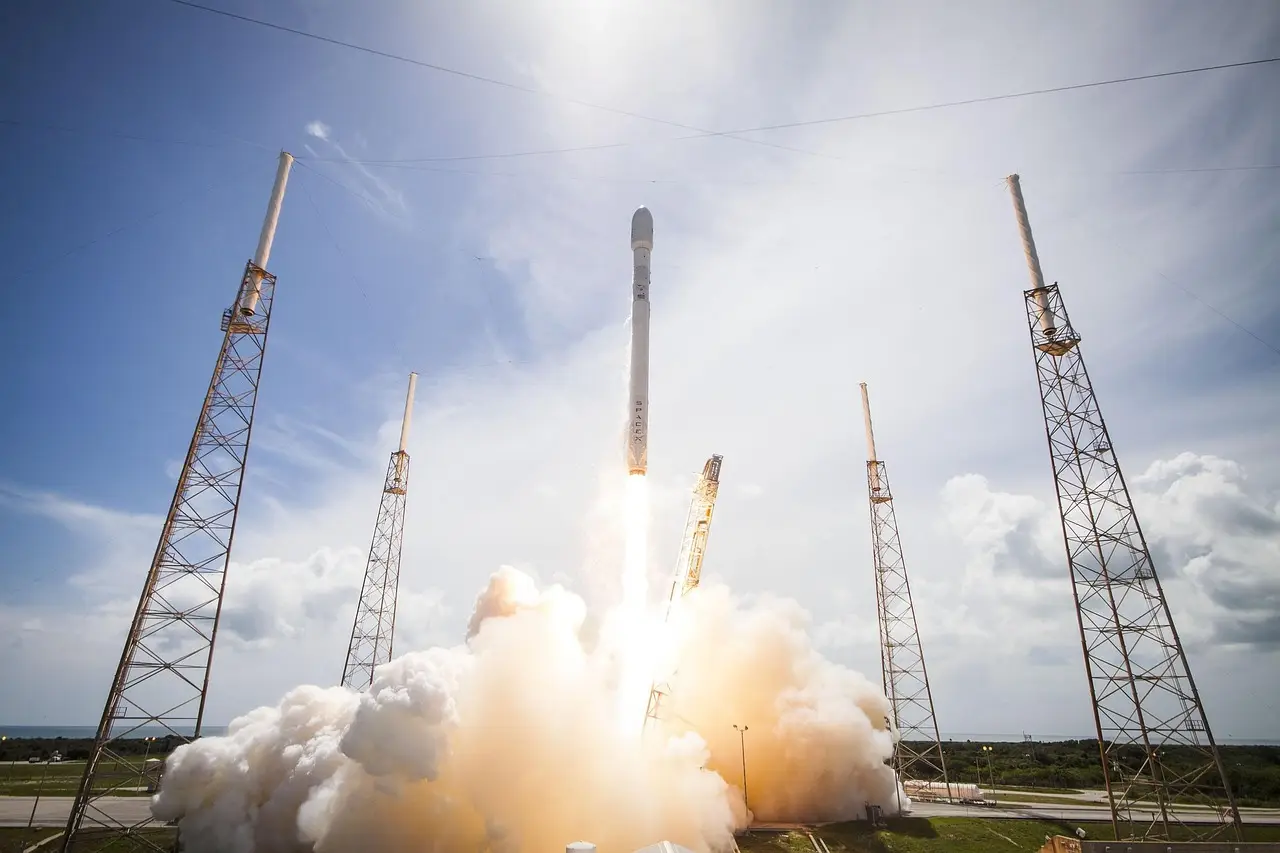
Google has booked Blue Origin's New Glenn for Project Suncatcher's first dedicated heavy-lift launch in Q1 2029, deploying rack-scale TPU satellites into sun-synchronous orbit.
Why it matters
- Google announced on November 19, 2026 that Blue Origin's New Glenn will fly Project Suncatcher's first dedicated heavy-lift launch in Q1 2029.
- Each Suncatcher satellite is designed to provide computing capacity roughly at the scale of a data center rack, carrying Google TPUs into sun-synchronous orbit.
- A prototype launched October 1, 2026; by October 30 its Gemma 4 model generated a haiku — the first AI response from a data-center-class TPU in orbit.
- New Glenn lifts 45 metric tons to low Earth orbit with a seven-meter fairing offering twice the volume of five-meter-class fairings.
- Google says satellites in low Earth orbit can generate up to eight times more solar power than on Earth; a two-satellite interconnection milestone is planned for 2027.
Google has signed Blue Origin's New Glenn for Project Suncatcher's first dedicated heavy-lift launch, targeted for the first quarter of 2029, with the goal of deploying solar-powered satellites carrying Google's Tensor Processing Units into sun-synchronous orbit. The announcement, made on November 19, 2026, moves orbital AI compute past the single-prototype stage and into multi-satellite deployment. It is the clearest signal yet that a major hyperscaler treats space as a serious candidate for machine-learning infrastructure, not a science experiment.
The stakes are straightforward. AI compute is power-limited on Earth, and data centers compete with grids and cities for electricity. Google's bet is that orbit changes the math — and the launch agreement now gives that bet a ride.
What did Google and Blue Origin actually agree to?
The launch services agreement covers deployment of TPU-carrying satellites into sun-synchronous orbit. Each satellite is designed to provide computing capacity roughly at the scale of a data center rack. That is not a hyperscale cluster yet. It is a research platform meant to answer whether an interconnected network of solar-powered satellites could scale machine-learning compute in space at all.
The dedicated launch builds on Google's continuing work with other satellite and launch partners, according to the company. In other words, New Glenn is the heavy-lift path, not the only path. But it is the one sized for the next phase: many satellites at once rather than one prototype at a time.
Jordan Charles, senior vice president of New Glenn at Blue Origin, said the rocket's "heavy-lift capacity and large payload volume give customers the flexibility to bring new capabilities to orbit." For Suncatcher, that flexibility translates directly into how many TPU satellites can go up on a single flight.
Why New Glenn fits the mission
The vehicle's published specifications frame the choice. New Glenn offers:
- 45 metric tons of lift to low Earth orbit
- More than 13 metric tons to geostationary transfer orbit
- A seven-meter payload fairing with twice the volume of smaller five-meter-class fairings
- A reusable first stage designed for a minimum of 25 flights
The fairing volume matters as much as raw lift. Cluster deployment of dozens of rack-scale machines requires physical room, and doubling fairing volume roughly doubles what a single launch can carry in bulky payloads. The reusable first stage, rated for at least 25 flights, points toward the cadence and cost profile a research program needs if it eventually scales to constellations rather than demos.
For Blue Origin, the deal is a marquee customer win: a Google division committing to a dedicated flight on a rocket still early in its operational life, booked for a 2029 mission with a concrete payload architecture behind it.
What has already flown?
The 2029 launch rests on a body of prototype work that is already in orbit. Google previewed Project Suncatcher in September 2026, then flew a prototype satellite on October 1, 2026. By October 30, 2026, Google had powered the host and TPU trays and run early machine-learning tests during commissioning.
The flagship result: the onboard Gemma 4 model generated a haiku. Google described it as the first AI response from a data-center-class TPU in orbit. A haiku is a modest artifact, but the provenance is not — it is a commercial-grade AI accelerator doing inference work in space, powered up and answering within 29 days of launch.
The disclosed roadmap continues with thermal-stress and radiation testing, followed by a planned 2027 milestone of two interconnected satellites. That twin-satellite test is the hinge of the whole program, because it is the first time Suncatcher will have to make two machines talk to each other in orbit.
Why put compute in orbit at all?
Google's energy rationale is the core of the pitch. Satellites in low Earth orbit can access near-constant sunlight and generate up to eight times more solar power than equivalent arrays on the ground, the company says. Eight times the energy harvest, with no cloudy days and no nighttime duty cycle, is the difference between a power-constrained accelerator and one that can run hard.
Proposed future designs scale the concept: dozens of TPUs on each satellite, with lasers providing high-bandwidth communication over short distances between spacecraft orbiting in clusters. The cluster architecture treats the constellation as a distributed machine — compute nodes in formation, linked by light rather than fiber.
What could still break it?
The engineering problems are the reason this is research and not a product. Three stand out:
- Cooling. In a vacuum, chips cannot rely on airflow. Engineers have tested heat pipes and radiators in a thermal vacuum chamber to move heat off densely packed TPUs and radiate it into space.
- Chips. Radiation and thermal stress are hostile to silicon. The planned radiation and thermal-stress testing exists precisely to find out whether standard data-center hardware survives, or whether orbital compute needs hardened designs.
- Communications. The laser links must maintain high bandwidth over short distances between moving spacecraft, which requires precise knowledge of each satellite's position relative to its neighbors. Two machines in formation, pointing lasers at each other while orbiting at speed, is a pointing and tracking problem as much as a networking one.
The agreement supplies a heavy-lift path for a larger research deployment. But the prototype and twin-satellite work must still establish the essentials of orbital computing — reliable chips, effective cooling and precise intersatellite communication — before a 2029 cluster launch means anything.
What happens next?
The sequence between now and the first quarter of 2029 is fixed by the disclosed plan: thermal-stress and radiation testing on the current prototype, the two-satellite interconnection milestone in 2027, and then the dedicated New Glenn flight carrying a multi-satellite deployment toward sun-synchronous orbit. Whether Suncatcher progresses from individual machines running in orbit to a networked machine-learning system depends on those intermediate tests passing — and on whether a haiku written in space turns out to be the first line of a much longer story for AI infrastructure.
Source: unite.ai
More from Elena Vasquez
Show full bio
Market editor covering technology and product news in artificial intelligence and machine learning at AI In Context.
795 articles
Related articles
- Google books Blue Origin for 2029 orbital data center launch
- Google Taps Blue Origin's New Glenn to Launch AI Data Centers Into Orbit
- Google will launch AI chips into orbit on October 1st
- Google Will Launch Its First AI Test Satellite on Oct. 1
- Google's First Suncatcher Orbital Data Center Test Launches October 1